Early leader training
In the first 3–5 years, select one strong central leader and remove or shorten competing upright shoots in late winter so the young tree develops a stable, single-trunk structure that resists wind and heavy nut loads.

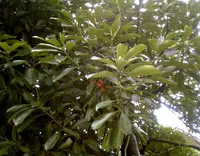
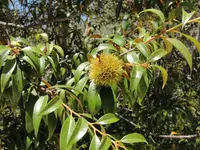
Japanese stone oak, Lithocarpus edulis, is an evergreen tree from the beech family, native to warm coastal regions of Japan. It is often grown as an ornamental or container specimen in mild climates.
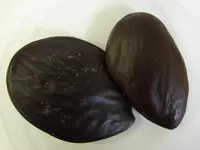
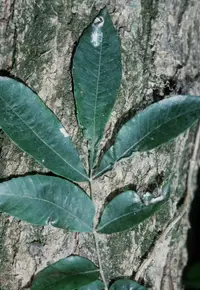
The tree has dense, glossy, leathery leaves and produces small acorn-like nuts, giving it a sturdy, architectural look. Growth is generally slow to moderate, which suits smaller gardens and long-term container culture.
Its toughness and tolerance of pruning make it manageable, but its eventual size and long lifespan mean it suits patient growers. Those who want to learn how to care for Japanese stone oak should note its preference for bright light, even moisture, and well-drained, slightly acidic soil.

Care Difficulty
Moderate Care

Light Preference
Full Sun

Water Requirements
Moderate Water

Temperature Preference
Warm Climate

Hardiness Zone
8–10

Soil Texture
Loamy, Sandy, Organic-rich

Soil pH
Acidic (5.5–6.5), Slightly acidic (6.5–7.0)

Soil Drainage
Well-drained

Fertilization
Minimal (feed rarely)
Scan your plant to receive care tips personalized for your specific plant
Available on iOS and Android
This evergreen prefers bright outdoor conditions with protection from intense midday sun.
This species prefers evenly moist, well-drained soil rather than constant saturation.
This tree thrives in mild, frost-free to light-frost climates with moderate seasonal change.
This species handles typical indoor humidity but benefits from moderately moist air.
Lithocarpus edulis prefers deep, well-drained, mildly acidic mineral soil that still retains some moisture.
This tree can be grown in containers for many years if root space and stability are carefully managed.
This evergreen tree benefits from modest, balanced feeding in containers or poor soils, but established in-ground plants often manage with minimal input.
Pruning needs for Lithocarpus edulis are low and mostly structural or corrective.
This species is usually grown in the ground, with transplanting most important while plants are still young.
New plants are produced mainly from seed, as vegetative methods are unreliable for this species.
Established trees are moderately cold hardy and often need little active winter care in mild climates.

Plant Health Check
Not sure what's wrong with your plant? Check your plant's health inside the app.
The nuts are technically edible and have been eaten in parts of Japan, but they contain tannins that give a strong bitterness unless leached or processed thoroughly.
This species naturally occurs on warm, coastal slopes and islands in Japan and is notably tolerant of salty sea breezes and strong winds compared with many other broadleaf trees.
The heavy acorn crops provide a reliable autumn food source for birds and small mammals in its native range, supporting local forest wildlife communities.

In Japan this evergreen oak has been traditionally planted around temple grounds and coastal settlements as a long-lived, windbreaking tree that also stabilizes slopes with its dense, fibrous root system.
This tree grows slowly to moderately, usually 15–30 cm per year under good conditions. Growth slows in poor soil, drought, or heavy shade. Patience is needed, as it can take many years to reach full size.
Keep your plants happy and healthy with plant identification, disease detection, and easy care guidance.