Use clean substrate
When cultivating this fungus on agar plates or sterilized grain/wood substrates, always pressure-sterilize containers and tools and work near a flame or in a still-air box to reduce contamination by molds and bacteria.

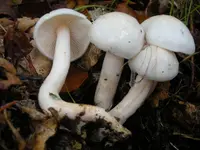
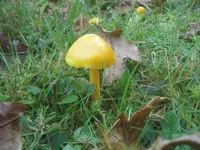
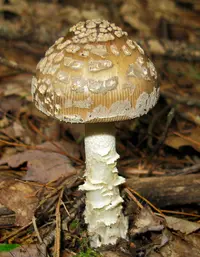
Cowboy's Handkerchief is a small, waxy white mushroom. It produces slimy caps and slender stems, often forming scattered groups on forest floors. Hygrophorus eburneus is native to temperate woodlands, especially under broadleaf and mixed trees, where it lives in partnership with roots and helps them absorb nutrients. It typically appears in moist, mossy, or leaf-littered areas during cooler, damp seasons. For those who want to care for Cowboy's Handkerchief in a cultivated setting, it is challenging because it depends on this natural root partnership and consistent forest-like humidity.

Care Difficulty
Hard Care

Light Preference
Partial Shade

Water Requirements
Keep Soil Moist

Temperature Preference
Cool Climate

Hardiness Zone
Unknown

Soil Texture
Loamy, Silty, Organic-rich

Soil pH
Strongly acidic (4.5–5.5), Acidic (5.5–6.5)

Soil Drainage
Moist but well-drained

Fertilization
Minimal (feed rarely)
Scan your plant to receive care tips personalized for your specific plant
Available on iOS and Android
This fungus favors low, indirect light in cool, moist woodland conditions rather than direct sun exposure.
This mycorrhizal fungus depends on consistently moist, but not waterlogged, forest soil.
This species fruits best in cool to mild conditions typical of autumn woodlands.
Humidity is not a key factor for this outdoor mushroom species and usually does not need active management in gardens.
This mushroom prefers moist, humus-rich forest soil and is difficult to mimic in typical garden settings.
This species is generally unsuitable for conventional container growing, as it relies on complex woodland soil and mycorrhizal relationships that are difficult to sustain in pots.
This wild fungus, known as Cowboy's Handkerchief, typically gains all needed nutrients from its forest habitat and does not benefit from additional fertilizer.
Hygrophorus eburneus is a wild mushroom species that does not require or benefit from pruning in cultivation or natural settings.
This species is a mycorrhizal fungus that forms partnerships with tree roots, so it is not suited to standard repotting or transplanting like a potted plant.
Propagation of this wild mycorrhizal fungus is complex and not practical for home growers, so deliberate propagation is rarely attempted.
No special winter care is required, as this fungus is adapted to natural seasonal cycles in outdoor woodland conditions.

Plant Health Check
Not sure what's wrong with your plant? Check your plant's health inside the app.
Mature fruiting bodies develop a strongly viscid to slimy cap cuticle when wet, due to a thick gelatinous layer in the cap skin that helps reduce desiccation and may deter some small grazers.
The species has thick, waxy, widely spaced gills that produce a white spore print and give the mushroom a characteristic smooth, wax-like texture typical of the waxcap relatives.
It commonly fruits in late summer to autumn in temperate regions, growing on soil rich in decaying leaf litter in broadleaf and mixed woodlands, where it helps decompose organic material.

Genetic and ecological studies indicate that this species forms ectomycorrhizal associations with trees, meaning its underground mycelium connects with tree roots and exchanges mineral nutrients for plant-produced sugars, contributing to forest health and nutrient cycling.
This mushroom is considered edible but of low culinary value due to its slimy cap and mild flavor. Correct identification is essential, since white mushrooms can be confused with toxic species. When unsure, do not consume.
Keep your plants happy and healthy with plant identification, disease detection, and easy care guidance.