Select proper host
Harvest or introduce this fungus only on dead or heavily decayed hardwoods like birch or beech, avoiding living trees to prevent unintended tree damage and to give the fungus the lignin‑rich wood it needs.

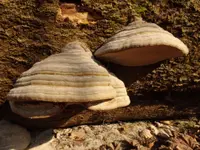
Hoof fungus, Fomes fomentarius, is a perennial bracket fungus rather than a typical leafy plant. It forms hard, hoof-shaped shelves on the trunks of birch, beech, and other broadleaf trees.
This fungus occurs widely across temperate regions of Europe, Asia, and North America, usually on dead or weakened trees. It grows slowly, creating dense, woody fruiting bodies that can persist for many years.
Because it is a wood-decaying specialist, it is challenging to cultivate at home, and most people do not actively care for Hoof Fungus. In nature it favors cool, moist forests and stable, undisturbed host wood.

Care Difficulty
Hard Care

Light Preference
Partial Shade

Water Requirements
Keep Soil Moist

Temperature Preference
Cold Hardy

Hardiness Zone
3–8

Soil Texture
Loamy, Rocky, Organic-rich

Soil pH
Acidic (5.5–6.5), Slightly acidic (6.5–7.0)

Soil Drainage
Moist but well-drained

Fertilization
Minimal (feed rarely)
Scan your plant to receive care tips personalized for your specific plant
Available on iOS and Android
This wood-decay fungus prefers low to moderate light similar to shaded forest conditions.
Fomes fomentarius grows on wood and relies on ambient moisture rather than direct, frequent watering.
This species is adapted to temperate forests and tolerates a wide temperature range once established.
Humidity is not a major factor for Fomes fomentarius, which naturally tolerates a wide range of outdoor conditions.
This wood-decay fungus does not grow in conventional potting soil and instead colonizes dead hardwood, so preparation focuses on the host log rather than ground substrate.
This species is not suitable for conventional container growing, since it requires colonized hardwood rather than a soil-based root zone.
This wood-decay fungus grows on host trees and does not need added nutrients in containers or the landscape.
Pruning for Fomes fomentarius focuses on safety and host tree health rather than shaping the fungus itself.
This fungus is not a conventional potted plant, so management relates to relocating colonized wood rather than classic repotting.
Propagation of Fomes fomentarius is specialized and not practical for typical home culture.
This fungus is very cold hardy and usually needs no special winter care in outdoor settings.

Plant Health Check
Not sure what's wrong with your plant? Check your plant's health inside the app.
This species most often colonizes wounded or stressed birch trees in temperate and boreal forests, where it acts as a white rot fungus that selectively digests lignin and leaves the wood pale and fibrous.
In living trees it typically behaves as a parasite, slowly degrading heartwood, but after the host dies it continues as a saprobe, recycling the dead wood and contributing significantly to forest nutrient cycles.
The inner layers of its tough basidiocarp were historically processed into amadou, a felt-like material used across Europe for centuries as tinder and also for items such as hat felt and fishing fly bodies.

Archaeological analysis of the Copper Age mummy known as Ötzi the Iceman showed that he carried pieces of this fungus, likely as tinder for fire-starting and possibly as part of a portable ember-transport kit, indicating its practical value to humans more than 5,000 years ago.
This bracket fungus grows slowly. A single fruiting body often needs several years to reach full size, adding only a few millimeters of thickness annually while the internal mycelium continues spreading through the host wood.
Keep your plants happy and healthy with plant identification, disease detection, and easy care guidance.