Site microhabitat
Mimic a short, unimproved grassland by placing spawn where the turf is cut only a few times per year and nutrient inputs are minimal, such as an old, low-traffic lawn or orchard edge.

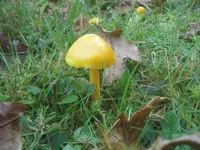
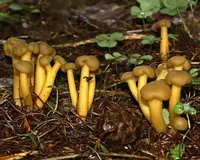
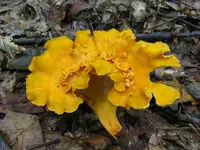
Golden waxcap, Hygrocybe chlorophana, is a small, bright yellow mushroom rather than a traditional leafy plant. It forms slim, fragile stems topped with smooth, waxy caps that often look glossy when wet.
This species typically appears in unimproved grasslands, meadows, and mossy lawns, especially in cool, moist regions of Europe and parts of North America. It usually grows scattered or in small groups, not dense clusters.
Golden waxcap depends on undisturbed, low-nutrient soils, so it does not adapt well to heavily fertilized or compacted ground. Its need for stable, moist, well-drained turf makes it challenging to care for Golden Waxcap in typical garden settings.

Care Difficulty
Hard Care

Light Preference
Partial Shade

Water Requirements
Keep Soil Moist

Temperature Preference
Cool Climate

Hardiness Zone
Unknown

Soil Texture
Loamy, Silty, Organic-rich

Soil pH
Strongly acidic (4.5–5.5), Acidic (5.5–6.5)

Soil Drainage
Moist but well-drained

Fertilization
Minimal (feed rarely)
Scan your plant to receive care tips personalized for your specific plant
Available on iOS and Android
This waxcap prefers cool, moist grassland light rather than intense, direct sun.
Watering should aim to keep the grassland substrate evenly moist without saturation.
This species fruits best in cool, moist conditions typical of temperate grasslands.
This fungus needs consistently moist, humid conditions to fruit well outdoors.
This grassland fungus relies on undisturbed, low-nutrient, well-drained soil rather than a formulated potting mix.
This species is not suitable for typical container growing because it depends on complex grassland soil relationships rather than confined media.
This grassland fungus naturally grows in low-nutrient soils and generally should not be fertilized.
Hygrocybe chlorophana does not require conventional pruning, as each fruiting body is short-lived and seasonal.
Transplanting this waxcap is rarely successful because it depends on complex soil fungi and undisturbed grassland conditions.
Propagation of Hygrocybe chlorophana is technically complex and not practical for most growers, so it is rarely attempted at home.
This grassland fungus is naturally cold hardy and normally needs no special winter care, as only the underground mycelium persists.

Plant Health Check
Not sure what's wrong with your plant? Check your plant's health inside the app.
The fruiting bodies develop a distinctly slimy, vividly yellow to orange-yellow cap when moist, a surface texture that helps distinguish this species from many other waxcaps with drier caps.
This mushroom typically fruits in unimproved, low-nutrient grasslands such as old pastures and lawns, making it an indicator of long-established, low-intensity land management in many parts of Europe.
The cap surface often becomes less slimy and paler as it dries, so the same patch can look quite different between wet weather and a dry spell, which sometimes leads to misidentification by beginners.

This species is part of a group of waxcap fungi now understood to form specialized associations with mosses and soil microorganisms rather than classic tree-root mycorrhizas, so its presence can signal a complex, relatively undisturbed soil ecosystem rather than a specific tree partner.
This fungus is generally considered inedible. It is small, insubstantial, and easily confused with other waxcap species. Foraging is not recommended unless guided by an experienced mycologist, as misidentification can lead to safety risks.
Keep your plants happy and healthy with plant identification, disease detection, and easy care guidance.