Rotate Container Regularly
Turn the pot 90° every 2–3 weeks so the crown develops symmetrically and the fronds do not lean permanently toward the strongest light source.


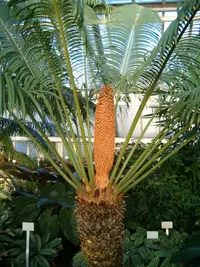
Queen sago (Cycas circinalis) is a slow-growing cycad, often mistaken for a palm because of its stiff, feather-like fronds arranged in a rosette. It forms a thick, woody trunk over time and develops a symmetrical, architectural shape that suits feature planting or large containers.
This species is native to India and surrounding regions, where it grows in warm, seasonal climates. It is long lived but grows slowly, so changes in size are gradual.
Queen sago prefers bright light, well-drained soil, and moderate moisture, and it dislikes sitting in waterlogged conditions. These traits make it fairly resilient once established but require some attention to how to care for Queen sago, especially in indoor or cooler climates.

Care Difficulty
Moderate Care

Light Preference
Full Sun

Water Requirements
Moderate Water

Temperature Preference
Tropical / Frost Sensitive

Hardiness Zone
10–12

Soil Texture
Sandy, Loamy, Organic-rich

Soil pH
Acidic (5.5–6.5), Slightly acidic (6.5–7.0)

Soil Drainage
Well-drained

Fertilization
Minimal (feed rarely)
Scan your plant to receive care tips personalized for your specific plant
Available on iOS and Android
Cycas circinalis prefers bright, warm conditions that mimic open tropical woodland.
Cycas circinalis prefers thorough watering followed by a drying period rather than constantly wet soil.
This species thrives in consistently warm, frost-free climates.
This species handles typical indoor humidity but benefits from slightly moist air.
This cycad needs sharply drained, slightly gritty soil to prevent root and caudex rot.
This species adapts well to container growing when the pot supports deep, stable root development.
Cycas circinalis benefits from light, controlled feeding rather than heavy fertilization.
Cycas circinalis needs minimal pruning, focused mainly on health and safety.
This cycad grows slowly and dislikes frequent disturbance, so repotting or transplanting should be infrequent and deliberate.
Cycas circinalis is most practically propagated from offsets (pups), while seed propagation is slow and specialized.
This tropical cycad is frost sensitive and requires protection in climates with cold winters.

Plant Health Check
Not sure what's wrong with your plant? Check your plant's health inside the app.
This species is native mainly to the Western Ghats and nearby regions of India and is considered a relict of the ancient Gondwanan flora, representing a very old evolutionary lineage of seed plants that predates flowering plants.
All parts of the plant, especially the seeds, contain potent toxins such as cycasin, yet local communities have historically used the seeds as a famine food after elaborate traditional detoxification processes involving prolonged washing and leaching.
As a dioecious species with separate male and female plants, it produces distinct large cones; males form elongated pollen cones, while females develop massive, woolly megasporophyll clusters that hold the ovules and later seeds.

In parts of southern India this species has long been planted near temples and in traditional gardens, where its very slow growth, symmetrical crown, and great longevity have given it symbolic value as a living marker of continuity across generations.
Brown leaf tips or fronds usually result from underwatering, low humidity, salt buildup from fertilizer, or sun scorch. Check soil moisture, flush the pot occasionally, trim only fully brown leaf sections, and adjust light exposure gradually.
Keep your plants happy and healthy with plant identification, disease detection, and easy care guidance.