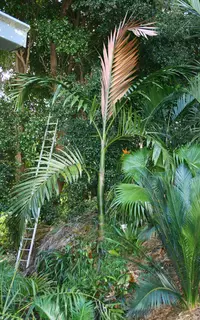
Queen sago Care (Cycas rumphii)

Also known as: Cycad, Bread palm, Ceylon sago palm, False sago-palm, False sago, Spiny-leaved cycas
Queen sago

About Queen sago

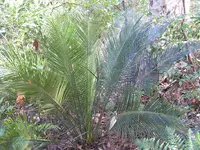
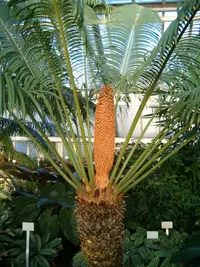
Queen sago, Cycas rumphii, is a slow-growing cycad, an ancient group of seed plants that resemble palms but are not true palms. It forms a stout trunk topped by a symmetrical crown of stiff, glossy, feather-like fronds.

In nature, it occurs in coastal areas of Indonesia and surrounding regions, where it tolerates wind, salt spray, and short dry periods. This background makes it a relatively tough ornamental plant, but it is slow to recover from damage and dislikes root disturbance.

It prefers bright light, well-drained soil, and moderate, steady moisture rather than waterlogged conditions. Understanding these natural preferences is the basis of how to care for Queen sago in gardens or large containers.

Main Plant Requirements

Care Difficulty

Moderate Care

Light Preference

Full Sun

Water Requirements

Moderate Water

Temperature Preference

Tropical / Frost Sensitive

Hardiness Zone

10–12

Soil Texture

Sandy, Loamy, Organic-rich

Soil pH

Acidic (5.5–6.5), Slightly acidic (6.5–7.0)

Soil Drainage

Well-drained

Fertilization

Minimal (feed rarely)

Get Personalized Care Plan

Scan your plant to receive care tips personalized for your specific plant

Available on iOS and Android

How to Care for the Queen sago

Cycas rumphii grows best in bright outdoor light with some protection from harsh midday sun.

  • Provide 4–6 hours of direct morning sun plus bright, filtered light for the rest of the day, especially in warm climates.
  • Allow light partial shade in the afternoon; fronds that yellow or scorch at the tips indicate too much intense sun.
  • In cooler regions, choose the sunniest, south-facing spot; in hot regions, Queen sago performs best with light shade during peak summer sun.

Cycas rumphii prefers deep, infrequent watering in sharply drained soil.

  • Outdoors in warm seasons, water when the top 3–5 cm of soil are dry; soak the root zone fully, then let excess drain away.
  • Reduce watering in cooler months, allowing the soil to dry deeper, but do not let the root area stay bone dry for long periods.
  • Watch for yellowing, soft leaf bases as a sign of overwatering and root rot, and crisp browning leaf tips as an indicator of underwatering.

This species thrives in consistently warm, frost-free conditions.

  • Aim for 70–85°F (21–29°C) for active growth; it tolerates brief heat up to about 95°F (35°C) if soil moisture is stable.
  • Avoid temperatures below 45°F (7°C); foliage damage often occurs near 40°F (4°C), and freezing can kill the growing point.
  • In cooler climates, choose a sheltered microclimate near walls or windbreaks to buffer cold snaps and reduce chill stress.

Cycas rumphii handles a wide humidity range but grows best with moderate moisture in the air.

  • Aim for 40–60% humidity, which suits typical indoor and many outdoor sheltered conditions.
  • It tolerates drier air if soil moisture is steady, but prolonged very dry air can slow new frond development.
  • Humidity stress shows as browning leaflet tips and slowed growth; increase humidity with grouped plants, a nearby water tray, or sheltered placement away from drying winds.

Cycas rumphii prefers sharply drained, slightly sandy soil that does not stay wet after watering.

  • Use a mix of 40% coarse sand or grit, 40% loam, and 20% compost to balance drainage, structure, and nutrients.
  • Aim for slightly acidic to neutral pH around 6.0–7.0 for efficient nutrient uptake and stable growth.
  • Improve aeration by adding perlite or small pumice pieces, especially in heavier garden soils or dense commercial mixes.
  • Avoid compacted, clay-heavy, or waterlogged substrates, which can cause root and caudex rot and stunt new fronds.

This species is suitable for container growing, especially in cooler climates where outdoor planting is risky.

  • Choose a deep, heavy container that resists tipping as the crown enlarges and fronds become more top-heavy.
  • Select pots with wide, unobstructed drainage holes so water exits quickly and does not pool around the caudex base.
  • Use a mineral-rich, gritty mix in tall pots to keep the upper root zone moist but the lower zone free-draining, preventing chronic saturation.

Cycas rumphii benefits from light, consistent feeding during the warm growing season.

  • Use a balanced slow-release fertilizer (for example 10-10-10) or a well-diluted liquid feed at 1/2 strength.
  • Apply every 6–8 weeks in spring and summer, onto moist soil to avoid root burn.
  • Reduce or stop feeding in fall and winter, when growth slows or stops.
  • Organic compost can be used as a light surface dressing for caring for Queen sago in the ground.

Pruning Cycas rumphii focuses on cleanliness and safety rather than reshaping the plant.

  • Best time is late spring to early summer, once new fronds have fully hardened.
  • Remove only dead, yellowing, diseased, or badly damaged fronds at the base with clean, sharp pruners or a saw.
  • Avoid cutting green, healthy fronds, as this reduces vigor and weakens the crown.
  • Trim old leaf bases and spent cones carefully to tidy appearance without injuring the growing point.

Transplanting Cycas rumphii is infrequent and should be done carefully to protect the slow-growing root system.

  • Look for roots circling inside the container, pushing out of drainage holes, or noticeably slowed growth.
  • Choose late spring to early summer, when soil is warm and the plant can re-establish quickly.
  • Move to a container or site only 1 size larger, using a free-draining, sandy mix and a stable, heavy pot.
  • Handle the rootball gently, keep roots shaded and moist during the move, then water deeply and allow soil to dry slightly between waterings.

Propagation of Cycas rumphii is possible but slow and usually done by seeds or basal offsets called pups.

  • Collect ripe seeds and sow in warm conditions around 77–86°F with a coarse, free-draining medium.
  • Provide bright, indirect light and consistent, light moisture; germination may take many months.
  • For pups, detach only well-formed offsets in late spring, keeping as many roots as possible.
  • Allow any cut surfaces to dry briefly, then plant pups in a gritty mix and keep slightly moist until established.

Cycas rumphii is frost-sensitive and needs protection in regions with cold winters.

  • Move container plants indoors or into a greenhouse before temperatures drop below 45°F.
  • In the ground, add a 5–10 cm mulch layer around the root zone, keeping it away from the trunk base.
  • Cover the crown and fronds with breathable frost cloth during light freezes, then remove once temperatures rise.

Care Tips

Protective trunk mulching

Apply a 5–8 cm ring of coarse, well-draining mulch around the base, keeping it 5–10 cm away from the trunk, to buffer soil temperature and reduce weed competition without risking rot at the crown.

Staking for wind stability

In windy sites, install 2–3 sturdy stakes outside the root zone and secure the trunk with soft, adjustable ties to prevent rocking, which can damage newly forming roots and destabilize the plant.

Managed pup removal

Remove basal offsets with a clean, sharp knife once they are 5–10 cm wide, dust the cuts with sulfur or a fungicide, and either discard or root them separately to maintain a single, well-shaped specimen.

Gradual sun acclimation

When moving a plant from shade to higher light, increase sun exposure by 1–2 hours every few days to prevent leaflet scorch and allow the fronds to develop thicker, more resilient tissue.

Seasonal pest monitoring

Inspect the underside of fronds and the crown every 2–4 weeks, especially in warm seasons, and spot-treat early signs of scale or mealybugs with horticultural oil to keep caring for Queen sago effective and targeted.

Common Pests and Diseases

Cycad scale

This pest forms dense white or brown crust-like colonies on fronds and petioles, causing yellow spotting, frond decline, and possible plant death if populations build up. This scale is one of the most serious and characteristic problems on Queen sago and other cycads.

Solution

Prune and discard heavily infested fronds, then thoroughly wash remaining foliage with a strong spray of water to remove as many scales as possible. Follow with repeated treatments of horticultural oil or insecticidal soap directed to the undersides of fronds and leaf bases every 7–10 days until new growth appears clean, and avoid overfertilizing, which can favor population explosions.

Mealybugs

These insects appear as white, cottony clusters in leaf bases, on roots, and along the rachis, sucking sap and promoting sooty mold growth. Symptoms include sticky honeydew, distorted new fronds, and general decline, especially on container plants and in sheltered sites.

Solution

Physically remove visible clusters with a cotton swab dipped in alcohol, then hose down the plant to wash off remaining insects and honeydew. For persistent infestations, apply insecticidal soap or horticultural oil to all plant surfaces and repeat at 7–14 day intervals, and inspect nearby plants since mealybugs often spread between hosts.

Armillaria root and crown rot

This disease is caused by soilborne Armillaria fungi that attack stressed cycads, leading to progressive yellowing, collapse of the crown, and eventual plant death. Symptoms include poor vigor, wilting despite adequate moisture, and white fungal mats under the bark near the soil line.

Solution

Remove and destroy severely affected plants, including as much of the root system and surrounding infected wood as possible, since the fungus persists in buried roots. Improve drainage, avoid overwatering, and do not replant another cycad in the same spot for several years; instead, choose non-susceptible species or plant in a raised, well-drained bed.

Leaf spot fungi

This disease group causes brown, tan, or dark purple spots on older fronds, often with yellow halos, making the plant look tired and reducing photosynthesis. Symptoms include scattered lesions that may merge, leading to premature browning of entire leaflets in humid or poorly ventilated conditions.

Solution

Remove and discard affected fronds to reduce the source of spores, and avoid overhead watering that keeps foliage wet for long periods. Improve spacing and air movement around the plant, and in severe or recurring cases use a labeled fungicide for ornamental foliage plants during warm, humid periods as part of broader Cycas rumphii care instructions.

Interesting Facts

Living fossil lineage

This species belongs to an ancient cycad lineage that has changed very little morphologically since the Mesozoic era, so its overall form is similar to plants that grew alongside dinosaurs.

Coastal wind specialist

In its native coastal habitats of Southeast Asia and the western Pacific, this plant often forms groves on sandy or rocky shores, tolerating salty air and strong sea winds that damage many other tree species.

Specialized root symbiosis

Like other cycads, it produces coralloid roots that host cyanobacteria, which can fix atmospheric nitrogen and help the plant survive in nutrient-poor coastal soils.

Botan icon

Did you know?

The seeds and other parts of this plant are naturally toxic due to compounds such as cycasin, but in some traditional cultures they have been eaten only after complex processing steps to leach and break down these toxins, illustrating a long history of local ecological knowledge about plant safety.

FAQs about Queen sago

All parts of this species are highly toxic to cats, dogs, and other pets if chewed or ingested, especially the seeds. Keep plants out of reach, promptly remove fallen seeds, and seek veterinary help if ingestion is suspected.

Grow Healthy Plants with Botan Care

Keep your plants happy and healthy with plant identification, disease detection, and easy care guidance.

Botan plant care app — identify plants on mobile

Explore More Plants