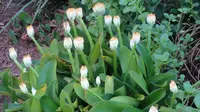
Use wide containers
Choose a shallow, wide pot rather than a deep one so the fern’s creeping rhizomes can spread horizontally and form a fuller, more even frond canopy.

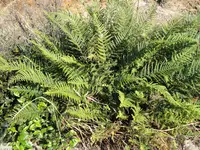
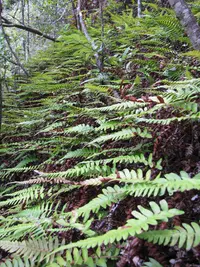
Dixie silverback fern, Pityrogramma calomelanos, is a delicate tropical fern valued for its fine, arching fronds dusted with a silvery or whitish coating underneath. It usually forms low, graceful clumps that give a soft, feathery look to containers, shaded borders, or terrariums.
This species occurs naturally in warm regions of the Americas and often grows on rocky slopes or disturbed ground, which makes it relatively adaptable in cultivation. It prefers bright, filtered light, evenly moist soil, and stable humidity, so those conditions make it easier to care for Dixie silverback fern indoors or in sheltered outdoor spots.

Care Difficulty
Moderate Care

Light Preference
Partial Shade

Water Requirements
Keep Soil Moist

Temperature Preference
Tropical / Frost Sensitive

Hardiness Zone
10–11

Soil Texture
Loamy, Peaty, Organic-rich

Soil pH
Acidic (5.5–6.5), Slightly acidic (6.5–7.0)

Soil Drainage
Moist but well-drained

Fertilization
Light (every 4–6 weeks)
Scan your plant to receive care tips personalized for your specific plant
Available on iOS and Android
This fern prefers bright, filtered light that mimics a lightly shaded forest floor.
This species needs consistently moist but not waterlogged soil to thrive.
This fern grows best in mild, frost-free conditions with stable temperatures.
This fern prefers consistently moist air and responds quickly to low humidity.
This fern needs a loose, moisture-retentive yet fast-draining, organic-rich substrate.
This species adapts well to container culture when moisture control is prioritized.
This fern benefits from light, consistent feeding during its active growing season for steady frond production.
Pruning Pityrogramma calomelanos focuses on hygiene and maintaining a compact, fresh-looking clump.
Container-grown plants appreciate occasional repotting to refresh soil and relieve root congestion.
This fern is most commonly propagated by division, while spore propagation is possible but slower and more technical.
This fern is frost-sensitive and needs protection in regions with cold winters or freezing nights.

Plant Health Check
Not sure what's wrong with your plant? Check your plant's health inside the app.
The fronds are coated with a fine, powdery wax that gives the underside a silvery to whitish appearance, which is why it is commonly called silverback or silver fern. This coating can rub off easily when touched, leaving the green tissue exposed.
This fern is native to tropical regions of the Americas, from Mexico and the Caribbean through Central America into parts of South America, and it has naturalized in other warm regions. Its ability to colonize disturbed soils allows it to appear quickly on roadsides, landslides, and open forest edges.
Some forms show striking contrasts, with pale or silver undersides and greener upper surfaces, and young fronds can emerge with slightly different tones than mature ones. This variability has led to several ornamental selections and contributes to interest in Pityrogramma calomelanos plant care.

In its native range, this fern often behaves as a pioneer species, rapidly establishing on freshly disturbed, nutrient-poor substrates such as volcanic ash or eroded slopes, which helps stabilize soil and create microhabitats for other plants to follow.
This species is generally regarded as non-toxic to cats and dogs, though it is not intended as food. Mild stomach upset is still possible if large amounts are chewed, so discourage regular nibbling.
Keep your plants happy and healthy with plant identification, disease detection, and easy care guidance.