marsh horsetail Care (Equisetum palustre)

marsh horsetail

About marsh horsetail

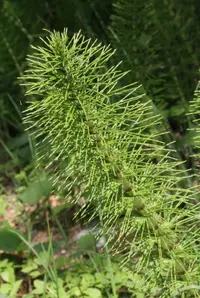
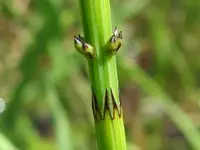
Marsh horsetail, Equisetum palustre, is a primitive, reed-like perennial that spreads by underground rhizomes and forms dense, upright clumps of jointed green stems. It has a distinctly segmented appearance with small, dark teeth at each node instead of true leaves.

This species naturally occurs in marshes, wetlands, pond margins, and other consistently wet soils across cooler regions of Europe, Asia, and parts of North America. It is very persistent and can spread aggressively where moisture and space allow.

For those who want to know how to care for marsh horsetail, it generally prefers full sun to partial shade, saturated soil, and nutrient-poor, slightly acidic to neutral conditions.

Main Plant Requirements

Care Difficulty

Moderate Care

Light Preference

Partial Shade

Water Requirements

Aquatic

Temperature Preference

Cold Hardy

Hardiness Zone

3–8

Soil Texture

Loamy, Silty, Organic-rich

Soil pH

Acidic (5.5–6.5), Slightly acidic (6.5–7.0)

Soil Drainage

Waterlogged tolerant

Fertilization

Minimal (feed rarely)

Get Personalized Care Plan

Scan your plant to receive care tips personalized for your specific plant

Available on iOS and Android

How to Care for the marsh horsetail

This species thrives in consistently bright, moisture-side locations with mild direct sun.

  • Provide 3–6 hours of sun daily, favoring gentle morning sun with light or open shade in the afternoon to prevent stem scorch.
  • It tolerates partial shade, especially in summer, but dense shade reduces vigor and can cause weak, leaning shoots on marsh horsetail.
  • In hot climates, use filtered light or dappled shade from taller plants; in cooler regions, more direct sun supports stronger, denser growth.

Equisetum palustre is a bog plant that prefers saturated, never-dry conditions.

  • Maintain constantly wet soil or mud; in the ground, it can stand with roots submerged and stems in shallow water without harm.
  • If grown where drainage is better, do not let the top 1–2 cm dry; water again as soon as the surface starts to lose its sheen.
  • Brown, crisp tips signal drying; pale, limp stems in foul-smelling, stagnant conditions suggest anaerobic, waterlogged soil lacking oxygen.

This hardy wetland plant tolerates a wide temperature range once established.

  • Optimal growth occurs around 60–77°F (16–25°C), with steady moisture and no rapid drying from hot winds or intense heat.
  • Rhizomes usually survive down to about 5°F (−15°C) under water or saturated soil, though above-ground shoots may die back in winter.
  • Heat above 86°F (30°C) is tolerated if the root zone stays cool and wet; drying combined with heat stresses the plant and weakens new shoots.

This species needs very high humidity and constant moisture to grow well.

  • Aim for 70–100% humidity by keeping the plant in or beside standing water such as a pond edge or water-filled saucer.
  • It tolerates short dry-air spells, but dry soil quickly stresses marsh horsetail and causes browning tips.
  • Crisping stems, fading green color, and slowed growth indicate humidity or moisture stress.
  • Increase humidity by clustering water-filled trays, mini bog planters, or shallow ponds around the plant.

This plant prefers permanently wet, organic-rich soil that mimics a shallow bog.

  • Use a heavy, fine-textured mix such as 2 parts clay or loam garden soil to 1 part compost, kept waterlogged.
  • Allow no drainage in bog containers; stand the pot in a tray or outer pot that remains filled with water.
  • Slightly acidic to neutral soil (pH 5.5–7.0) supports nutrient uptake and stable growth.
  • Avoid sandy, fast-draining, or drying mixes, which prevent stable rhizome anchoring and cause stem dieback in Equisetum palustre.

This species can be grown in containers if the setup allows permanently wet conditions.

  • Choose a deep, wide container to contain the spreading rhizomes and prevent toppling as tall stems develop.
  • Use a solid pot or a watertight cachepot so water can stand above the soil line without escaping quickly.
  • Place the container in a larger tub or half-barrel of water to stabilize moisture and keep the substrate consistently saturated.

This wetland species usually grows well in nutrient-poor substrates, so fertilizing marsh horsetail is rarely necessary.

Pruning Equisetum palustre is mainly done to manage spread and maintain tidy growth in managed ponds or containers.

  • Cut dead, damaged, or heavily weathered stems at the base in late winter or early spring before strong new growth appears.
  • Thin crowded clumps by removing some older stems to maintain air flow and a more upright, less tangled appearance.
  • Use clean, sharp scissors or hand pruners and discard removed stems to limit unwanted spread by small fragments.

Marsh horsetail is more often transplanted in ponds or bog beds than repotted as a houseplant.

  • Transplant when clumps outgrow their space, water flow is blocked, or stems appear congested and weaker than before.
  • Choose early spring or early fall, when temperatures are mild and plants are not under strong heat stress.
  • Lift the rhizome mass gently, keeping roots and attached soil or aquatic substrate as intact as possible.
  • Replant at the same depth in a prepared wet site, water well, and keep consistently saturated to reduce transplant shock.

Equisetum palustre is most reliably propagated by division of rhizomes rather than by spores or seed in home conditions.

  • Divide established clumps in early spring or early fall, when growth is slower and temperatures are moderate.
  • Dig up a section of rhizomes, cutting it into pieces with several healthy growing points and attached roots.
  • Replant divisions into saturated soil or shallow water, keeping rhizomes just below the surface level.
  • Maintain constant moisture and moderate light until new shoots establish and growth becomes steady.

This species is generally cold hardy in temperate climates and needs minimal winter care once established outdoors.

  • Allow above-ground stems to die back naturally after hard frosts; new shoots will emerge from rhizomes in spring.
  • In very cold regions, add a 5–8 cm mulch layer over the root zone in late fall, especially in exposed sites.
  • Move container-grown plants into a cold but frost-free location or sink pots into the ground to insulate roots.

Care Tips

Contain Rhizome Spread

Use a wide, bottomless container sunk into the pond edge or bog bed to 25–30 cm deep to confine the aggressive rhizomes while still allowing the plant constant access to water.

Support Upright Stems

In windy or exposed sites, run discreet horizontal twine or a low wire ring around the clump at mid-height to keep the hollow stems from lodging or snapping, especially in nutrient-rich, fast-growing stands.

Control Size With Thinning

Once or twice a year, pull out whole stems with attached rhizome sections from the clump edges rather than just cutting tops, which both limits spread and maintains better air flow through the stand.

Refresh Water Regularly

In artificial ponds or tubs, partially change water every 2–4 weeks to prevent stagnant, low-oxygen conditions that can promote rot around the submerged rhizomes.

Use Clean Division Tools

When dividing or relocating clumps, cut rhizomes with a sharp, disinfected knife or spade and rinse off old, anaerobic-smelling sludge to reduce disease transfer while growing marsh horsetail in multiple spots.

Common Pests and Diseases

Rust fungi

This disease causes orange to brown powdery pustules on stems and fertile shoots, sometimes leading to distorted growth. Symptoms include weakened segments that yellow and age prematurely.

Solution

Remove and destroy heavily infected stems to reduce spore load, and avoid overhead watering on any emergent foliage in marginal plantings. Improve air movement around the stand if grown in contained ponds, and where allowed, treat surrounding non-aquatic vegetation that may act as a rust reservoir with a labeled fungicide to lower reinfection pressure.

Stem smut

This disease produces dark, sooty streaks or swollen black lesions on stems, especially on dense or nutrient-rich stands. Symptoms include weakened, brittle stems that break or collapse more easily.

Solution

Cut and discard affected stems before they release large amounts of spores, and thin overcrowded clumps to increase light penetration and airflow. Avoid overfertilizing, and if the problem recurs in the same container or pond, remove and replace the substrate and replant with clean, nursery-propagated divisions only.

Marsh snails

These pests rasp tissues on young shoots, leaving ragged edges, shallow pits, and sometimes complete loss of new stems near the waterline. This pest is most problematic in nutrient-rich ponds and slow-moving water where populations build quickly.

Solution

Hand-pick snails during evening or early morning and reduce hiding spots such as thick leaf litter or dense submerged debris. In ornamental ponds, use physical barriers or fine mesh around young clumps, and where compatible with other aquatic life, introduce or encourage natural snail predators like certain fish to keep numbers low as part of broader Equisetum palustre plant care.

Aquatic leafhoppers

These insects feed on above-water segments, causing pale stippling, small white patches, and occasional deformation of young tips. This pest may also excrete honeydew, which can encourage sooty mold on nearby plants.

Solution

Rinse emergent shoots with a firm stream of water to dislodge nymphs and adults, repeating as needed. For persistent infestations, use insecticidal soap or a low-toxicity contact spray labeled for use near water, applied in calm weather and kept away from open water surfaces as much as possible.

Interesting Facts

Specialized wetland niche

Marsh horsetail is strongly associated with nutrient-poor, wet, and often slightly acidic soils, and it is most frequent in fens, marshy meadows, and shallow pond margins where water stands or fluctuates through the growing season.

Naturally toxic to livestock

This species contains alkaloids, including palustrine and palustridiene, that can poison horses and other grazing animals when eaten in significant amounts, which is why it is considered an undesirable plant in wet pastures in some regions.

Clonal colony former

The plant spreads mainly through creeping rhizomes below the soil surface, often forming dense, long-lived clonal patches that can persist in the same wetland area for many years.

Botan icon

Did you know?

Fossil and genetic evidence place marsh horsetail within one of the oldest surviving vascular plant lineages, and its overall jointed, leaf-reduced architecture is recognizably similar to extinct horsetail relatives that were already present in Paleozoic wetlands over 300 million years ago.

FAQs about marsh horsetail

This species spreads strongly through creeping rhizomes and can form dense colonies. In gardens, it often behaves aggressively, so use root barriers, solid containers, or lined bog beds to prevent unwanted spread into surrounding planting areas.

Grow Healthy Plants with Botan Care

Keep your plants happy and healthy with plant identification, disease detection, and easy care guidance.

Botan plant care app — identify plants on mobile

Explore More Plants