Water Salinity Checks
Measure salinity or electrical conductivity of irrigation or pond water a few times per year and keep it in the brackish range, avoiding both fully fresh and highly saline water to prevent root stress and leaf burn.

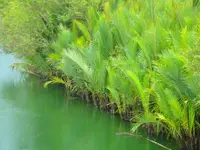
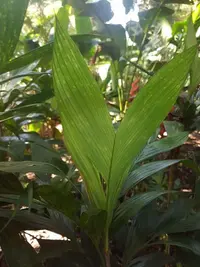
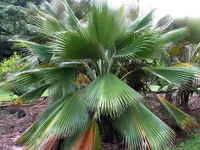
Nipa palm (Nypa fruticans) is a mangrove palm that naturally forms dense colonies along tidal rivers and muddy coastal swamps. It has long, feather-like fronds that emerge from the ground, while the trunk stays mostly underground.
This species is native to Southeast Asia and parts of the tropical Indo-Pacific, where it thrives in brackish, slow-moving water. It is adapted to waterlogged, saline conditions, so it is challenging to grow outside very warm, humid climates.
Gardeners who care for nipa palm need consistently moist, organic-rich soil, high humidity, and protection from cold. It is best suited to specialized collections, conservatories, or managed wetland plantings rather than typical home gardens.

Care Difficulty
Hard Care

Light Preference
Full Sun

Water Requirements
Aquatic

Temperature Preference
Tropical / Frost Sensitive

Hardiness Zone
10–12

Soil Texture
Sandy, Silty, Organic-rich

Soil pH
Acidic (5.5–6.5)

Soil Drainage
Waterlogged tolerant

Fertilization
Minimal (feed rarely)
Scan your plant to receive care tips personalized for your specific plant
Available on iOS and Android
This mangrove palm thrives in warm, bright coastal light with some protection from harsh midday sun.
This species is adapted to tidal, waterlogged conditions and expects constant moisture around its roots.
This palm is strictly tropical and performs best in stable, warm, frost-free climates.
This mangrove palm demands very high humidity to grow well in cultivation.
This species is adapted to permanently wet, organic, coastal mud rather than typical garden soil.
This species is difficult but possible to grow in containers under warm, wet, coastal-style conditions.
In cultivation, nipa palm benefits from light, steady feeding during warm, active growth.
Nypa fruticans needs only light maintenance pruning to keep the clump healthy and accessible.
Transplanting Nypa fruticans is uncommon and should be done carefully, as the species dislikes root disturbance.
Propagation of Nypa fruticans is almost entirely from seed and can be slow and specialized.
This strictly tropical palm has very poor cold tolerance and needs strong winter protection outside frost-free zones.

Plant Health Check
Not sure what's wrong with your plant? Check your plant's health inside the app.
This species forms dense stands of leaves and inflorescences emerging from an underground stem, so it appears trunkless at the surface, unlike most other palms that develop visible above-ground trunks.
It is one of the few palms fully adapted to tidal, muddy estuaries, with roots that tolerate fluctuating salinity and waterlogged, low-oxygen soils typical of mangrove ecosystems.
Its large, fibrous fruit clusters break into buoyant seed units that can float in seawater for long periods, allowing the species to disperse naturally along tropical coasts and colonize new river mouths.

Fossil evidence shows that this species once had a much wider distribution, with Nypa pollen and impressions found in Eocene deposits on continents far outside its current Asian and Pacific range, indicating that it was a prominent component of ancient coastal forests.
Growth is moderate rather than rapid. In warm, consistently wet, brackish conditions, new fronds appear regularly, but forming a substantial clump can still take several years. Cooler temperatures or unstable water levels slow development noticeably.
Keep your plants happy and healthy with plant identification, disease detection, and easy care guidance.