Koolau Range pritchardia Care (Pritchardia martii)

Koolau Range pritchardia

About Koolau Range pritchardia

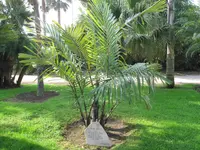
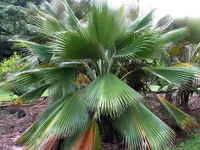
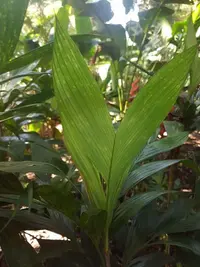
Koolau Range pritchardia (Pritchardia martii) is a rare fan palm native to the windward slopes of the Koʻolau Range on Oʻahu, Hawaii. It typically forms a single, slender trunk topped with a rounded crown of large, pleated, fan-shaped leaves.

In its natural habitat it grows in moist, lowland to mid-elevation forests, often exposed to trade winds. The palm is slow growing and can be sensitive to cold and very dry air, which makes it more suitable for mild, frost-free climates or protected cultivation.

Those who want to care for Koolau Range pritchardia should provide bright light, regular moisture, and freely draining, organic-rich soil to mimic its native conditions as closely as possible.

Main Plant Requirements

Care Difficulty

Hard Care

Light Preference

Full Sun

Water Requirements

Regular Water

Temperature Preference

Tropical / Frost Sensitive

Hardiness Zone

11–12

Soil Texture

Sandy, Loamy, Organic-rich

Soil pH

Slightly acidic (6.5–7.0), Neutral (7.0)

Soil Drainage

Moist but well-drained

Fertilization

Minimal (feed rarely)

Get Personalized Care Plan

Scan your plant to receive care tips personalized for your specific plant

Available on iOS and Android

How to Care for the Koolau Range pritchardia

This palm prefers bright, warm conditions similar to its native Hawaiian range.

  • Provide 4–6 hours of direct morning sun with bright, filtered light the rest of the day, especially for young Koolau Range pritchardia plants.
  • Allow light partial shade in hot climates, particularly from harsh afternoon sun, to reduce leaf scorch and tip burn.
  • In summer, monitor for yellowing or crispy leaves as signs of too much sun, and in winter ensure at least 6 hours of strong, unshaded light to maintain healthy growth.

This species prefers evenly moist but not saturated soil around its root zone.

  • Water when the top 3–5 cm of soil feels dry, applying enough water to moisten the root area without leaving standing water.
  • During warm growing seasons, expect faster drying and watch for faintly drooping or folding leaf tips as a sign that Pritchardia martii needs water.
  • In cooler months, allow slightly deeper drying, and reduce volume if new spear leaves look soft, the base feels mushy, or there is a sour smell, which suggests overwatering.

This palm thrives in consistently warm, tropical to subtropical conditions.

  • Aim for 70–85°F (21–29°C) for active growth, with stable warmth and protection from sudden temperature swings.
  • Protect plants if temperatures approach 40–45°F (4–7°C); brief dips may be tolerated, but frost can permanently damage fronds and growing points.
  • In hot spells above 90°F (32°C), provide extra shade and soil moisture, as prolonged extreme heat with dry wind can scorch leaves and stress the plant.

This palm prefers moderately humid air and reacts if conditions are too dry.

  • Aim for 50–70% humidity, as Koolau Range pritchardia comes from moist coastal valley habitats.
  • Leaf tips browning, folded leaflets, and slowed new growth indicate humidity stress rather than underwatering.
  • Increase humidity outdoors with sheltered planting near other vegetation, and indoors by grouping plants, using a tray with wet pebbles, or running a small humidifier nearby.

This species needs a loose, fast-draining yet moisture-retentive mix to avoid root problems.

  • Use a sandy loam rich in organic matter, combining roughly 40% coarse sand, 40% composted bark or compost, and 20% perlite.
  • Ensure sharp drainage so water drains through in seconds, preventing waterlogging that can cause root rot in Pritchardia martii.
  • Keep pH slightly acidic to neutral, around 6.0–7.0, which supports nutrient uptake without causing micronutrient lockout.
  • Improve aeration by avoiding fine peat-heavy mixes, and never plant in compacted clay or areas where water stands after rain.

This palm can be grown in containers for many years, especially in its juvenile stages.

  • Choose a tall, heavy pot that lowers the center of gravity and resists tipping as the palm becomes top-heavy.
  • Select a container material that matches your climate, such as thick-walled clay to prevent overheating and rapid drying in hot sun.
  • Fill the bottom third with a lighter but still drained mix so deeper roots have air pockets rather than a dense, soggy layer.

This palm benefits from light, consistent feeding during the warm growing season, especially in containers.

  • Use a balanced slow-release palm or general fertilizer (around 10-10-10) or well-aged compost mixed into the soil surface.
  • Apply every 8–10 weeks in spring and summer; reduce to 1 very light feeding in fall if growth continues.
  • Dilute liquid feeds to 1/2–1/4 strength to avoid root burn, especially for young Koolau Range pritchardia plants.
  • Water thoroughly after applying fertilizer so nutrients move into the root zone and salts do not accumulate.

Pruning Pritchardia martii is minimal and mainly focused on safety and appearance rather than shaping.

  • Best time is late winter to early spring, before strong new growth starts.
  • Remove only dead, yellowing, storm-damaged, or hanging fronds, cutting them close to the trunk without nicking living tissue.
  • Use clean, sharp bypass loppers or a pruning saw; disinfect blades between plants to limit disease spread.
  • Avoid removing green fronds, since over-pruning weakens the palm and reduces its natural, symmetrical crown form.

This species is usually grown in the ground, but young plants in containers or nursery stock transplant best when handled gently.

  • Look for roots circling the pot drainage holes, soil drying very fast, or noticeably slowed growth as cues to move up 1 container size.
  • Transplant or shift containers in late spring to early summer when soil is warm and active root growth supports recovery.
  • In the new site or pot, use a deep, free-draining mix and set the root flare at the same depth to avoid trunk rot.
  • Keep the root ball intact, water deeply after planting, and provide shade cloth or wind protection for 2–3 weeks to limit transplant shock.

This palm is almost always raised from seed, and propagation is slow but straightforward under stable warm conditions.

  • Collect fresh, fully ripe seeds from mature Pritchardia martii fruits for the highest viability.
  • Sow in spring or early summer in a sterile, well-drained mix kept at 75–85°F with consistently moist, not waterlogged, conditions.
  • Clean pulp from seeds, then soak 24 hours to improve water uptake before sowing 1–2 cm deep.
  • Provide bright, indirect light and patience; germination may take several months, and seedlings need steady warmth and protection from drying out.

This tropical palm is frost-sensitive and demands careful winter management outside warm climates.

  • In ground, it suits USDA zones roughly 10–11; even brief frost can damage foliage and young trunks.
  • Apply a 5–8 cm mulch layer around the root zone, keeping it off the trunk, to buffer soil temperature swings.
  • Wrap young stems with breathable frost cloth during cold nights and remove coverings once temperatures rise.
  • Move container plants indoors or into a heated greenhouse before temperatures drop below 45–50°F, ensuring bright light and reduced watering.

Care Tips

Wind-hardening outdoors

If moving this palm from a protected spot or container to a windier location, gradually expose it to stronger wind over 2–3 weeks to reduce leaflet tearing and trunk wobble.

Early trunk support

Install a sturdy stake on the windward side of young plants and secure the trunk loosely with soft ties, checking every few months and loosening as the trunk thickens to avoid girdling.

Clean frond management

Remove only completely brown, dry fronds and cut them 2–3 cm from the trunk with clean, sharp tools to lower pest harboring without stressing the crown.

Salt and spray tolerance

In coastal sites, hose off foliage with fresh water every 2–4 weeks to reduce salt buildup on leaves and soil surface, which helps maintain healthy photosynthesis and root function.

Mulch for root zone

Maintain a 5–8 cm layer of coarse organic mulch out to the drip line, keeping it 5–10 cm away from the trunk base, to buffer root temperature and moisture while reducing weed competition when caring for Koolau Range pritchardia.

Common Pests and Diseases

Palm leaf scale

This pest forms small, hard, shell-like bumps on fronds and petioles, often causing pale spots and a general decline in vigor. Heavy infestations can lead to yellowing and premature leaf drop.

Solution

Physically remove scales and honeydew with a soft cloth or sponge dipped in mild soapy water, then rinse thoroughly. For persistent infestations on Pritchardia martii, apply a targeted horticultural oil or insecticidal soap to all leaf surfaces at 7–14 day intervals, ensuring good coverage of leaf bases and undersides while the plant is shaded and temperatures are below 85°F.

Mealybugs

These insects appear as white, cottony clusters in leaf bases and on the undersides of fronds, feeding on sap and weakening the palm. Symptoms include sticky honeydew and sooty mold growth on leaves and surrounding surfaces.

Solution

Isolate affected plants, then dab visible mealybugs with cotton swabs dipped in isopropyl alcohol and wipe leaf bases thoroughly. Follow with repeated treatments using insecticidal soap or horticultural oil, focusing on tight leaf bases and the crown where mealybugs tend to hide, and improve airflow around the plant to reduce reinfestation risk.

Pink disease

This disease, caused by the fungus Erythricium salmonicolor, produces pink to whitish crusts on stems, petioles, and occasionally leaf bases, leading to dieback of affected tissues. Symptoms include canker-like lesions and sudden collapse of fronds above the infected area.

Solution

Prune and dispose of all affected fronds and petiole sections well below visible symptoms, using sterilized tools and avoiding contact with healthy tissue. Improve air circulation, reduce overhead watering in dense plantings, and, in high-value landscape or collection specimens, consult local extension services about registered systemic fungicides suitable for palms.

Fusarium leaf blight

This disease causes necrotic, often wedge-shaped lesions that start along leaf margins or tips of older fronds and progress toward the midrib, sometimes affecting one side of the leaf more severely. Symptoms include tan to brown dead patches with darker borders, leading to a scorched appearance in stressed palms.

Solution

Remove and destroy affected fronds as soon as lesions are observed, cutting them off with sanitized tools to reduce spore spread. Maintain moderate, even soil moisture, avoid overhead irrigation wetting the canopy for long periods, and apply a palm-appropriate systemic fungicide if the disease continues to progress, especially in landscape plantings of P. martii in warm, humid regions.

Spider mites

These pests are tiny and often hard to see, but they cause fine stippling, a dusty look on fronds, and very fine webbing, especially on indoor or sheltered plants. Symptoms include dull, gray-green foliage and increased susceptibility to leaf scorch under strong light.

Solution

Increase humidity around the palm and regularly hose down both sides of the fronds with a firm but gentle stream of water to dislodge mites. For ongoing problems, use insecticidal soap or a miticide labeled for palms, applying thoroughly to the undersides of leaves and repeating weekly until new fronds emerge clean, which supports effective Koolau Range pritchardia indoor care.

Interesting Facts

Endemic valley specialist

This palm is naturally restricted to a single valley system in the Koʻolau Range on Oʻahu, Hawaiʻi, where it grows on steep, moist slopes and valley walls rather than in lowland coastal habitats typical of many other Pritchardia species.

Large flat leaf blades

Its fan-shaped leaves are unusually broad and relatively flat with only shallow division, giving the crown a dense, rounded appearance that differs from the more deeply split and drooping leaves of several closely related Hawaiian Pritchardia species.

Heavy, clustered fruiting

The tree develops multiple pendent inflorescences carrying dense clusters of rounded, dark fruits that provide important food resources for native birds when available, although much of this ecological role has been reduced as these birds have declined.

Botan icon

Did you know?

This species is considered critically endangered in the wild, with only a very small number of naturally occurring individuals remaining in its native Oʻahu habitat, so most plants seen today come from conservation-driven propagation rather than wild populations.

FAQs about Koolau Range pritchardia

Growth is moderate for a palm. In warm, suitable conditions it may add about 15–30 cm of trunk height per year, slower when young or container-grown, and faster once well established in the ground.

Grow Healthy Plants with Botan Care

Keep your plants happy and healthy with plant identification, disease detection, and easy care guidance.

Botan plant care app — identify plants on mobile

Explore More Plants