
betel palm Care (Areca catechu)

Also known as: Areca Palm, Betel Nut Palm
betel palm

About betel palm

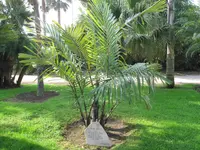
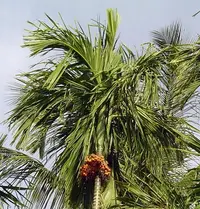
Betel palm, Areca catechu, is a slender, single-trunk palm commonly grown in tropical and subtropical landscapes. It forms a smooth gray stem topped with an elegant crown of arching, feather-like fronds.

In nature it occurs across South and Southeast Asia and parts of the Pacific, often in warm, humid coastal or lowland areas. In suitable climates it grows upright and relatively fast, eventually forming a tall, columnar accent.

This palm prefers bright light, consistent warmth, and evenly moist, well-drained soil, which makes outdoor cultivation easier in frost-free regions. Indoors it can be more challenging, so understanding how to care for betel palm helps keep it healthy over time.

Main Plant Requirements

Care Difficulty

Moderate Care

Light Preference

Partial Sun

Water Requirements

Regular Water

Temperature Preference

Tropical / Frost Sensitive

Hardiness Zone

11–12

Soil Texture

Sandy, Loamy, Organic-rich

Soil pH

Acidic (5.5–6.5), Slightly acidic (6.5–7.0)

Soil Drainage

Moist but well-drained

Fertilization

Light (every 4–6 weeks)

Get Personalized Care Plan

Scan your plant to receive care tips personalized for your specific plant

Available on iOS and Android

How to Care for the betel palm

Areca catechu prefers bright, filtered light similar to high, broken canopy shade in the tropics.

  • Provide 4–6 hours of bright, indirect light daily; morning sun with light afternoon shade suits young betel palm best.
  • Tolerates partial shade, but in too little light fronds stretch, become thin, and lose rich green color.
  • In hot summers, protect from harsh midday sun to prevent leaf scorch, especially on new fronds, and adjust placement seasonally as sun angle changes.

Areca catechu prefers evenly moist but never waterlogged soil.

  • Water when the top 3–5 cm of soil feel dry, then wet the root zone thoroughly and let excess drain away.
  • In warm, active growth, expect more frequent watering; in cooler seasons reduce frequency, allowing slightly deeper drying between waterings.
  • Yellowing lower fronds and soft, foul-smelling roots suggest overwatering, while crisp leaflet tips and folding fronds indicate underwatering or prolonged drought.

This palm thrives in consistently warm, frost-free conditions.

  • Ideal growth occurs at 70–88°F (21–31°C), with steady warmth and high humidity supporting strong frond and trunk development.
  • Avoid temperatures below 55°F (13°C); brief dips to 45–50°F (7–10°C) may be survived but can slow growth and damage foliage.
  • The plant tolerates short heat waves up to about 100°F (38°C) if soil moisture and humidity are adequate, but it is highly sensitive to frost.

This palm benefits from moderately high, stable humidity indoors and outdoors.

  • Aim for 50–70% humidity; use a hygrometer to track levels in drier homes.
  • Tolerates short periods near 40%, but tips brown and fronds crisp if air stays very dry.
  • Increase humidity with a pebble tray under the pot or a nearby room humidifier rather than frequent misting.

Areca catechu prefers loose, aerated, evenly moist but free-draining soil.

  • Use a mix of 40% peat or coco coir, 40% composted bark-based potting mix, and 20% perlite or coarse sand for structure and drainage.
  • Aim for slightly acidic to neutral pH around 6.0–7.0 to support nutrient uptake and root activity.
  • Ensure the mix feels springy, not compacted; chunky particles maintain air pockets that prevent root suffocation.
  • Avoid heavy clay, waterlogged spots, or pure sand, which either hold water too long or dry and leach nutrients too quickly.

This species is suitable for container growing when the pot is chosen to support its tall, clumping form.

  • Select a wide, heavy container that resists tipping as the palm gains height and canopy mass.
  • Choose a pot material with moderate porosity, such as thick-walled terracotta, to balance moisture loss and root cooling.
  • Leave several centimeters between the root ball and pot wall to buffer moisture swings in warm, bright locations.

Areca catechu benefits from moderate, consistent feeding during active growth for steady, healthy foliage.

  • Use a balanced liquid fertilizer (for example 10-10-10) at half strength every 4–6 weeks in spring and summer.
  • Alternatively, apply a slow-release palm or houseplant fertilizer at label rate at the start of the growing season.
  • Reduce or stop feeding in fall and winter when growth slows to prevent salt buildup and weak, lanky growth.
  • In containers, flush the soil with plain water every few months to remove excess fertilizer salts from the betel palm root zone.

Areca catechu needs light, corrective pruning rather than shaping cuts.

  • Best time for pruning is late winter to early spring, before strong new growth begins.
  • Remove only dead, brown, or badly damaged fronds at the base, leaving all healthy green leaves intact.
  • Cut off dry flower stalks and fruit clusters to keep the crown tidy and reduce pest attraction.
  • Use clean, sharp pruners or a small saw, making smooth cuts without tearing the fibrous leaf bases.

This palm prefers stable conditions, so repot or transplant Areca catechu only when clear signs of crowding appear.

  • Look for roots circling the pot, pushing through drainage holes, or noticeably slower growth as signals to move up.
  • Plan repotting or transplanting for late spring to early summer, when warmth supports root recovery.
  • In containers, shift to a pot only 1–2 in wider every 2–3 years, using a free-draining, slightly sandy mix.
  • Handle the root ball gently, keep roots shaded and moist, then water thoroughly and keep out of harsh sun for 1–2 weeks to reduce stress.

Areca catechu is usually propagated from seed, which requires warmth, time, and consistent moisture.

  • Sow fresh, cleaned seeds in late spring or early summer for faster germination.
  • Use a sterile, very well-drained mix such as sand and peat or coco coir in small pots or trays.
  • Maintain 77–86°F bottom warmth, high humidity, and bright, indirect light; germination can take several months.
  • Keep the medium evenly moist but never waterlogged, and transplant seedlings gently once roots hold the mix together.

Areca catechu is tropical and requires careful winter protection in climates cooler than USDA zone 11.

  • Avoid any frost exposure; leaf and bud damage can occur near 32°F and below.
  • Mulch the root zone 5–8 cm deep with bark or compost in mild-winter areas to buffer soil temperatures.
  • For container plants, move indoors or into a heated greenhouse before nights drop below 50°F.
  • Indoors, provide bright light, avoid drafts, and water less often while keeping the root ball slightly moist.

Care Tips

Root-zone mulching

Apply a 3–5 cm layer of sterile, fine bark or coconut husk chips over the root zone to keep the substrate evenly moist, protect surface roots, and reduce compaction without smothering the palm base.

Controlled pot sizing

Step up to the next pot size only when roots circle the bottom firmly, as slightly tight quarters help stabilize the palm and reduce waterlogging risk in container culture.

Stake for verticality

Use 2–3 slim bamboo stakes and soft ties to keep young stems upright and evenly spaced, checking and loosening ties every few months to avoid constriction as the trunks thicken.

Salt buildup management

Every 2–3 months, flush the container thoroughly with low-salinity water until it drains freely to prevent fertilizer salts from accumulating and burning sensitive roots and leaf tips.

Preventive pest scouting

Inspect leaf undersides, leaflet bases, and where fronds join the stem every 1–2 weeks for scale, mealybugs, and spider mites, so any small infestation can be treated early with a targeted, palm-safe product when caring for betel palm.

Common Pests and Diseases

Red palm mite

This pest feeds on the underside of fronds, causing yellow speckling that can merge into bronzing and premature leaf drop.

Solution

Rinse fronds thoroughly with a strong but controlled stream of water, then apply a horticultural oil or insecticidal soap to both leaf surfaces every 7–10 days until new growth appears clean; in warm climates, reduce heat and dust and avoid water stress to discourage outbreaks.

Coconut scale

This pest appears as small, fixed bumps on fronds and petioles, sucking sap and leading to yellowing, thinning canopies, and reduced vigor.

Solution

Manually remove heavily encrusted fronds, gently scrape or wipe remaining scales with a cloth dipped in diluted alcohol, then follow with repeated applications of horticultural oil focusing on leaf bases and midribs, while monitoring ants that may protect the scales and controlling them if present.

Bud rot

This disease attacks the central growing point, with symptoms including collapse or yellowing of the spear leaf, foul odor, and death of the crown if not controlled early.

Solution

Remove and discard the affected spear and any soft, rotting tissue, improve drainage and avoid overhead watering on the crown, then treat the bud area with an appropriate copper-based fungicide, ensuring future irrigation keeps the crown dry as much as possible.

Leaf spot

This disease causes small water-soaked lesions on leaflets that expand into brown or gray spots, sometimes with darker margins, leading to reduced photosynthesis and cosmetic damage.

Solution

Prune and dispose of badly spotted fronds, increase spacing and airflow, water at soil level rather than on foliage, and apply a labeled fungicide containing chlorothalonil or copper on new and lightly affected leaves during warm, humid periods.

Ganoderma butt rot

This disease affects the lower trunk, causing internal decay, thinning canopy, wilting, and often the appearance of hard, shelf-like fungal brackets at the base.

Solution

Remove and destroy infected palms including as much of the stump and major roots as possible, avoid wounding the trunk, and do not replant palms in the same spot for several years; there is no reliable curative treatment, so prevention and site selection are the main Areca catechu care instructions related to this pathogen.

Interesting Facts

Specialized for lowland tropics

Areca catechu naturally occurs in warm, humid lowland forests from India and Bangladesh through Southeast Asia to the western Pacific, and it does not occur as a true native in Africa or the Americas despite being widely planted there.

True single-stem palm

Unlike clustering ornamental arecas, this species usually grows as a solitary, unbranched trunk that can reach around 15–20 m, occasionally more, with a smooth, ringed surface formed by old leaf scars.

Chemically distinct seeds

The seeds, commonly called betel nuts, contain well-studied alkaloids such as arecoline that stimulate the nervous system and have been linked in epidemiological studies to an increased risk of oral cancers when chewed with tobacco and slaked lime.

Botan icon

Did you know?

Archaeological and historical evidence indicates that betel nut chewing with Piper betle leaves has been an established cultural practice in parts of South and Southeast Asia for at least several millennia, making this palm one of the longest continuously used psychoactive plant species in human society.

FAQs about betel palm

Brown leaf tips usually come from low humidity, salt buildup from fertilizer, or inconsistent watering. Improve air moisture, flush the potting mix occasionally, and keep watering even. Strong sun or dry indoor heat can worsen browning.

Grow Healthy Plants with Botan Care

Keep your plants happy and healthy with plant identification, disease detection, and easy care guidance.

Botan plant care app — identify plants on mobile

Explore More Plants