Wind acclimation
In the first 1–2 years after planting, use temporary windbreaks such as shade cloth or fencing and gradually remove them so the palm can adapt to coastal or exposed winds without trunk snap or spear damage.

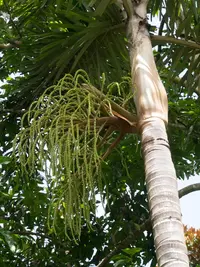
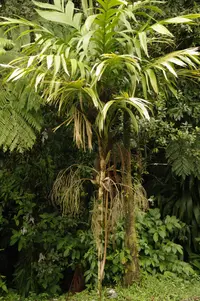
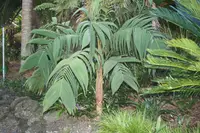
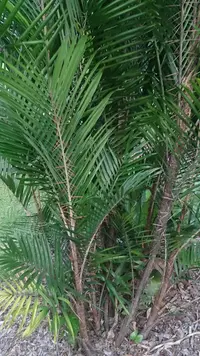
Black palm, Normanbya normanbyi, is a single-trunk palm tree native to the tropical rainforests of northeastern Australia. It forms a slender, ringed trunk topped with a symmetrical crown of feathery, arching fronds. In the landscape it can reach tree size, but in containers it stays smaller and develops slowly. Its tidy form and glossy foliage make it popular for warm-climate gardens and, in large bright spaces, as a statement container specimen. The species prefers warm, frost-free conditions, steady moisture, and well-drained, organic-rich soil, which influences how to care for Black palm in cultivation.

Care Difficulty
Hard Care

Light Preference
Full Sun

Water Requirements
Regular Water

Temperature Preference
Tropical / Frost Sensitive

Hardiness Zone
11–12

Soil Texture
Sandy, Loamy, Organic-rich

Soil pH
Acidic (5.5–6.5), Slightly acidic (6.5–7.0)

Soil Drainage
Moist but well-drained

Fertilization
Light (every 4–6 weeks)
Scan your plant to receive care tips personalized for your specific plant
Available on iOS and Android
This tropical palm prefers bright, gentle light that mimics a high-canopy rainforest edge.
This palm needs steadily moist but not saturated soil, especially during warm, active growth.
This species is a true lowland tropical palm that thrives in consistently warm conditions.
This palm prefers consistently moist air and benefits from elevated humidity in cultivation.
Normanbya normanbyi grows best in deep, moist yet sharply draining, organic-rich substrate.
This species can be grown in large containers when young, provided the pot is deep, stable, and very well drained.
This palm benefits from modest, steady feeding rather than heavy fertilization, especially in containers.
Normanbya normanbyi needs only light, health-focused pruning to stay tidy and safe.
This palm is usually landscape-grown, so focus on careful transplanting of young specimens rather than frequent repotting.
Reproduction of Normanbya normanbyi is usually done from seed and is slow but reliable under warm, stable conditions.
This tropical palm is highly frost-sensitive and needs structured winter care in most non-tropical climates.

Plant Health Check
Not sure what's wrong with your plant? Check your plant's health inside the app.
This palm is naturally restricted to lowland and foothill rainforests of northeastern Queensland, usually below about 600 m, where it grows along humid, sheltered valleys and creek lines.
The species is endemic to Australia and is listed as Near Threatened in Queensland due to habitat loss and fragmentation from land clearing in its limited coastal range.
Its large, fibrous fruits are eaten and dispersed by the southern cassowary, a big flightless bird that plays a key role in moving the palm’s seeds through the rainforest.

The glossy black color of its mature trunk is unusual among rainforest palms and is caused by persistent, densely packed leaf bases that weather and darken over time, giving rise to the common name black palm.
Growth is moderate under warm, humid, frost-free conditions. In landscape settings it often adds 30–60 cm of trunk per year, needing 10–20 years to develop a tall, clean trunk and full crown.
Keep your plants happy and healthy with plant identification, disease detection, and easy care guidance.