Sturdy Pot Choice
Use a tall, heavy, straight-sided pot to counteract the palm’s narrow root system and prevent toppling as the slender stem elongates, especially in higher indoor light.

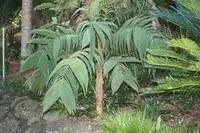
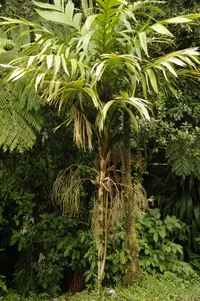
Geonoma undata, commonly called undulate shadowplant, is a small understory palm native to humid tropical forests of Central and South America. It usually forms slender, solitary stems with gracefully arching, narrow leaflets. The foliage often shows a softly rippled or undulating texture, which gives the plant a refined, delicate look, even though it is fairly sturdy when kept in stable conditions. In nature it grows in deep shade with constant moisture and warm, still air, so it adapts best to sheltered indoor or greenhouse spaces. It is moderately demanding, as it dislikes dry air, cold drafts, and irregular watering, but it rewards patient growers with a calm, elegant presence. Understanding how to care for Undulate Shadowplant helps prevent stress and leaf damage.

Care Difficulty
Hard Care

Light Preference
Partial Shade

Water Requirements
Keep Soil Moist

Temperature Preference
Tropical / Frost Sensitive

Hardiness Zone
11–12

Soil Texture
Loamy, Peaty, Organic-rich

Soil pH
Acidic (5.5–6.5)

Soil Drainage
Moist but well-drained

Fertilization
Light (every 4–6 weeks)
Scan your plant to receive care tips personalized for your specific plant
Available on iOS and Android
This shade-loving palm prefers soft, filtered light that mimics the forest understory.
This species prefers consistently moist but not waterlogged soil.
This palm thrives in warm, stable temperatures with no exposure to frost.
This species prefers consistently high humidity to mimic its cloud forest habitat.
Geonoma undata thrives in moist, airy, organic-rich soil that drains freely but never dries out completely.
This palm is suitable for container growing if the pot supports steady moisture and root stability.
Geonoma undata benefits from light, consistent feeding during the warm growing season when kept as a container palm.
Pruning needs are minimal for Geonoma undata and focus on cleanliness rather than shaping.
Container-grown Geonoma undata prefers stable conditions, so repotting should be infrequent and gentle.
This palm is usually produced from seed, and home propagation of Geonoma undata is slow and somewhat specialized.
This species is not frost-hardy and needs careful winter management in temperate climates, especially in containers.

Plant Health Check
Not sure what's wrong with your plant? Check your plant's health inside the app.
This species naturally occurs in cool, humid montane forests from roughly 1,000 m upward in the Andes and Central American highlands, which is unusual for palms that typically favor lowland tropical heat.
In some populations, plants shift from more divided juvenile leaves to less divided or differently shaped adult leaves, a pattern known as leaf dimorphism that likely reflects adaptation to changing light and moisture with height.
Geonoma undata is a slow-growing understory palm that tolerates very low light, forming part of the dense herb and shrub layer beneath cloud forest canopies and contributing to long-term forest structure and leaf‑litter production.

This species belongs to a highly diverse Andean radiation of Geonoma palms, and its many described forms and varieties have made it a reference taxon in studies of how mountain uplift and cloud forest fragmentation drive palm speciation.
Brown tips or edges usually result from low humidity, inconsistent watering, or excess fertilizer salts. Increase ambient humidity, water evenly, flush the pot occasionally, and avoid letting the root zone dry completely or stay waterlogged.
Keep your plants happy and healthy with plant identification, disease detection, and easy care guidance.