Use airy supports
If leaves or petioles start to flop, insert slim bamboo stakes into the pot and loosely tie petioles with soft garden tape so the plant can hold leaves more upright without damaging the tissues.

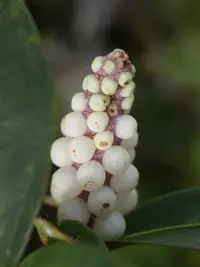
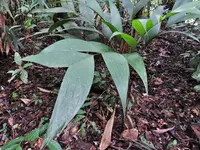
Anthurium obtusum is a tropical aroid grown mainly for its striking foliage rather than showy flowers. It typically forms a compact clump with thick, often slightly leathery leaves. The leaves are usually oval to oblong with a blunt tip, giving the species its name.
In the wild it grows as an epiphyte or lithophyte in humid forests of Central and South America, often on trees or rocks. It prefers warm, stable conditions, moderate indirect light, and evenly moist but airy substrate. These traits make how to care for Anthurium obtusum moderately easy for growers who can provide steady humidity and avoid overwatering.

Care Difficulty
Moderate Care

Light Preference
Bright Indirect Light

Water Requirements
Keep Soil Moist

Temperature Preference
Tropical / Frost Sensitive

Hardiness Zone
11–12

Soil Texture
Loamy, Peaty, Organic-rich

Soil pH
Acidic (5.5–6.5)

Soil Drainage
Moist but well-drained

Fertilization
Light (every 4–6 weeks)
Scan your plant to receive care tips personalized for your specific plant
Available on iOS and Android
This species prefers bright, filtered light similar to a shaded forest understory.
Watering should keep the root zone evenly moist but never saturated.
Stable, warm conditions support steady growth and reduce stress.
This species benefits from elevated humidity to maintain healthy leaves and roots.
This aroid prefers a very airy, organic, fast-draining substrate rather than dense potting soil.
This species grows well in containers when the pot supports its moisture needs and root structure.
This species benefits from modest, consistent feeding during active growth.
Pruning is mainly hygienic and shaping, not heavy cutting back.
This plant prefers occasional repotting into a loose, airy mix rather than frequent disturbance.
Propagation is usually done vegetatively to preserve desirable traits.
This tropical species is sensitive to frost and needs mild, stable winter conditions.

Plant Health Check
Not sure what's wrong with your plant? Check your plant's health inside the app.
This species occurs in humid lowland to premontane forests in Costa Rica and western Panama, often in foothill zones below many better-known highland anthuriums, which makes it adapted to warm, moist, but not extremely cool habitats.
It typically grows as an epiphyte on tree trunks and branches rather than in soil on the forest floor, anchoring its roots in bark and organic debris while taking advantage of higher light and airflow in the canopy.
The specific epithet obtusum refers to its characteristically blunt or rounded leaf tips, a leaf-shape feature used by botanists to distinguish it from related Central American species with more pointed foliage.
This species usually performs best indoors or in sheltered, shaded outdoor spaces in warm climates. It dislikes direct sun, cold drafts, and low humidity. Stable indoor conditions often make Anthurium obtusum indoor care more predictable and successful.
Keep your plants happy and healthy with plant identification, disease detection, and easy care guidance.