Mounted culture setup
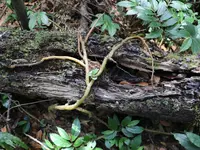
Mount the plant on cork, tree fern, or hardwood and wrap the roots in a thin layer of long-fiber sphagnum to mimic its natural epiphytic habit and improve air flow around the root system.

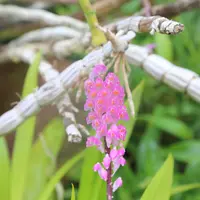
Toothbrush orchid (Dendrobium secundum) is a small to medium epiphytic orchid that usually grows on tree trunks or rocky surfaces in tropical Southeast Asia. It forms tight clumps of upright, cane-like stems lined on one side with many small flowers, giving the look of a toothbrush. Blossoms are typically pink to orange and appear in dense clusters, often after a drier rest period. This species prefers bright light, good air movement, and quick-drying, airy media such as bark or mounted culture. Its need for seasonal changes in moisture and light makes how to care for Toothbrush orchid slightly more advanced than for some beginner orchids, but still manageable with attention.

Care Difficulty
Moderate Care

Light Preference
Partial Sun

Water Requirements
Moderate Water

Temperature Preference
Tropical / Frost Sensitive

Hardiness Zone
11–12

Soil Texture
Sandy, Rocky, Organic-rich

Soil pH
Acidic (5.5–6.5)

Soil Drainage
Well-drained

Fertilization
Moderate (every 2–4 weeks)
Scan your plant to receive care tips personalized for your specific plant
Available on iOS and Android
This species prefers bright, filtered light similar to high tree branches in the tropics.
This epiphytic orchid prefers moist-drying cycles rather than constantly wet roots.
This orchid grows best in warm conditions with a slight day–night temperature difference.
This species prefers moderately high humidity but adapts to typical home levels if air movement is good.
This orchid grows best in a very airy, fast-draining epiphytic mix rather than regular potting soil.
Dendrobium secundum is well suited to container growing when the pot supports its upright canes and fast drainage.
This epiphytic orchid benefits from light, consistent feeding during active growth for balanced flowering and cane development.
Pruning Dendrobium secundum is minimal and focuses on health, space, and safe handling.
This orchid prefers slightly tight conditions but needs timely repotting to keep roots healthy and medium fresh.
This species is usually propagated vegetatively, with keikis and division favored over seed due to complexity of orchid germination.
Dendrobium secundum is not frost hardy and requires a warm, sheltered environment in winter, especially in temperate climates.

Plant Health Check
Not sure what's wrong with your plant? Check your plant's health inside the app.
This orchid forms very dense, one-sided clusters of small pink to orange flowers along the upper side of the stem, strongly resembling the bristles of a toothbrush, which inspired its common name.
The plant develops slender, cane-like pseudobulbs that act as storage organs, allowing it to withstand distinct dry periods in its native seasonal tropical habitats.
It occurs naturally across lowland to mid-elevation forests in Thailand, Laos, Vietnam, Peninsular Malaysia, and parts of Indonesia, often growing as an epiphyte on tree trunks exposed to bright light.

In its native range, this species often flowers most heavily on leafless, mature canes after a drier rest period, so in cultivation many growers deliberately reduce watering to trigger a concentrated, toothbrush-like flush of blooms, a key point in Dendrobium secundum care.
Lack of blooms usually comes from insufficient light, no distinct cool-dry rest, or overfeeding with high-nitrogen fertilizer. Provide bright light, a slight winter temperature drop, reduced watering, and a bloom-boosting fertilizer to encourage flowering.
Keep your plants happy and healthy with plant identification, disease detection, and easy care guidance.