


Offset management
Remove and replant offsets only when they have at least 4–5 firm leaves and visible roots, and allow the offset base to dry for 2–3 days before potting to reduce rot risk.

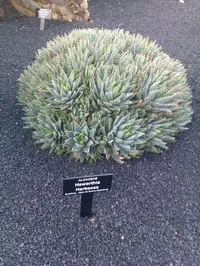
Leafy haworthia (Haworthia herbacea) is a small, rosette-forming succulent known for its thick, fleshy leaves often marked with translucent streaks or pale bands. It stays compact, which makes it suitable for windowsills, desks, and small indoor spaces.
This species is native to arid regions of South Africa, where it grows in rocky, well-drained soils and often receives bright light filtered through shrubs or grasses. Its slow growth, drought tolerance, and ability to handle typical indoor humidity make it relatively simple to care for Leafy Haworthia.
It generally prefers bright, indirect light, infrequent but thorough watering, and a gritty, fast-draining soil mix that prevents excess moisture around the roots.

Care Difficulty
Easy Care

Light Preference
Bright Indirect Light

Water Requirements
Low Water

Temperature Preference
Tropical / Frost Sensitive

Hardiness Zone
10–11

Soil Texture
Sandy, Loamy, Rocky

Soil pH
Acidic (5.5–6.5), Slightly acidic (6.5–7.0)

Soil Drainage
Well-drained

Fertilization
Minimal (feed rarely)
Scan your plant to receive care tips personalized for your specific plant
Available on iOS and Android
Haworthia herbacea prefers bright, indirect light that mimics the dappled sun of its natural habitat.
Haworthia herbacea stores water in its leaves and needs thorough but infrequent watering.
This species prefers moderate, stable temperatures and does not tolerate frost.
This species handles typical indoor humidity well and rarely needs adjustment.
Haworthia herbacea needs a very fast-draining, mineral-rich substrate to prevent root rot.
This compact succulent is very suitable for container growing.
This succulent needs only modest feeding, so focus on light, infrequent applications during active growth when caring for Leafy Haworthia.
Haworthia herbacea needs minimal pruning, mainly for cleanliness and to maintain a compact rosette.
This compact succulent prefers slightly tight quarters, so repot only when clear signs show the container is too small.
This species is most commonly propagated from offsets, which form naturally around the base of the mother plant.
This succulent is not reliably frost hardy and benefits from thoughtful winter management in cooler climates.

Plant Health Check
Not sure what's wrong with your plant? Check your plant's health inside the app.
This species is naturally restricted to quartz gravel and quartzite outcrops in South Africa’s Western Cape, where its mottled leaves blend closely with the pale stones and soil surface.
Wild populations show striking variation in leaf markings and translucency, with some plants having dense pale spotting and windowed tips while others are darker green with fewer, finer markings.
In its native Mediterranean-type climate, it grows mainly during the cooler, wetter winter months and slows or partially rests in the hot, dry summer, a cycle that influences successful Haworthia herbacea plant care under cultivation.
Yellow leaves usually result from chronic overwatering, compacted or poorly drained soil, or prolonged low light. Check that the pot drains freely, let the mix dry more between waterings, and remove any consistently soggy, damaged roots.
Keep your plants happy and healthy with plant identification, disease detection, and easy care guidance.

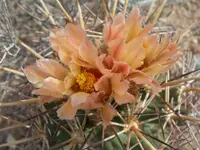
Pima Pineapple Cactus
Coryphantha robustispina
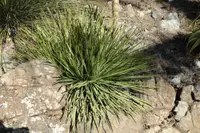
Mexican grass tree
Dasylirion longissimum
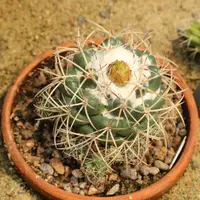
Coryphantha poselgeriana
Coryphantha poselgeriana
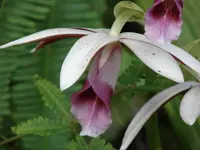
greater swamp-orchid
Calanthe tankervilleae
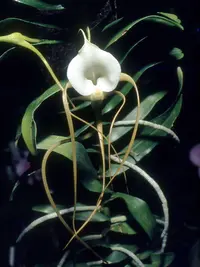
Angraecum ramosum
Angraecum ramosum
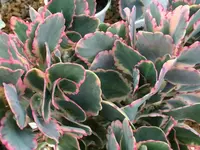
Variegated Kalanchoe
Kalanchoe fedtschenkoi 'Marginata'
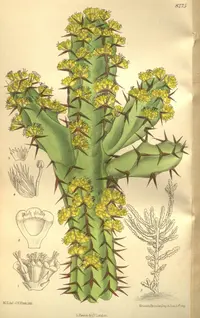
Euphorbia ledienii
Euphorbia ledienii
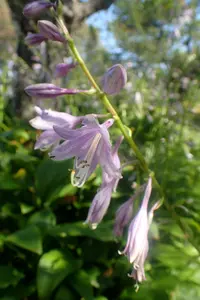
narrowleaf plantain lily
Hosta lancifolia