Mexican grass tree Care (Dasylirion longissimum)

Mexican grass tree

About Mexican grass tree

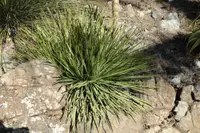
The Mexican grass tree, Dasylirion longissimum, is a slow-growing succulent shrub from arid regions of northeastern Mexico. It forms a dense sphere of very thin, arching leaves atop a sturdy trunk-like base.

Its tidy, architectural shape makes it popular in modern xeriscape and desert-style gardens. The plant is highly drought-tolerant and adapted to strong sun, wind, and poor, rocky soils.

Growth is slow, so it suits long-term landscape projects and large containers. Understanding how to care for Mexican grass tree starts with providing sharp drainage and avoiding prolonged cold, wet conditions.

Main Plant Requirements

Care Difficulty

Moderate Care

Light Preference

Full Sun

Water Requirements

Low Water

Temperature Preference

Warm Climate

Hardiness Zone

8–11

Soil Texture

Sandy, Loamy, Rocky

Soil pH

Slightly acidic (6.5–7.0), Slightly alkaline (7.0–7.5)

Soil Drainage

Well-drained

Fertilization

Minimal (feed rarely)

Get Personalized Care Plan

Scan your plant to receive care tips personalized for your specific plant

Available on iOS and Android

How to Care for the Mexican grass tree

This drought-adapted species prefers strong, direct sun to maintain its dense, symmetrical crown.

  • Provide 6–10 hours of direct sun daily; full sun is best, though light afternoon shade is acceptable in very hot, reflective sites.
  • Young or newly planted Mexican grass tree may benefit from 2–4 hours of gentler morning sun plus bright, filtered light later in the day.
  • In low light, leaves elongate and loosen; in extreme sun with reflected heat, tips may scorch, so increase spacing or add slight seasonal shade.

This desert-adapted plant prefers infrequent, deep watering in fast-draining soil.

  • Outdoors in the ground, water only when the top 5–8 cm of soil are completely dry; in hot, dry spells this may mean every 2–4 weeks.
  • Use sharply draining, gritty soil so water runs through quickly; avoid any standing water around the base of Dasylirion longissimum.
  • Overwatering shows as yellowing or mushy lower leaves, while persistent crisping and folding leaves suggest underwatering or very long drought.

This species thrives in warm, arid climates and tolerates a broad temperature range once established.

  • Optimal growth occurs around 70–90°F (21–32°C), with good performance in dry heat up to about 100°F (38°C) if soil drains freely.
  • Mature plants can survive brief drops to about 15–20°F (-9 to -6°C); younger plants are safer above 25°F (-4°C).
  • In regions with frost, site the plant in a raised, well-drained spot and protect the crown during cold snaps to reduce freeze damage.

This species tolerates low humidity and typical indoor air without special measures.

  • Aim for 30–50% humidity; drier air is usually fine if light and watering are correct.
  • Mexican grass tree shows humidity stress mainly as shriveled leaf bases combined with underwatering, not from dry air alone.
  • Increase humidity only in very arid homes by grouping plants or placing a water tray nearby, not by frequent misting.

Dasylirion longissimum needs a very fast-draining, mineral-rich substrate to prevent root rot.

  • Use a gritty mix such as 50–70% coarse sand, pumice, or small gravel blended with 30–50% lean cactus mix.
  • Soil should feel loose and airy, with water running through in seconds and no puddling on the surface.
  • Keep pH around 6.0–7.5; most cactus/succulent mixes fall naturally in this range and are suitable.
  • Avoid dense peat-heavy or clay-based soils, and always increase drainage by adding mineral grit rather than extra compost.

This species is suitable for long-term container growing if the pot is stable and sharply drained.

  • Choose a wide, heavy container so the tall, grass-like crown does not tip the plant in strong wind.
  • Select porous materials like unglazed terracotta if extra evaporation is needed in wet climates to keep the root zone dry.
  • Maintain a deep gravel or coarse-stone layer above the drainage holes to prevent blockage while preserving rapid runoff.

This desert species needs very modest feeding, so focus on not overdoing fertilizer for Mexican grass tree.

  • Use a low-dose balanced NPK or slow-release desert-plant formula once at the start of spring growth.
  • In poor soils, a thin top-dressing of well-aged compost can support gradual nutrient supply.
  • Dilute liquid fertilizer to 25–50% strength and apply only to moist soil, never dry roots.
  • Avoid feeding in fall and winter, when growth slows and excess nutrients may cause root damage.

Pruning Dasylirion longissimum is mainly cosmetic and should be minimal to preserve its natural form.

  • Best time is late winter to early spring, before strong new growth begins.
  • Remove only dead, brown, or damaged leaves, cutting close to the trunk without nicking it.
  • Leave healthy lower leaves to maintain the spherical form and protect the stem.
  • Use sharp, clean pruners or a pruning saw and wear gloves to handle stiff, serrated foliage safely.

This slow-growing desert plant dislikes frequent disturbance, so repot or transplant only when clearly necessary.

  • Look for roots circling the pot drainage holes or stunted growth as signs it has outgrown its container.
  • Plan any transplanting for late spring to early summer, once nights are consistently warm and soils are drying.
  • Expect to repot only every 5–7 years; choose a pot just 2–5 cm wider with very sharp drainage.
  • Handle the root ball gently, keep roots shaded and slightly moist, and water lightly after planting to limit shock.

Reproduction of Dasylirion longissimum is usually done from seed and is slow, so home propagation is not common.

  • Collect ripe seed from mature flowering plants and sow in late spring or early summer.
  • Use a gritty, fast-draining mix and keep lightly moist at 70–80°F for best germination.
  • Provide bright light with good air movement, avoiding excess humidity that favors damping-off disease.
  • Seedlings grow slowly; transplant only once roots fill small cells to reduce disturbance stress.

This species is fairly cold tolerant when mature but benefits from some winter attention in colder regions.

  • Established plants tolerate brief drops near 15–20°F if soil drains very sharply.
  • Add a light, dry gravel or bark mulch around the root zone to insulate without trapping water.
  • In prolonged freezes, wrap the growing point with breathable frost cloth to limit leaf and crown damage.
  • Move container plants under cover or indoors to a bright, cool, frost-free spot until temperatures moderate.

Care Tips

Protect crown zone

When adding gravel or rock mulch, keep a 5–10 cm ring of bare soil around the stem base so the crown stays dry and well aerated, which greatly reduces the risk of rot after heavy rains.

Encourage strong trunk

Allow old lower leaves to remain until they are completely dry and loose, as this protects the developing stem from sunscald and mechanical damage before a woody trunk fully hardens.

Plan root space

If planting near hardscape, leave at least 60–90 cm clearance around the root zone so the slowly expanding root system and leaf sphere have room without crowding paths or walls.

Cold snap handling

Before an unusual hard freeze, tie the leaf skirt loosely upward with soft twine to protect the crown, then remove the tie once temperatures return above freezing to avoid trapping moisture.

Safe debris removal

Use long sleeves and eye protection when trimming dead leaves or old flower stalks, and cut with clean, sharp tools from the underside of the leaf base to avoid the stiff, sharp leaf tips when caring for Mexican grass tree.

Common Pests and Diseases

Agave snout weevil

This pest bores into the stem base and crown, causing internal tunneling and eventual collapse of the rosette. Symptoms include sudden yellowing, wilting from the center, and a foul smell at the base.

Solution

Remove and destroy heavily infested plants to prevent spread, and dig out and discard the surrounding soil where larvae may be present. For high-value specimens, use a systemic insecticide labeled for snout weevils as a soil drench in spring in warm climates, and avoid injuries or cuts at the crown that attract egg-laying adults.

Scale insects

These insects attach to leaves and stems, appearing as small, hard or waxy bumps along the leaf margins and trunk. This pest feeds on sap, causing yellowing, stunted growth, and sometimes sticky honeydew on nearby surfaces.

Solution

Physically remove light infestations by wiping foliage and trunk with a cloth dampened in soapy water or alcohol, focusing on the leaf bases. For larger infestations, use repeated applications of horticultural oil or an appropriate systemic insecticide, and reduce plant stress by providing strong light and avoiding overwatering, which supports Dasylirion longissimum care instructions in dry climates.

Mealybugs

These insects appear as white, cottony clusters tucked into leaf bases and between tightly packed leaves. This pest sucks plant sap, leading to weakened growth, slight leaf yellowing, and sooty mold on the honeydew they excrete.

Solution

Inspect the crown and leaf bases regularly and remove visible clusters with a cotton swab dipped in alcohol or with a strong stream of water. For persistent problems, apply horticultural soap or oil thoroughly into the leaf axils at intervals as directed on the label, and improve air movement and spacing around the plant to reduce hiding places.

Fungal crown rot

This disease affects the growing point at the center of the rosette, especially in poorly drained or overly wet soil. Symptoms include browning and softening at the crown, collapse of new leaves, and a sour or rotten odor.

Solution

At early stages, remove all affected soft tissue with a sterile knife and allow the crown to dry in a very well-ventilated, rain-sheltered position. Long term, prevent recurrence by planting in sharply draining, gritty soil, elevating the crown above surrounding grade, avoiding overhead watering, and spacing irrigation widely, especially in cool weather.

Interesting Facts

Spherical leaf fountain

Mature plants form a nearly perfect sphere of extremely narrow, flexible leaves that can reach 1.2–1.8 m long, creating a fountain-like dome unlike the stiffer rosettes of many related desert plants.

False trunk structure

The tall, woody stem often called a trunk is actually a densely packed stem base built up over many years from old leaf bases and stem tissue, giving a tree-like appearance while the plant remains structurally closer to a rosette-forming shrub.

Fire-adapted desert native

In its native arid habitats of northeastern Mexico, this species tolerates drought, rocky alkaline soils, and periodic fire, with the insulated stem and tight leaf bases helping protect the growth point during harsh events.

Botan icon

Did you know?

This species can live for many decades and only begins to form a noticeable above-ground stem after a long juvenile phase, so large, trunked specimens in cultivation are often significantly older than they appear.

FAQs about Mexican grass tree

This species blooms only at mature age, often after many years, and not every season. Cool winters, strong light, and avoiding excess fertilizer help. Even in good conditions, flowering is naturally irregular and cannot be forced reliably.

Grow Healthy Plants with Botan Care

Keep your plants happy and healthy with plant identification, disease detection, and easy care guidance.

Botan plant care app — identify plants on mobile

Explore More Plants