Winter rest period
From late fall to early spring keep the plant cool (40–50°F), very dry, and in bright light to encourage abundant flowering the following season, as this cool dormant phase is essential when growing Lobivia maximiliana.

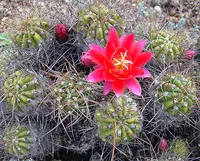
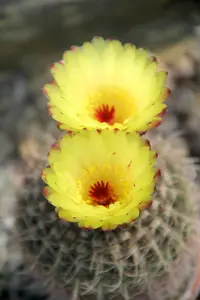
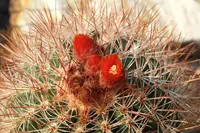
Lobivia maximiliana is a small, clump-forming cactus native to the high Andes of Bolivia and Peru. It typically grows as low, rounded stems covered in short, dense spines. In season it produces striking funnel-shaped flowers, often red, orange, or magenta, that contrast strongly with the spiny body. The plant’s compact size and slow growth make it suitable for containers and small indoor collections. It is considered relatively easy to grow for those who provide strong light, very well-drained mineral soil, and careful watering. Understanding how to care for Lobivia maximiliana mainly involves avoiding excess moisture and giving it enough light and cool rest in winter.

Care Difficulty
Easy Care

Light Preference
Full Sun

Water Requirements
Low Water

Temperature Preference
Warm Climate

Hardiness Zone
9–11

Soil Texture
Sandy, Loamy, Rocky

Soil pH
Slightly acidic (6.5–7.0), Neutral (7.0)

Soil Drainage
Well-drained

Fertilization
Minimal (feed rarely)
Scan your plant to receive care tips personalized for your specific plant
Available on iOS and Android
This mountain cactus prefers bright, strong light that mimics high-altitude sun but needs gradual acclimation outdoors.
This cactus has shallow roots and stores water in its stem, so watering must be infrequent but thorough.
This species prefers warm days with cooler nights, similar to high-altitude desert conditions.
This cactus handles typical indoor humidity well and rarely needs special humidity management.
Lobivia maximiliana needs a very fast-draining, mineral-rich substrate to prevent root rot.
This species is very suitable for container growing due to its compact, slow-growing habit.
This cactus benefits from light feeding during the warm growing season but is sensitive to excess nutrients.
Pruning needs for this compact cactus are minimal and mainly sanitary.
This slow-growing cactus prefers infrequent disturbance, but occasional repotting supports root health.
This species is commonly propagated from offsets and seeds under warm, bright conditions.
This cactus needs a cool, dry winter rest and is not tolerant of prolonged hard frost.

Plant Health Check
Not sure what's wrong with your plant? Check your plant's health inside the app.
This cactus is native to high-elevation regions of the central Andes in Bolivia and southern Peru, where it experiences strong sun, large day–night temperature swings, and very well-drained rocky soils.
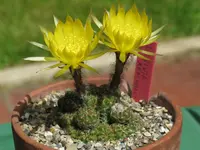
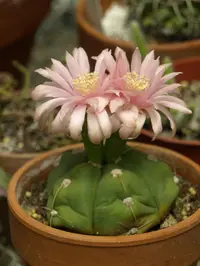
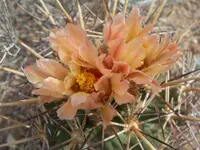
Populations and cultivated forms of this species show a wide range of flower colors, including red, orange, pink, and purple tones, often with a contrasting throat, which makes it a highly variable ornamental cactus.
The plant forms small, mostly spherical stems that gradually produce offsets, creating tight clumps that hug the ground and help stabilize it against erosion in its mountainous habitat.

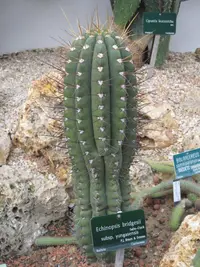
Lobivia maximiliana has been reclassified several times and is currently placed by most modern botanists in the genus Echinopsis, reflecting its close evolutionary relationship with other South American hedgehog and sea-urchin cacti.
Flowering depends on plant maturity, a cool dry winter rest, and adequate light. Without a temperature drop in winter and a bright position in spring, buds may not form. Avoid high winter watering, which reduces flower production.
Keep your plants happy and healthy with plant identification, disease detection, and easy care guidance.