Cactus Care (Gymnocalycium horstii)

Cactus

About Cactus

Gymnocalycium horstii is a small globular cactus known for its rounded, ribbed body and prominent, slightly curved spines. It stays relatively compact, making it suitable for containers and indoor displays.

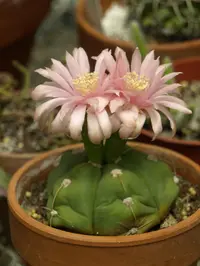
This species comes from grassland and rocky areas of southern Brazil, where it experiences strong light, porous soils, and periods of drought. It produces large, showy flowers that often appear in shades of white to pale pink.

Its slow growth, drought tolerance, and modest size make it a manageable cactus for beginners willing to learn how to care for Gymnocalycium horstii. It generally prefers bright light, low to moderate water, and very well-drained, mineral-rich soil.

Main Plant Requirements

Care Difficulty

Easy Care

Light Preference

Partial Sun

Water Requirements

Low Water

Temperature Preference

Tropical / Frost Sensitive

Hardiness Zone

10–11

Soil Texture

Sandy, Loamy, Rocky

Soil pH

Acidic (5.5–6.5), Slightly acidic (6.5–7.0)

Soil Drainage

Well-drained

Fertilization

Minimal (feed rarely)

Get Personalized Care Plan

Scan your plant to receive care tips personalized for your specific plant

Available on iOS and Android

How to Care for the Cactus

This cactus prefers bright conditions with some protection from harsh midday sun.

  • Provide 4–6 hours of direct morning sun with bright, filtered light for the rest of the day, especially in hot, dry climates.
  • Allow light partial shade in the afternoon; strong summer sun through glass can scorch the skin, causing yellow or brown patches.
  • Increase exposure gradually in spring and move plants slightly closer to light in winter to prevent stretching and pale, elongated growth.

Watering should respect this cactus’s strong drought tolerance and shallow root system.

  • Let the top 3–5 cm of soil dry completely before watering; in active growth this often means deep watering every 10–21 days, depending on heat and airflow.
  • Use fast-draining, gritty soil and a container or bed that never stays soggy; standing water quickly leads to root rot and a soft, discolored stem.
  • In winter or cool periods, reduce watering sharply, giving only enough to prevent shriveling; wrinkles and light softness signal thirst, while blackened roots indicate overwatering.

Stable warmth supports compact growth and reliable flowering.

  • Aim for 70–85°F (21–29°C) in the growing season; growth slows above 90°F (32°C) unless there is strong airflow and shade during the hottest hours.
  • Protect from cold below 45°F (7°C); brief dips to 40°F (4°C) are usually tolerated if soil is dry, but any frost can permanently damage tissues.
  • For winter rest, keep around 50–60°F (10–16°C) in a bright spot with very limited water to support long-term Gymnocalycium horstii care.

This cactus handles dry household air well, so humidity is rarely a concern.

  • Aim for 30–50% humidity, typical of most heated or air‑conditioned homes.
  • Dry air is tolerated, but combine low humidity with bright, hot sun gradually to avoid shriveling.
  • If skin wrinkles while soil is slightly moist, improve airflow instead of adding humidity to prevent rot.

Soil for Gymnocalycium horstii must be very fast-draining and highly aerated.

  • Use a gritty mix: 50–70% mineral materials (pumice, coarse sand, small gravel, or perlite) with 30–50% cactus potting mix.
  • Aim for slightly acidic to neutral pH around 6.0–7.0, avoiding strongly alkaline limestone-heavy media unless the plant is already adapted.
  • Create a loose, open structure where water runs through in seconds and the surface dries within 1–2 days.
  • Avoid dense peat-only mixes, fine sand that compacts, or any soil that stays wet or cool around the roots.

This species is very suitable for container growing.

  • Choose a shallow but wide pot so the relatively shallow root system can spread while the body remains stable.
  • Select unglazed terracotta if extra evaporation is needed in humid or cool climates to reduce rot risk.
  • Elevate the pot slightly on feet or mesh so drainage holes remain clear and water cannot pool under the base.

This small cactus benefits from light feeding during the active growing season but is sensitive to excess nutrients.

  • Use a dilute balanced liquid fertilizer (around 10-10-10 or 20-20-20) at 1/4–1/2 strength in spring and summer.
  • Apply every 4–6 weeks when growth is visible, onto already-moist soil to avoid root burn.
  • Do not use rich compost; choose a fertilizer formulated for cacti and succulents instead.
  • Stop feeding Gymnocalycium horstii in fall and winter when growth slows or stops.

Pruning needs for this cactus are minimal and focus on plant health rather than shaping.

  • Carry out any pruning in late spring or early summer when the plant is actively growing.
  • Remove only dead, shriveled, diseased, or scarred tissue using clean, sharp scissors or a sterile knife.
  • Cut away damaged offsets at the base if they rot or deform the plant’s symmetry.
  • Avoid cutting healthy green tissue, as this slows growth and may reduce flowering.

This slow-growing cactus needs infrequent repotting, mainly to refresh soil and improve drainage.

  • Repot every 3–4 years, or when roots circle the pot base or emerge from drainage holes and growth slows.
  • Choose late spring as the best time, using a shallow pot with fresh, gritty cactus mix for growing Gymnocalycium horstii.
  • A few days before repotting, withhold water so the root ball is dry and easier to handle, reducing breakage.
  • After repotting, keep the plant dry and shaded for 5–7 days, then resume light watering to allow roots to heal.

Propagation is usually done from seeds or offsets, but it is a slow process for this species.

  • Sow seeds in late spring on the surface of a sterile, very well-drained cactus mix, then lightly cover with sand or fine grit.
  • Maintain bright, indirect light, 70–80°F temperatures, and consistently barely moist substrate until germination.
  • For offsets, wait until pups are firm and thumb-sized, then remove with a sterile knife and let the cut callus for several days.
  • Place callused offsets on dry cactus mix, mist sparingly, and increase watering only once new roots and growth appear.

This cactus is not reliably frost hardy and benefits from a cool, dry rest in winter.

  • Keep Gymnocalycium horstii at 45–55°F in winter, ensuring it stays above freezing at all times.
  • Move container plants indoors or into an unheated, bright room or greenhouse before the first frost.
  • Provide maximum light and keep soil almost completely dry, watering only enough to prevent severe shriveling.
  • Avoid drafts, excess humidity, and sudden temperature swings that can cause tissue damage.

Care Tips

Encourage firm growth

Rotate the pot by 90° every 2–3 weeks during the bright season so the stem develops evenly and stays compact instead of leaning toward the strongest light source.

Optimize pot dimensions

Choose a pot only 2–3 cm wider than the plant body with good depth for its taproot, as overly large, shallow containers increase the risk of root rot and unstable growth.

Seasonal rest period

Provide a cool, dry rest in winter at 45–55°F with only minimal sips of water to encourage stronger flowering and tighter, healthier tissue the following growing season when caring for Gymnocalycium horstii.

Inspect graft unions

If the plant is grafted, check the join line a few times a year for cracking, rot, or separation, and keep that area very dry so pathogens do not enter through the vulnerable tissue interface.

Controlled offsets removal

Remove offsets with a sterile, thin blade only when they are at least 1/3 the size of the main plant, then let the cut dry for several days before rooting to reduce infection risk and scarring on the mother plant.

Common Pests and Diseases

Mealybugs

This pest often hides in ribs, woolly areoles, and the base of flower buds, sucking sap and weakening the cactus. Symptoms include white cottony masses, stunted growth, and sticky honeydew that can lead to sooty mold.

Solution

Isolate the plant, then remove visible insects with a cotton swab dipped in 70% isopropyl alcohol and repeat weekly until no new insects appear. For heavier infestations, use a systemic insecticide labeled for cacti and improve light and air movement to reduce reinfestation when caring for Gymnocalycium horstii.

Red spider mites

These insects are tiny and often go unnoticed until the epidermis shows a dull, bronzed, or roughened surface. Symptoms include fine webbing in the ribs and areoles, slow growth, and loss of the plant’s natural glossy green color.

Solution

Rinse the plant thoroughly with a firm stream of water, including between ribs, then increase humidity slightly and improve airflow to discourage mites. If damage continues, apply a miticide or neem oil spray labeled for indoor succulents, repeating as directed to cover the full life cycle.

Scale insects

This pest appears as small, hard, brown or gray bumps on ribs and at the base of spines that do not wipe off easily. Symptoms include localized yellowing, reduced vigor, and sticky honeydew around the plant.

Solution

Gently scrape off individual scales with a toothpick or soft brush and wipe the affected areas with isopropyl alcohol. For persistent problems, use a systemic insecticide suitable for cacti and avoid overfertilizing, which can encourage new infestations.

Basal stem rot

This disease usually starts at the soil line where tissue becomes soft, brown, and water-soaked, often following overwatering or cold, wet conditions. Symptoms include plant leaning, shrinking above the base, and a foul smell from decaying tissue.

Solution

At early stages, unpot the cactus, cut away all soft or discolored tissue with a sterile knife, and allow the healthy part to callus in a dry, bright place for several days before re-rooting in fresh, fast-draining cactus mix. Discard severely affected plants and always adjust watering to fully dry the substrate between waterings, especially in cool weather.

Fungal leaf spot on epidermis

This disease produces small, sunken, brown to black spots on the green body, sometimes with a slightly raised or corky edge. Symptoms include scattered lesions that may merge into larger scars but usually stay superficial if conditions improve.

Solution

Remove any severely damaged tissue with a sterile blade if it threatens to spread, ensure the plant is kept in a bright, well-ventilated spot, and avoid overhead watering or water sitting on the skin for long periods. Apply a copper-based or sulfur-based fungicide labeled for cacti if new spots continue to appear, and keep the plant in a drier environment during cool periods.

Interesting Facts

Flattened globular body

This species develops a low, flattened, disk-like stem with very broad, rounded ribs, which helps reduce sun exposure and water loss in its native grassland habitats of southern Brazil.

Masses of large flowers

Mature plants can produce a striking ring of relatively large white to pale pink funnel-shaped flowers around the stem apex, often opening repeatedly over the warm season under suitable conditions.

Strong taproot adaptation

It forms a thick taproot that stores water and nutrients, allowing the plant to survive seasonal drought and brief periods of unfavorable weather in its natural range, which is important to respect when repotting or trying to grow Gymnocalycium horstii from seed.

FAQs about Cactus

Lack of flowers usually comes from insufficient light, overly rich soil, or no cool, dry winter rest. Mature plants need strong light, a pronounced spring–summer growing period, and a slight temperature drop in winter to set buds.

Grow Healthy Plants with Botan Care

Keep your plants happy and healthy with plant identification, disease detection, and easy care guidance.

Botan plant care app — identify plants on mobile

Explore More Plants