


Rotate For Symmetry
Turn the pot 90° every 2–3 weeks during active growth so all ribs receive similar light, which keeps the stem evenly shaped and reduces leaning toward the brightest side.

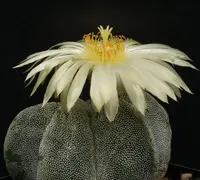
Bishop's cap (Astrophytum myriostigma) is a slow-growing desert cactus valued for its clean, sculptural shape. It usually forms a spineless, ribbed, star-like stem with tiny white dots on the surface. Mature plants may branch slowly and can produce small, yellow funnel-shaped flowers from the top. This species is native to arid regions of northeastern Mexico, where it grows on rocky slopes with strong sun and very sharp drainage. Its drought tolerance and lack of spines make it easier to handle than many cacti, but it is sensitive to overwatering and cold, which can cause rot. Those factors shape how to care for Bishop's Cap in home collections, especially in cooler or more humid climates.

Care Difficulty
Moderate Care

Light Preference
Full Sun

Water Requirements
Low Water

Temperature Preference
Tropical / Frost Sensitive

Hardiness Zone
9–11

Soil Texture
Sandy, Rocky, Loamy

Soil pH
Slightly acidic (6.5–7.0), Neutral (7.0)

Soil Drainage
Well-drained

Fertilization
Minimal (feed rarely)
Scan your plant to receive care tips personalized for your specific plant
Available on iOS and Android
This cactus prefers bright, indirect light with some direct sun for compact growth.
Watering should be infrequent and measured to avoid root rot in this desert cactus.
This species prefers warm, dry conditions and does poorly in prolonged cold or damp.
This cactus prefers dry air and does not need added humidity.
This species needs a very fast-draining, mineral-rich substrate to prevent root rot.
This species is very suitable for container growing due to its compact, slow growth and shallow root system.
This cactus needs modest feeding, as Bishop's Cap naturally thrives in lean, mineral soils.
Astrophytum myriostigma requires almost no pruning, since it grows as a single, tidy stem.
Repotting should be infrequent and focused on maintaining a stable, well-drained root environment.
This species is most commonly propagated from seed, as it rarely offsets.
Winter care focuses on keeping this cactus cool, very dry, and frost-free.

Plant Health Check
Not sure what's wrong with your plant? Check your plant's health inside the app.
The stem typically develops 5 sharply defined ribs arranged in a star pattern when viewed from above, a growth form that maximizes surface area for photosynthesis while minimizing exposure to intense sun in its native habitat.
Its grey-green surface is densely dotted with tiny white trichome clusters, which scatter sunlight and reduce water loss, giving the plant a characteristic frosted or chalky appearance.
Unlike many cacti, this species naturally lacks spines and instead relies on its thick epidermis and cryptic coloration as protection, illustrating an evolutionary shift away from mechanical defense structures.

In parts of northern Mexico, large, old individuals of Astrophytum myriostigma have been observed growing on extremely shallow, gypsum-rich soils and almost bare limestone outcrops, showing a rare degree of adaptation to mineral-heavy, low-organic substrates where very few other vascular plants can survive long term.
Lack of flowers usually comes from insufficient light, a pot that is too large, or the plant being too young. It typically needs several years to bloom and benefits from a pronounced cool, dry winter rest.
Keep your plants happy and healthy with plant identification, disease detection, and easy care guidance.

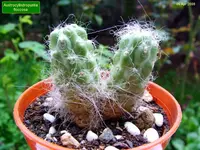
waraqu
Austrocylindropuntia floccosa
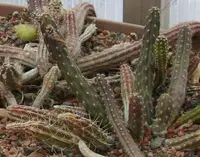
Austrocactus spiniflorus
Austrocactus spiniflorus
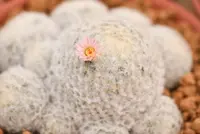
Powderpuff cactus
Mammillaria bocasana
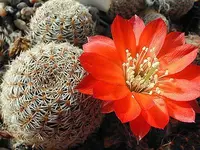
Aylostera albopectinata
Aylostera albopectinata
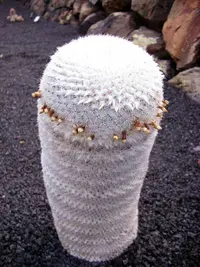
Mammillaria albilanata
Mammillaria albilanata
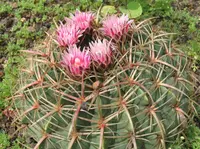
Cactus
Ferocactus macrodiscus
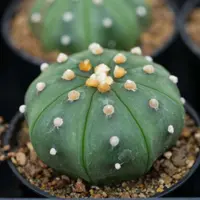
Star Cactus
Astrophytum asterias
Eve's needle cactus
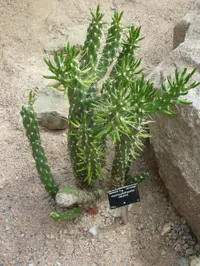
Austrocylindropuntia subulata