Eve's needle cactus Care (Austrocylindropuntia subulata)

Also known as: Eve's Needle Cactus, Devil's Rope, Long-Spine Cactus
Eve's needle cactus

About Eve's needle cactus

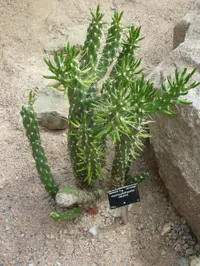
Eve's needle cactus, Austrocylindropuntia subulata, is a shrubby, fast-growing cactus native to the high Andes of Peru and Ecuador. It forms upright, branching stems covered with long, sharp spines and narrow, leaf-like projections on young growth. Mature plants can become tall and tree-like in mild climates, creating a dense, architectural silhouette. Small, tubular flowers and occasional fleshy fruits may appear in good conditions, but this is less common indoors. This species is generally easy for beginners, as it tolerates heat, drought, and occasional neglect. It prefers bright, direct light, low humidity, and very free-draining, gritty soil, so understanding these basics makes it easier to care for Eve's needle cactus.

Main Plant Requirements

Care Difficulty

Easy Care

Light Preference

Full Sun

Water Requirements

Low Water

Temperature Preference

Warm Climate

Hardiness Zone

9–11

Soil Texture

Sandy, Loamy, Rocky

Soil pH

Slightly acidic (6.5–7.0), Slightly alkaline (7.0–7.5)

Soil Drainage

Well-drained

Fertilization

Minimal (feed rarely)

Get Personalized Care Plan

Scan your plant to receive care tips personalized for your specific plant

Available on iOS and Android

How to Care for the Eve's needle cactus

This cactus prefers strong light and thrives in bright, open exposures.

  • Provide 6–10 hours of direct sun daily outdoors, ideally with gentle morning sun and some protection from harsh late-afternoon summer sun.
  • It tolerates light partial shade, but stems may stretch and lose firmness if grown with less than 4–5 hours of direct sun.
  • Monitor for sunburn in heatwaves: pale, corky, or brown patches on the sun-facing side signal excessive exposure, especially on newly moved Eve's needle cactus plants.

This drought-adapted cactus prefers infrequent, deep watering with thorough drying between events.

  • Water only when the top 3–5 cm of soil are completely dry; in hot active growth this may be every 10–21 days, much less in cool seasons.
  • Use very free-draining, gritty soil so water runs through quickly and roots do not sit in soggy conditions that promote rot.
  • Reduce watering sharply in winter, and watch for shriveling segments as a sign it needs water, or soft, yellowing, leaning stems as a sign of overwatering in Austrocylindropuntia subulata.

This species prefers warm, dry conditions and handles heat better than cold.

  • Aim for daytime temperatures of 70–90°F (21–32°C) during active growth, with slightly cooler nights around 60–70°F (16–21°C).
  • Protect from frost; it may tolerate brief dips to 25–30°F (-4 to -1°C) if completely dry, but tissue damage is likely below freezing.
  • In very hot weather above 95–100°F (35–38°C), increase airflow and provide light shade to prevent stem scorch and stress.

This cactus prefers dry air and rarely needs humidity adjustment indoors.

  • Maintain 20–40% humidity, similar to typical heated or air-conditioned rooms.
  • Dry air is tolerated well; avoid placing it near humidifiers or in steamy bathrooms.
  • Signs of excess humidity include soft, pale, or blackened stems and moldy soil; increase air flow and let the mix dry if this occurs when caring for Eve's needle cactus.

Use a very fast-draining, mineral-heavy mix to prevent root rot.

  • Choose a sandy or gritty structure, such as 50–70% inorganic material (coarse sand, pumice, or perlite) with 30–50% cactus potting mix.
  • Aim for slightly acidic to neutral pH around 6.0–7.0, which supports stable nutrient availability for Austrocylindropuntia subulata.
  • Increase aeration by using large-grain particles (3–6 mm) and avoiding compact peat-heavy mixes that stay wet for more than 2–3 days.
  • Avoid dense garden soil, clay, or high-compost blends that hold water and collapse, as these encourage fungal problems and root suffocation.

This species is suitable for container growing when the pot is chosen to manage its vigorous, upright growth.

  • Select a heavy, wide-based pot to counterbalance tall, top-heavy stems and reduce tipping in wind or on balconies.
  • Use a container only 2–4 cm wider than the root ball to keep the mix drying evenly between waterings.
  • Prefer unglazed terracotta in wet or cooler climates to improve evaporation, but use thicker-walled pots in very hot regions to reduce rapid overheating of roots.

This cactus benefits from light, controlled feeding during the active growing season only.

  • Use a diluted balanced liquid cactus fertilizer (around 10-10-10) at 1/4–1/2 strength during spring and summer for caring for Eve's needle cactus.
  • Apply every 4–6 weeks when growth is active; always water lightly before adding fertilizer to avoid root burn.
  • Avoid high-organic compost or rich slow-release products that keep soil wet, which increases rot risk.
  • Stop feeding completely in fall and winter when growth slows or stops.

Pruning helps keep Austrocylindropuntia subulata compact, stable, and safe to handle.

  • Plan main pruning in late winter or early spring before strong new growth begins.
  • Remove dead, damaged, crossing, or dangerously leaning stems at their base using sharp, clean loppers or a pruning saw.
  • Shorten overly tall or crowded stems to control height and encourage branching from lower joints.
  • Wear thick gloves and protect skin; allow large cut surfaces to dry and callus to reduce infection risk.

Container-grown plants and young outdoor specimens benefit from occasional, careful transplanting.

  • Check for roots circling the pot, emerging from drainage holes, or slow growth, which indicate a need to repot.
  • Plan repotting or transplanting in late spring, about every 2–4 years for potted plants, when soil is warm and dry weather is likely.
  • Use a heavy, well-drained cactus mix and only move up 1 pot size to keep roots slightly tight and stable.
  • Handle stems with thick gloves, keep the root ball as intact as possible, and avoid watering for 3–5 days afterward to limit rot and stress.

This species is commonly propagated from stem cuttings under warm, dry conditions.

  • Take 10–20 cm healthy stem segments in late spring or early summer using a sterile, sharp knife or pruning saw.
  • Dry cuttings in bright, indirect light for 7–10 days until the cut ends callus, reducing rot risk.
  • Plant in a gritty, almost dry cactus mix, burying the base slightly; keep temperatures around 70–80°F.
  • Water very lightly only after roots begin forming, then increase gradually as growth becomes visible.

Winter care depends strongly on local climate and whether the plant grows in ground or in containers.

  • This cactus dislikes prolonged freezing; many forms suffer damage below about 20–25°F, especially in wet soil.
  • In colder or wet climates, grow in containers and move indoors to a cool, very bright, dry spot before hard frost.
  • For in-ground plants in marginal climates, ensure excellent drainage and apply a light gravel mulch to keep the root zone drier.
  • Keep soil almost dry in winter to reduce the risk of cold-related root and stem rot.

Care Tips

Stabilize Tall Stems

Provide a discreet stake or wire grid once stems reach 30–40 cm to prevent top-heavy leaning or breakage, tying loosely with soft plant ties that do not cut into the tissue.

Encourage Branching

If a main stem becomes overly tall and bare, tip-prune a small section from the top during active growth to stimulate side-branching and create a denser, more stable plant.

Use Inert Mulch

Top-dress the soil surface with a thin layer of coarse gravel or pumice to keep stem bases dry, reduce algae and fungus gnat issues, and improve drainage at the crown.

Cold Season Dry Rest

In regions with cool winters, keep the plant very dry and under cover from rain from late fall to early spring to reduce root rot risk while still allowing it to tolerate brief drops in temperature.

Safe Handling Setup

Before repotting or moving the plant, wrap the stems loosely in several layers of folded newspaper or use thick padded gloves so you can handle spiny segments safely while caring for Eve's needle cactus.

Common Pests and Diseases

Cochineal scale

This pest forms dense white cottony clusters on pads and stems, feeding on the cactus sap and weakening growth over time.

Solution

Physically remove colonies by spraying the stems with a strong jet of water, then wipe remaining insects with cotton pads dipped in 70% isopropyl alcohol; for persistent infestations, use a systemic insecticide labeled for cacti and increase sun exposure and airflow so the plant dries quickly after watering.

Soft scale

This pest appears as small tan to brown, dome-shaped bumps on stems, causing yellowing, stunted growth, and sticky honeydew that can attract sooty mold.

Solution

Gently scrape off or crush visible scale with a gloved finger or soft brush, then treat the plant with repeated applications of horticultural oil or insecticidal soap, making sure to fully coat the stems while also reducing excess nitrogen fertilizer that encourages soft growth.

Spider mites

These insects are tiny and often invisible to the naked eye, but they cause fine stippling, dull patches, and sometimes thin webbing on stressed or under-watered plants kept in hot, very dry air.

Solution

Rinse the entire plant thoroughly with water to dislodge mites, then apply insecticidal soap or a neem-based product on all surfaces at 5–7 day intervals, while slightly increasing ambient humidity and reducing extreme heat to make conditions less favorable for mites without keeping the soil wet.

Fusarium stem rot

This disease causes localized soft, sunken, or brownish areas on stems that can expand and lead to collapse of whole segments, especially after wounds or overwatering in cool conditions.

Solution

Cut out affected tissue well into healthy green tissue with a sterile knife, discard all infected material, allow remaining cut surfaces to dry and callus for several days, then replant in a sharply draining mineral-rich mix while avoiding overhead watering and keeping the plant in a bright, airy, warm position.

Bacterial soft rot

Symptoms include rapidly soft, water-soaked, foul-smelling areas on stems that can turn mushy and spread quickly, often starting from mechanical damage or prolonged moisture on the pads.

Solution

Remove and discard all affected segments immediately, cutting well into firm, healthy tissue with sterilized tools, then let the plant dry in a warm, ventilated spot and adjust watering so the substrate dries fully between waterings, as part of general Austrocylindropuntia subulata care.」}]}```},

Interesting Facts

Shrub-like cactus branches

This species forms a tall, many-branched shrub rather than a single column, with cylindrical stems and short, awl-shaped leaves that are quickly shed as the tissue becomes more succulent.

Persistent leaf cushions

Even after the small leaves drop, their bases remain as raised cushions (areoles) that produce clusters of spines, which help the plant reduce water loss and protect it from herbivores in its native Andean range.

Escaped ornamental species

Originally native to high-altitude regions of Peru and Ecuador, it is widely grown as an ornamental and has escaped cultivation in some mild-climate regions, where it can become locally invasive along roadsides and disturbed sites.

Botan icon

Did you know?

In its native Andean habitat, this cactus is sometimes used as a living fence, with dense, spiny thickets planted along field boundaries to deter livestock movement and mark property lines without the need for wire fencing.

FAQs about Eve's needle cactus

Growth is moderate for a cactus. Young plants often add 10–25 cm per year in height in warm, bright, dry conditions, slowing as they age. Limited light, cool temperatures, cramped roots, or poor drainage reduce growth noticeably.

Grow Healthy Plants with Botan Care

Keep your plants happy and healthy with plant identification, disease detection, and easy care guidance.

Botan plant care app — identify plants on mobile

Explore More Plants