Rotate For Symmetry
Turn the pot 90° every 2–3 weeks during active growth so all sides receive similar light and stems stay compact rather than leaning strongly to one direction.

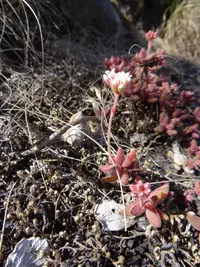
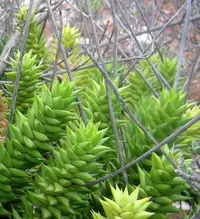
Money stonecrop (Crassula swaziensis) is a compact, clumping succulent known for its small, rounded leaves that form tight, attractive mats or cushions. The foliage often takes on red or bronze tones in strong light, adding seasonal color.
This species is native to parts of southern Africa, where it grows in rocky, well-drained habitats with bright sun and low rainfall. Its drought tolerance and slow, tidy growth habit make it suitable for containers, rock gardens, and windowsills.
Crassula swaziensis is generally considered easy to grow if excess moisture is avoided. It prefers bright light, lean gritty soil, and careful watering, which shapes how to care for Money Stonecrop.

Care Difficulty
Easy Care

Light Preference
Partial Sun

Water Requirements
Low Water

Temperature Preference
Tropical / Frost Sensitive

Hardiness Zone
10–11

Soil Texture
Sandy, Loamy, Rocky

Soil pH
Slightly acidic (6.5–7.0), Neutral (7.0)

Soil Drainage
Well-drained

Fertilization
Minimal (feed rarely)
Scan your plant to receive care tips personalized for your specific plant
Available on iOS and Android
This compact succulent prefers bright, gentle light similar to other small Crassula species.
This species stores water in its leaves and needs infrequent but thorough watering.
This succulent prefers mild, dry conditions and is sensitive to prolonged cold and frost.
This succulent tolerates a wide humidity range and usually does not need special humidity control indoors.
Use a sharply draining, mineral-rich mix that keeps roots dry between waterings.
This species is well suited to container growing due to its compact, shallow root system.
This compact succulent needs modest feeding to support steady growth in containers.
Light pruning keeps Crassula swaziensis compact and removes weak growth.
This slow-growing succulent prefers slightly tight containers and infrequent repotting.
Crassula swaziensis is commonly propagated from cuttings to maintain desired forms.
This succulent is tender and needs protection from freezing temperatures in most climates.

Plant Health Check
Not sure what's wrong with your plant? Check your plant's health inside the app.
This species is naturally found on rocky slopes and cliffs in Eswatini and nearby regions, often rooting in shallow crevices where many other plants cannot survive.
In strong light, the otherwise green cylindrical leaves develop noticeable red to purple tips, which is a sun-induced pigment response that helps protect the tissues from excess radiation.
The plant slowly forms tight, cushion-like clumps of many short stems, an adaptation that reduces water loss and buffers temperature around the growing points in its exposed habitats.
Leaf browning usually comes from underwatering, intense direct sun scorch, or a build-up of fertilizer salts. Check the root zone, flush the soil occasionally, and trim damaged leaves so new healthy growth can develop.
Keep your plants happy and healthy with plant identification, disease detection, and easy care guidance.