Rough Flowered Apicra Care (Astroloba spiralis)

Also known as: Kleinkaroo Astroloba
Rough Flowered Apicra

About Rough Flowered Apicra

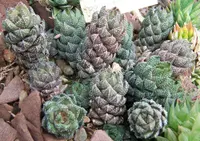
Astroloba spiralis is a small, slow-growing succulent from South Africa, related to aloes. It forms tight spiraling columns of triangular, firm leaves with attractive geometric patterns. Mature clumps stay compact, making it suitable for containers and small indoor displays.

This species is adapted to bright, dry conditions and rocky, well-drained soils. Its drought tolerance and slow growth rate make it relatively low-maintenance, but it dislikes prolonged cold and excess moisture. With the right light and fast-draining soil, it is straightforward to care for Astroloba spiralis.

Main Plant Requirements

Care Difficulty

Easy Care

Light Preference

Partial Sun

Water Requirements

Low Water

Temperature Preference

Warm Climate

Hardiness Zone

10–11

Soil Texture

Sandy, Loamy, Rocky

Soil pH

Slightly acidic (6.5–7.0), Neutral (7.0)

Soil Drainage

Well-drained

Fertilization

Minimal (feed rarely)

Get Personalized Care Plan

Scan your plant to receive care tips personalized for your specific plant

Available on iOS and Android

How to Care for the Rough Flowered Apicra

This compact succulent prefers bright, indirect light with some direct sun for best form and color.

  • Provide 4–6 hours of gentle morning sun or late-afternoon sun, with bright, filtered light for the rest of the day.
  • Protect Astroloba spiralis from harsh midday sun, which can cause leaf scorch and bleaching, especially in hot, dry climates.
  • In low light it becomes elongated and loses its tight spiral; move it gradually to a brighter spot, especially in late winter and early spring.

This drought-tolerant succulent needs infrequent, thorough watering and fast-draining soil.

  • Water only when the top 3–5 cm of soil are completely dry, then drench until excess drains away and discard any standing water.
  • Reduce watering in cooler months, allowing the mix to stay dry longer; slight leaf wrinkling signals thirst, while soft, translucent leaves suggest overwatering.
  • Use a gritty, sharply draining mix so roots dry quickly; persistent moisture, sour smell, or blackened roots indicate waterlogged conditions for Astroloba spiralis.

This species prefers warm, dry conditions with mild temperature swings between day and night.

  • Aim for 65–80°F (18–27°C) during active growth, with cooler nights improving stress tolerance and overall vigor.
  • Protect from frost; brief exposure down to 32°F (0°C) may be survived if kept dry, but growth is safest above 40°F (4°C).
  • In hot spells above 95°F (35°C), give light shade and good air movement to reduce heat stress and prevent sunburn on firm, compact leaves.

This species is adapted to dry climates and generally does not require special humidity control indoors.

This succulent prefers a very fast-draining, mineral-based substrate to prevent root rot.

  • Use a gritty mix with about 60–80% inorganic material such as pumice, coarse sand, or fine gravel, plus a small amount of cactus potting mix.
  • Aim for a loose, open structure that does not hold water around the roots for more than a few hours after watering.
  • Keep pH slightly acidic to neutral, roughly 6.0–7.0, which most commercial cactus mixes naturally provide.
  • Avoid dense, peat-heavy or clay soils that compact, stay wet, and restrict root aeration.

This compact succulent is well suited to container culture.

  • Choose a pot only 2–3 cm wider than the root ball so the mix dries evenly rather than staying wet in unused corners.
  • Select a heavy clay or ceramic pot if grown outdoors to stabilize the plant against wind and its slightly top-heavy rosettes.
  • Elevate the container on pot feet or mesh to keep drainage holes clear so water exits quickly after each watering.

This compact succulent benefits from modest feeding but is sensitive to excess nutrients.

  • Use a dilute balanced NPK liquid fertilizer (around 10-10-10 or similar) at 1/4–1/2 strength during active growth in spring–summer.
  • Apply every 4–6 weeks only when the potting mix is already slightly moist, never on bone-dry soil.
  • Avoid heavy organic compost and rich slow-release pellets, which can cause soft, weak growth in Astroloba spiralis.
  • Stop feeding in fall and winter when growth slows, to reduce root burn and conserve plant energy.

Astroloba spiralis needs minimal pruning, mainly for tidiness and plant health.

  • Best time for any pruning is late spring to early summer, when growth is steady and conditions are bright.
  • Remove only dead, dried, or damaged leaves by gently pulling or cutting at the base with clean, sharp scissors or snips.
  • Take out crowded or crossing rosettes at the clump edges to maintain shape and airflow around the plant.
  • Disinfect tools before and after use to limit the spread of fungal spores or bacterial infections between succulents.

This slow-growing succulent prefers slightly tight pots and infrequent disturbance.

  • Repot every 3–4 years, or when roots circle the pot base, emerge from drainage holes, or growth becomes noticeably slower.
  • Plan repotting for late spring, using a shallow pot with excellent drainage and a gritty cactus–succulent mix.
  • Lift the plant gently, loosen circling roots lightly with fingers, and remove old, compacted mix without tearing healthy roots.
  • After repotting, keep Astroloba spiralis in bright shade for 5–7 days, watering lightly only after the roots have had time to recover.

This species is commonly propagated from offsets, with seeds used mainly by collectors or breeders.

  • Separate offsets in late spring or early summer when they have several healthy leaves and their own root nubs.
  • Use a sterile, sharp knife to cut offsets cleanly, then let cut surfaces dry and callus for 2–3 days.
  • Plant offsets in a gritty, barely moist succulent mix and keep in bright, indirect light at 68–77°F until rooted.
  • For seeds, sow on the surface of a sterile, sandy mix, keep slightly moist, and provide warmth and bright, filtered light for slow, even germination.

This succulent is not fully frost hardy and benefits from thoughtful winter management in most climates.

  • Keep plants above 40°F for reliable survival; brief light frosts may mark leaves and stunt growth.
  • Move container plants indoors to a bright, cool room or greenhouse before nighttime temperatures drop near freezing.
  • Ensure the mix dries almost completely between light waterings, as cold, wet soil increases root rot risk.

Care Tips

Pot depth choice

Use a shallow, wide pot rather than a deep one to keep the fibrous roots in the upper zone and reduce the risk of water sitting in unused lower soil layers.

Offset management

Remove and replant offsets only when they show several healthy roots, using a clean, sharp tool and allowing cut surfaces to dry for 2–3 days before potting to limit rot.

Summer heat adjustment

During hot spells above 90°F, provide a few hours of light shade and slightly increase airflow around the plant to prevent leaf scorching and overheating of the root zone.

Winter rest handling

In winter, keep the plant slightly cooler and avoid disturbing roots or repotting, as reduced metabolic activity makes it slower to heal from damage.

Salt buildup control

Every 3–4 months, flush the pot thoroughly with plain water until it runs freely from the drainage holes to wash out accumulated salts from tap water and fertilizer, which supports long-term Astroloba spiralis care.

Common Pests and Diseases

Mealybugs

This pest appears as small white cottony clusters lodged between the tight leaf spirals and along leaf bases. Symptoms include stunted growth, sticky honeydew, and sometimes sooty mold on older plants.

Solution

Isolate the plant, then dab visible insects with cotton swabs dipped in 70% isopropyl alcohol, taking care to reach between the leaf spirals. Rinse the plant with a firm stream of water, allow it to dry fully, and repeat spot treatment weekly until no new insects appear; in dense infestations, use a systemic insecticide labeled for succulents following the product directions.

Aloe mite (eriophyid mites)

This pest causes abnormal, wart-like, or cauliflower-like growths (galls) on leaves and sometimes along the rosette where new growth emerges. Symptoms include distorted tissue that may turn brown or corky over time.

Solution

Remove and discard all affected leaves or rosettes with clean, sterilized tools, cutting well into healthy tissue to remove the mite population. Disinfect tools after each cut, destroy heavily infested plants if distortion continues, and maintain good spacing and airflow to reduce spread; in collections, consider a targeted miticide specifically labeled for eriophyid mites if cultural control is not sufficient.

Scale insects

These insects attach as small, hard, brown or tan bumps along the rigid leaves and at the base of the plant, often overlooked against the rough leaf texture. Symptoms include yellowing patches, reduced vigor, and sticky residues from honeydew.

Solution

Gently scrape or pry individual scales off with a fingernail or soft brush, then wipe leaf surfaces with a cloth lightly moistened with 70% isopropyl alcohol. For larger populations, use repeated applications of horticultural oil or insecticidal soap labeled for succulents, applied in the cooler part of the day and allowed to dry fully between treatments.

Fungal leaf spots

This disease produces small, sunken, brown to black lesions on the firm succulent leaves, sometimes with a slightly darker margin. Symptoms include cosmetic scarring and, in humid or poorly ventilated conditions, gradual expansion of spots that distort or weaken leaves.

Solution

Remove affected leaves if lesions are spreading, and improve conditions by increasing airflow, spacing plants apart, and keeping foliage dry when watering. In persistent cases, apply a copper-based or other broad-spectrum fungicide labeled for ornamental succulents, following label rates and making sure the plant dries quickly after each treatment.

Interesting Facts

Spiral leaf geometry

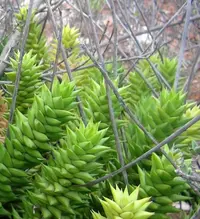
This species forms tight, spiral leaf columns with sharply pointed, triangular leaves arranged in distinct vertical ranks, a pattern that is much more regular and architectural than in most other Astroloba species.

Restricted Cape habitat

Astroloba spiralis is naturally confined to arid parts of the Western Cape in South Africa, where it grows on rocky slopes and limestone-rich soils that drain very quickly.

Night-blooming tubular flowers

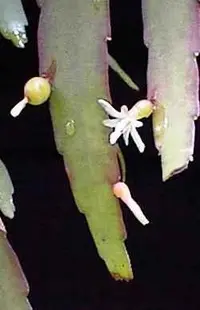
It produces slender, tubular white flowers often flushed with green or brown on tall inflorescences, and the blooms tend to open in the cooler evening and night hours, likely attracting nocturnal pollinators.

Botan icon

Did you know?

Collectors consider this species one of the most variable Astroloba, with local forms differing in leaf length, twisting degree, and surface texture, so plants from different populations can look strikingly unlike each other even though they are the same species.

FAQs about Rough Flowered Apicra

Brown leaf tips or patches usually result from prolonged drought, very low humidity, fertilizer salts building up in the pot, or strong sun scorch. Check roots, adjust watering slightly, flush the substrate, and provide gentler light exposure.

Grow Healthy Plants with Botan Care

Keep your plants happy and healthy with plant identification, disease detection, and easy care guidance.


Botan plant care app — identify plants on mobile

Explore More Plants