


Root-zone gravel
Lay a 5–8 cm band of coarse gravel or pumice around the base to keep stem pads off damp soil and reduce the risk of rot where the joints touch the ground.

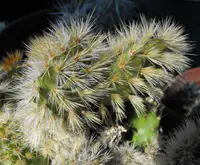
Big Bend pricklypear, Grusonia schottii, is a small, clustering cactus native to arid regions of the Chihuahuan Desert, especially around Big Bend in Texas and northern Mexico. It forms low, spiny mats of short, cylindrical segments rather than tall pads. The dense, sharp spines give strong protection from animals and sun, but they also mean handling requires care. This species is adapted to intense light, lean rocky soils, and very dry conditions, so it dislikes heavy, wet substrates. It suits growers who prefer a low-maintenance desert plant and understand how to care for Big Bend pricklypear with minimal watering and excellent drainage.

Care Difficulty
Moderate Care

Light Preference
Full Sun

Water Requirements
Low Water

Temperature Preference
Warm Climate

Hardiness Zone
8–11

Soil Texture
Sandy, Loamy, Rocky

Soil pH
Slightly acidic (6.5–7.0), Slightly alkaline (7.0–7.5)

Soil Drainage
Well-drained

Fertilization
Minimal (feed rarely)
Scan your plant to receive care tips personalized for your specific plant
Available on iOS and Android
This desert cactus prefers strong sun but benefits from gradual acclimation in cultivated settings.
This species is highly drought tolerant and must be kept on the dry side to stay healthy.
This cactus is adapted to hot, dry climates but still has clear temperature limits in cultivation.
This desert cactus handles low humidity well and rarely needs special humidity control indoors.
This species needs a very fast-draining, mineral-rich substrate to prevent root rot.
This cactus is suitable for container growing when the pot is set up to stay very dry around the roots.
Grusonia schottii grows well in lean, sandy soils and needs only light feeding in cultivation.
Pruning Grusonia schottii is minimal and mainly focused on safety and plant health.
Container or landscape plants are moved infrequently, as this cactus dislikes root disturbance.
Grusonia schottii is usually propagated from stem cuttings, with seeds used mainly by specialists.
This cactus is relatively cold hardy when dry but still benefits from thoughtful winter management.

Plant Health Check
Not sure what's wrong with your plant? Check your plant's health inside the app.
This cactus often drops entire stem segments when disturbed, a process called segment abscission, which helps it escape herbivores and also allows the detached pieces to root and start new plants.
Its spines are strongly hooked at the tips and easily catch onto fur, skin, or clothing, helping the plant disperse when segments cling to passing animals.
Native to the Chihuahuan Desert of the Big Bend region and northern Mexico, it grows in very coarse, rocky, and often gypsum-rich soils where many other plants cannot survive, making Grusonia schottii care quite different from that of typical houseplants.

In parts of its native range, dense, low mats formed by this species act as living barriers that can significantly limit the movement of small to medium-sized animals, creating microhabitats that trap windblown litter and provide shelter for insects and other small desert organisms.
Growth is slow. In suitable desert or xeric garden conditions, it may add only a few centimeters in height and spread per year. Poor drainage, frequent watering, or low light slow it even further.
Keep your plants happy and healthy with plant identification, disease detection, and easy care guidance.

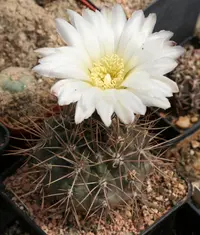
Gymnocalycium gibbosum
Gymnocalycium gibbosum
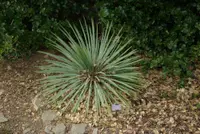
soapweed yucca
Yucca glauca
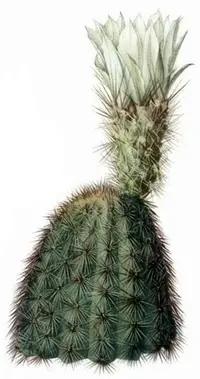
San Esteban hedgehog
Echinocereus grandis
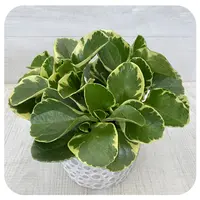
Baby Rubber Plant
Peperomia obtusifolia 'Variegata'
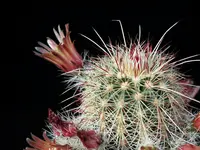
brownspine hedgehog cactus
Echinocereus russanthus
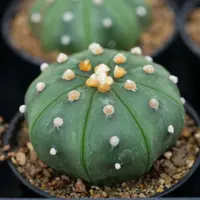
Star Cactus
Astrophytum asterias
 POPULAR
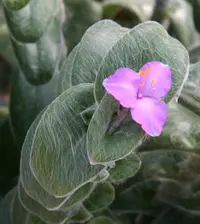
White Velvet
Tradescantia sillamontana
Schlumbergera russelliana
Schlumbergera russelliana