BotaN logo

soapweed yucca Care (Yucca glauca)

Also known as: Yucca, small soapweed, Spanish bayonet, Great Plains yucca, Soapweed, Gurney's yucca, American Vetch, Narrowleaf Yucca, Small Soapweed Yucca, beargrass
soapweed yucca

About soapweed yucca

Soapweed yucca (Yucca glauca) is a hardy, evergreen shrub native to the Great Plains of North America. It forms clumps of narrow, stiff, blue‑green leaves with sharp tips. Tall flower spikes rise above the foliage, carrying many creamy white, bell‑shaped flowers. The plant has a strong architectural look and stays low and clumping rather than forming a tree. In the wild it grows in dry prairies, rocky slopes, and open grasslands, so it tolerates drought, wind, and poor soils very well. These traits make it relatively easy to grow in low‑maintenance, sunny landscapes if the soil drains well and stays on the dry side. Understanding how to care for soapweed yucca starts with respecting its desert‑like origin.

Main Plant Requirements

Care Difficulty

Easy Care

Light Preference

Full Sun

Water Requirements

Low Water

Temperature Preference

Cold Hardy

Hardiness Zone

3–8

Soil Texture

Sandy, Loamy, Rocky

Soil pH

Neutral (7.0), Slightly alkaline (7.0–7.5)

Soil Drainage

Well-drained

Fertilization

Minimal (feed rarely)

Get Personalized Care Plan

Scan your plant to receive care tips personalized for your specific plant

Available on iOS and Android

How to Care for the soapweed yucca

Yucca glauca thrives in strong sun typical of open plains and dry prairies.

  • Provide 6–10 hours of direct sun daily; full sun from morning through mid-afternoon supports compact growth and dense leaf rosettes.
  • Plant soapweed yucca in a position with unshaded southern or western exposure; it tolerates light afternoon shade in hotter regions but may elongate and lose vigor in too much shade.
  • Newly planted specimens benefit from a few weeks of light midday protection; long-term, excessive shade reduces flowering, while unacclimated sudden full sun can cause leaf scorch.

Yucca glauca is strongly drought-tolerant and prefers infrequent deep watering over light frequent applications.

  • In the ground, wait until the top 5–8 cm of soil are completely dry and foliage looks slightly less turgid before watering again.
  • Use very fast-draining, sandy or gravelly soil; after watering, excess must drain away within minutes to prevent root rot and a sour, swampy soil smell.
  • Reduce or stop watering in cool or winter conditions; signs of overwatering include yellowing, limp, or mushy lower leaves, while crisp leaf tips and slow folding leaves point to drought stress.

This species is adapted to wide temperature swings and survives conditions that kill many ornamentals.

  • Active growth occurs around 65–85°F (18–29°C), especially in dry air and full sun, with slower growth during cooler or very hot periods.
  • Established plants tolerate winter lows near -20°F (-29°C) in dry, well-drained soil, but extended freeze in heavy, wet ground greatly increases crown and root damage risk.
  • Heat tolerance is high up to about 100°F (38°C) if soil is dry to only slightly moist; in prolonged extreme heat, avoid additional stress such as recent transplanting or heavy pruning.

Humidity is rarely a concern for Yucca glauca, which evolved in very dry habitats.

  • Target 20–40% humidity; the plant tolerates typical heated indoor air without added moisture.
  • Excess humidity combined with low airflow encourages leaf spotting, soft leaf bases, and crown rot.
  • If air is extremely dry and hot, increase spacing between plants and ensure strong air movement rather than adding humidifiers.

Yucca glauca needs very fast-draining, mineral-based soil to prevent root and crown rot.

  • Use a gritty mix such as 50–70% coarse sand or fine gravel with the rest a lean cactus or succulent mix.
  • Aim for slightly alkaline to neutral pH, roughly 7.0–8.0, avoiding strongly acidic substrates.
  • Improve aeration by mixing in pumice or perlite; the soil should feel loose and never compact into clods when dry.
  • Avoid high-peat, water-retentive, or clay-heavy soils, which keep roots wet and quickly lead to rot.

This species can grow in containers if the pot and substrate strongly favor drainage and stability.

  • Choose a deep, heavy container (such as thick terracotta or concrete) to counter its tall, top-heavy growth and wind exposure outdoors.
  • Fill the bottom third with coarse mineral material like gravel to improve drainage and weight without waterlogging roots.
  • Position the pot where wind buffeting is reduced, or brace it, because tall, narrow foliage can act like a sail and tip light containers.

Yucca glauca is adapted to poor, dry soils and needs only light feeding in cultivation.

  • Use a low-dose, balanced NPK fertilizer (around 10-10-10) or a thin layer of compost in spring for caring for soapweed yucca.
  • Feed once at the start of the growing season; a second very light dose in midsummer is usually enough.
  • Dilute liquid fertilizer to 25–50% strength to avoid root burn in containers.
  • Do not fertilize in fall and winter, as growth is slow and excess nutrients can cause weak, floppy tissue.

Yucca glauca benefits from minimal, targeted pruning to keep it tidy and healthy.

  • Best time for pruning is late winter to early spring, before strong new growth starts.
  • Remove dead, damaged, or diseased leaves at the base using clean, sharp pruners.
  • Cut spent flower stalks close to the crown once seeds have formed or been removed.
  • Limit pruning of healthy green leaves to small adjustments, as heavy removal can weaken the plant and distort its natural form.

This species is usually grown in the ground and only needs infrequent transplanting or repotting.

  • Transplant in late spring or early summer when soil is warming and the plant is actively growing.
  • Look for signs such as crowded clumps, poor flowering, or roots circling a container before moving Yucca glauca.
  • Lift with a wide root ball, keep roots as intact as possible, and handle the sharp leaves carefully.
  • Replant into very well-drained soil, water once to settle, then keep on the dry side to limit root stress and rot.

Yucca glauca is most often propagated by division of offsets, with seeds as a slower alternative.

  • Divide offsets in late spring when new growth starts and soil is warming.
  • Use a clean, sharp knife or spade to separate pups with some attached root, then plant in gritty, well-drained soil.
  • Keep divisions in bright light and only slightly moist until new root growth is evident.
  • Sow seeds in a fast-draining mix, provide bright light, and maintain moderate, even moisture for germination.

Yucca glauca is very cold hardy and usually needs little winter care in the ground.

  • In regions with severe freeze–thaw cycles, apply a 5–8 cm layer of dry mulch around the root zone, keeping it off the crown.
  • Leave old lower leaves in very exposed sites to add a bit of insulation to the stem.
  • For container plants in cold climates, move pots to an unheated garage or sheltered porch to avoid root freezing.

Care Tips

Encourage Deep Roots

Water rarely but deeply during the first 1–2 growing seasons so moisture reaches 20–30 cm down, which trains the plant to form a deep, drought-resilient root system rather than shallow, weak roots.

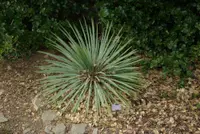
Gravel Collar Mulch

Apply a 3–5 cm ring of coarse gravel or small rock around the base instead of organic mulch to suppress weeds, keep the crown dry, and mimic the sharp drainage of its native habitat.

Prevent Crown Rot

Plant on a low mound or slight slope and keep surrounding soil graded away from the crown so rain and irrigation water run off instead of pooling around the base, which reduces rot risk in wet periods.

Safe Winter Snow Management

In snowy regions, gently brush off heavy wet snow with a broom before it compacts, supporting the leaves from below, to prevent leaf breakage and crown deformation without snapping the stiff foliage.

Controlled Offshoot Removal

Use a clean, sharp spade to slice off suckers at the base in late spring, leaving a small portion of root attached, which both keeps clumps from becoming too dense and provides divisions for growing soapweed yucca in new spots.

Common Pests and Diseases

yucca weevil

This pest is a specialized beetle whose larvae tunnel into the crown and upper roots, causing collapse of individual rosettes. Symptoms include wilting, loose crowns, and brown, foul-smelling tissue at the plant base.

Solution

Remove and destroy any collapsed or soft crowns, cutting back to firm, white tissue and discarding all infested material. Keep the base dry, avoid heavy mulch around the crown, and where infestation is known, use a labeled systemic insecticide as a soil drench in spring, following local regulations and product directions.

yucca moth larvae

These insects are the larvae of yucca moths that feed inside developing seed pods, sometimes deforming pods and diverting plant energy from seed production. Symptoms include small exit holes and frass in or on the pods.

Solution

Hand-pick and destroy heavily damaged pods before larvae exit, especially if seed production is not needed. For ornamental plants, thinning pods after flowering and cleaning up dropped pods breaks the life cycle without chemical treatment and supports balanced Yucca glauca plant care.

scale insects

These insects appear as small, fixed bumps on leaves and stems, sucking sap and sometimes causing yellowing or weak growth in stressed or container-grown plants. Symptoms include sticky honeydew and sooty mold on nearby surfaces in heavier infestations.

Solution

Wipe leaves with a cloth dampened in mild soapy water or spray the plant thoroughly, focusing on leaf bases and undersides, then rinse with clean water. For persistent scale on outdoor plants, prune and discard heavily infested leaves and use a horticultural oil spray during mild weather to cover the insects completely.

leaf spot

This disease causes small tan to dark brown lesions on leaves, sometimes with yellow halos, usually appearing after extended wet or humid conditions. Symptoms include scattered, dry spots that may coalesce on older foliage but rarely kill the whole plant.

Solution

Remove and discard affected lower leaves to reduce spore spread, and water at the soil level rather than overhead so foliage dries quickly. Improve spacing and airflow, and in repeatedly wet climates consider a labeled copper or broad-spectrum fungicide at the start of prolonged rainy periods if valuable specimens are regularly affected.

crown and spear rot

This disease affects the central growing point, where new leaves emerge, often after prolonged cold, wet conditions or water trapped in the rosette. Symptoms include soft, foul-smelling tissue in the crown, with new leaves pulling out easily and turning brown at the base.

Solution

Cut out all soft, brown tissue from the crown with a sterile knife until only firm, healthy tissue remains, then allow the area to dry thoroughly with no standing water in the rosette. Improve drainage, avoid winter overhead watering, and in very wet climates consider slightly tilting plants or planting on a raised mound to keep the crown drier.

Interesting Facts

Specialist yucca moth partner

This species depends on the yucca moth Tegeticula yuccasella for pollination, and the moth’s caterpillars in turn feed only on its seeds, forming a tightly coevolved mutualism found across the Great Plains and adjacent regions.

Extreme drought tolerance

The plant survives on very low rainfall in its native shortgrass prairie by using a thick, fibrous root system and narrow, waxy leaves that reduce water loss and withstand high sun and wind exposure.

Cold-hardy desert rosette

Unlike many arid-land plants, it tolerates winter temperatures well below freezing and is native from Canada south into the central United States, forming evergreen rosettes that stay structurally intact through snow and frost.

Botan icon

Did you know?

Indigenous peoples of the Great Plains used the tough leaf fibers of this species to make cordage, sandals, baskets, and brushes, while also eating the flowering stalks and young fruits as seasonal foods, making it both a fiber and emergency food plant in traditional cultures.

FAQs about soapweed yucca

Yellowing leaves often result from excess moisture, poor drainage, or natural aging of older foliage. Check soil drainage, reduce watering, and remove only fully dry, lower leaves. Persistent yellowing may indicate root rot or nutrient imbalance.

Grow Healthy Plants with Botan Care

Keep your plants happy and healthy with plant identification, disease detection, and easy care guidance.

Botan plant care app — identify plants on mobile

Explore More Plants