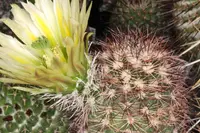
brownspine hedgehog cactus Care (Echinocereus russanthus)

Also known as: Rusty Hedgehog Cactus, Russet Hedgehog Cactus
brownspine hedgehog cactus

About brownspine hedgehog cactus

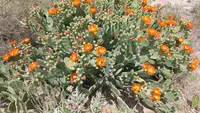
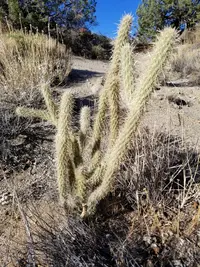
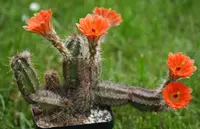
The brownspine hedgehog cactus, Echinocereus russanthus, is a small clumping cactus native to arid regions of the southwestern United States and northern Mexico. It typically forms low mounds of short cylindrical stems covered in dense brown to reddish spines.

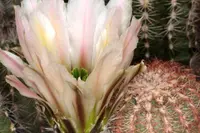
In spring, it produces tubular red to brownish flowers that attract pollinators and add strong seasonal interest. Its slow growth and compact size make it suitable for rock gardens, desert landscapes, and containers.

This species is adapted to strong sun, high heat, and very dry, rocky soils, which makes care for brownspine hedgehog cactus relatively straightforward in similar conditions. It generally prefers bright light, low humidity, and fast-draining mineral-based substrates.

Main Plant Requirements

Care Difficulty

Moderate Care

Light Preference

Full Sun

Water Requirements

Low Water

Temperature Preference

Warm Climate

Hardiness Zone

7–10

Soil Texture

Sandy, Rocky, Loamy

Soil pH

Slightly acidic (6.5–7.0), Neutral (7.0)

Soil Drainage

Well-drained

Fertilization

Minimal (feed rarely)

Get Personalized Care Plan

Scan your plant to receive care tips personalized for your specific plant

Available on iOS and Android

How to Care for the brownspine hedgehog cactus

This desert cactus requires strong light to maintain compact, healthy growth.

  • Provide 6–8 hours of direct sun daily; morning sun with light afternoon shade is ideal, especially in hot, low-humidity regions.
  • Teach brownspine hedgehog cactus to handle full sun by increasing exposure over 1–2 weeks to avoid bleaching or sunscald on the stems.
  • In summer, protect from intense late-afternoon sun; in winter, keep in the brightest spot available to prevent weak, elongated growth.

Watering should mimic arid habitats, with thorough soakings followed by long dry periods.

  • Allow the top 5–8 cm of soil to dry completely before watering, then soak deeply so water drains quickly from the root zone.
  • Use a very fast-draining, gritty mix and avoid water sitting around the base; soft, yellowing stems or a sour smell indicate overwatering and possible rot.
  • During active growth in spring–summer, expect more frequent watering; in fall–winter, water sparingly only when stems begin to slightly wrinkle.

Temperature needs reflect its origin in hot, seasonally cool desert environments.

  • Aim for 70–90°F (21–32°C) during active growth, with good air movement to reduce heat stress in strong sun.
  • The plant tolerates brief drops to about 20–25°F (-6 to -4°C) if very dry, but repeated hard frosts increase risk of tissue damage.
  • For best flowering, provide a cool, dry winter rest around 40–50°F (4–10°C), protecting from freezing rain, ice, and prolonged damp cold.

This cactus prefers very dry air and does not need added humidity.

  • Aim for 20–40% relative humidity, similar to a dry, heated indoor room or arid outdoor climate.
  • It tolerates lower humidity well; problems arise more from excess moisture than from air that is too dry.
  • If humidity stays above 60%, improve air movement and reduce watering to prevent soft, discolored stems and rot in brownspine hedgehog cactus.

Use a very fast-draining, mineral-heavy mix to keep roots dry between waterings.

  • Choose a gritty, sandy substrate with coarse particles that create air pockets and prevent compaction.
  • Aim for slightly acidic to neutral pH around 6.0–7.0, which supports nutrient availability without encouraging rot.
  • Combine about 20–30% cactus potting mix with 70–80% mineral materials such as pumice, coarse sand, and small gravel for Echinocereus russanthus.
  • Avoid dense, peat-heavy, or clay-rich mixes that stay wet, and always test that water runs through the pot within a few seconds.

This species is well suited to container growing when drainage and root zone conditions are carefully controlled.

  • Select a pot only 2–4 cm wider than the plant’s base to keep the root zone drying at a similar rate as the upper substrate.
  • Use unglazed terracotta if possible, since its porous walls allow faster evaporation and reduce the risk of chronic sogginess.
  • Place the pot on a slight incline or use pot feet outdoors so water drains fully away from the base after rain.

Echinocereus russanthus benefits from light feeding but remains sensitive to excess nutrients.

  • Use a low-dose balanced cactus fertilizer (around 5-5-5) or dilute general balanced NPK to 25–50% strength.
  • Apply during the warm growing season only, about every 4–6 weeks, on already moist soil to prevent root burn.
  • Skip or very sharply reduce feeding in winter dormancy, as growth is minimal and salts can accumulate in the mix.
  • For brownspine hedgehog cactus in very lean, sandy soil, a small amount of slow-release cactus food in spring is sufficient.

Echinocereus russanthus needs minimal pruning, mainly for hygiene and safety.

  • Best timing is late spring to summer, when plants are growing and wounds seal faster.
  • Remove only dead, shriveled, diseased, or broken stems; avoid cutting healthy segments to preserve natural clumping form.
  • Use long-handled tongs and sharp, disinfected pruners, then dust large cuts lightly with dry sulfur or cinnamon to reduce rot risk.

This cactus prefers to stay undisturbed and only needs repotting when clearly rootbound or declining.

  • Check for roots circling the pot, pushing through drainage holes, or very slow growth as signs it needs a larger container.
  • Plan repotting for late spring, every 3–5 years, so the plant enters active growth soon after disturbance.
  • Water lightly 3–5 days before, then slide the root ball out gently using tongs or folded newspaper to avoid stem damage.
  • Place in a slightly wider pot with fresh, gritty cactus mix, keep roots at the same depth, and wait 7–10 days before the first light watering.

Propagation of Echinocereus russanthus is possible by seeds or offsets, though it can be slow.

  • Separate small offsets in late spring or early summer using sterile, sharp tools and sturdy tongs for safe handling.
  • Allow cut surfaces to dry and callus in a warm, airy place for 5–10 days before potting in dry, gritty cactus mix.
  • Keep newly potted offsets bright but lightly shaded, and introduce very small, infrequent waterings only after firm rooting begins.
  • Sow seeds in shallow trays of sterile, sandy mix kept at 70–80°F with bright, indirect light and barely moist substrate until germination.

This species is relatively cold tolerant but still benefits from thoughtful winter care, especially in containers.

  • Mature plants in dry soil can handle brief drops near 10–15°F, but prolonged wet cold strongly increases rot risk.
  • Keep container plants almost completely dry in winter and ensure excellent drainage so roots never sit in cold, saturated mix.
  • In areas with severe freeze-thaw cycles, move pots under a dry overhang or unheated greenhouse to keep them cold but sheltered.

Care Tips

Gritty topdressing

Apply a 0.5–1 in layer of fine gravel or pumice on the soil surface to keep the stem base dry, reduce algae and fungus gnat issues, and stabilize shallow roots.

Clay pot choice

Use an unglazed clay pot that is only 1–2 in wider than the clump to improve evaporation around the root zone and reduce the risk of rot in compact plantings.

Cold rest management

Provide a dry, cool rest at 40–50°F for 8–12 weeks in winter to encourage tighter growth and more reliable flowering in the following season.

Light acclimation steps

Shift the plant into stronger sun over 10–14 days by moving it a little closer to the light source every few days to prevent epidermal scorch on the stems.

Flowering support

After buds appear, avoid rotating the pot and protect from sudden drafts or heavy rain, as stable orientation and conditions help prevent bud drop when growing brownspine hedgehog cactus.

Common Pests and Diseases

Stem mealybugs

This pest hides in woolly white clusters between ribs and at the cactus base, sucking sap and causing yellowing, weak growth, and occasional sooty mold from honeydew. Infestations often start in tight crevices between the spines where they are hard to see at first.

Solution

Isolate the plant, then dab visible mealybugs with cotton swabs dipped in 70% isopropyl alcohol and gently brush them out from between spines. Improve light and air movement, reduce excess humidity, and repeat alcohol treatments weekly; for heavy infestations, use a labeled systemic insecticide for cacti according to package directions as part of overall Echinocereus russanthus care instructions.

Red spider mites

These insects are tiny sap-feeding mites that prefer hot, dry, stagnant conditions and can cause a dusty surface, fine webbing, and a dull, speckled appearance to the stems. Symptoms include slow growth and loss of the plant’s natural sheen or color intensity.

Solution

Rinse the plant thoroughly with a strong but controlled stream of water, directing it along the ribs to dislodge mites and webbing without damaging tissue. Increase air circulation, avoid extreme dry heat without airflow, and use repeated applications of insecticidal soap or a horticultural oil labeled for cacti, applied carefully to reach all surfaces between spines.

Corky scab lesions

This disease produces dry, corky, brown patches on the stem surface, often along lower ribs or areas that were repeatedly wet or slightly injured. Symptoms include rough, scar-like tissue that does not wipe off and may slowly expand but usually stays localized.

Solution

Remove only any loose, dead tissue with clean tools and keep the plant in a bright, airy, dry position to prevent further spread. Avoid frequent overhead watering, dry the plant quickly after rainfall if grown outdoors in pots, and protect it from repeated minor injuries or prolonged skin wetness so new growth stays smooth and healthy.

Basal stem rot

This disease starts at the base of the cactus where moisture lingers, causing soft, discolored, and sometimes foul-smelling tissue that eventually destabilizes the whole plant. Symptoms include a shrinking or tilting clump and brown or black mushy tissue at soil level.

Solution

At the first sign, unpot the plant and cut away all soft or discolored tissue with a sterile knife, keeping only firm, healthy segments. Allow cut surfaces to callus dry in bright, indirect light for several days, then re-root in a fast-draining mineral cactus mix in a pot with excellent drainage and water very sparingly until new roots form.

Interesting Facts

Rust-colored spine bands

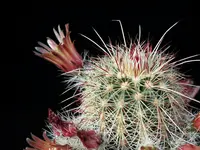
This species shows a distinctive banding pattern on its spines, where rusty brown sections alternate with paler segments along each spine, giving the plant its common name brownspine hedgehog cactus.

Narrow tubular flowers

The flowers are unusually narrow and tubular for a hedgehog cactus, with reddish to purplish tepals (petal-like structures) that create a long funnel shape adapted to pollinators with longer mouthparts.

Gypsum soil specialist

In the wild, this cactus often grows on gypsum-rich or calcareous gravelly soils in the Chihuahuan Desert, tolerating mineral conditions that many other plants cannot handle.

Botan icon

Did you know?

Populations of this cactus are naturally scattered and often very localized, so botanists recognize several regional forms and varieties that differ subtly in flower color, spine length, and rib count across its range in Texas and northern Mexico.

FAQs about brownspine hedgehog cactus

Growth is slow. In suitable outdoor conditions, stems usually add only a few millimeters per year, forming small clumps over many years. Limited water, cool temperatures, and low light slow growth even further.

Grow Healthy Plants with Botan Care

Keep your plants happy and healthy with plant identification, disease detection, and easy care guidance.

Botan plant care app — identify plants on mobile

Explore More Plants