


Encourage Compact Clumping
Rotate the pot a quarter turn every 2–3 weeks during the bright season so all sides receive similar light, which keeps the plant compact and encourages even clump formation instead of leaning toward one direction.

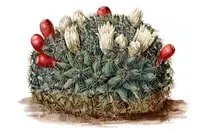
The little nipple cactus, Mammillaria heyderi, is a small, clustering cactus native to arid regions of Mexico and the southern United States. It forms low, rounded mounds covered in short tubercles tipped with tight clusters of spines. This species often produces small, ring-shaped displays of pink to whitish flowers near the crown, followed by elongated red fruits. Its compact size and slow growth make it suitable for containers and rock gardens. Mammillaria heyderi prefers bright light, low humidity, and sharply drained, mineral-rich soil. These drought-adapted traits generally make it easy to care for little nipple cactus when overwatering is avoided.

Care Difficulty
Easy Care

Light Preference
Full Sun

Water Requirements
Low Water

Temperature Preference
Warm Climate

Hardiness Zone
9–11

Soil Texture
Sandy, Loamy, Rocky

Soil pH
Slightly acidic (6.5–7.0), Neutral (7.0)

Soil Drainage
Well-drained

Fertilization
Minimal (feed rarely)
Scan your plant to receive care tips personalized for your specific plant
Available on iOS and Android
Mammillaria heyderi thrives in bright, mostly direct sun that mimics its native desert habitat.
This cactus prefers infrequent, thorough watering with fast drainage to prevent root rot.
This desert species prefers warm conditions and only brief exposure to cold.
This cactus prefers dry air and rarely needs extra humidity.
Provide a very fast-draining, mineral-rich mix to prevent root rot.
This species is very suitable for container growing due to its compact, shallow root system.
This small cactus has low nutrient needs but benefits from light feeding during active growth for best flowering and compact form.
Mammillaria heyderi needs minimal pruning, mainly to keep the plant clean and healthy rather than to control size.
This cactus grows slowly and prefers slightly tight pots, so repotting is infrequent and mainly for root health.
Mammillaria heyderi is commonly propagated from offsets and seeds, both of which respond well to warm, bright conditions.
This cactus prefers a cool, dry winter rest and has limited frost tolerance, especially in containers.

Plant Health Check
Not sure what's wrong with your plant? Check your plant's health inside the app.
This species has pronounced conical tubercles that channel scarce desert rain and dew directly toward the root zone, improving water capture in its arid native habitats.
Unlike many tropical cacti, it can survive brief light frosts in habitat, reflecting adaptation to high-elevation grasslands and open scrub in the southern United States and northern Mexico.
Populations show notable variation in radial and central spine number, length, and color, which botanists use to distinguish regional forms and to study microevolution within the species.

In parts of its native range, this cactus often grows partially sunken into the soil, so that only the flattened top is visible, reducing surface exposure and water loss while helping it blend into surrounding gravel and grass.
Lack of flowers often relates to insufficient light, limited winter cool-down, or a pot that is too large. Mild winter rest with less water and bright conditions in spring usually support blooming for mature plants.
Keep your plants happy and healthy with plant identification, disease detection, and easy care guidance.

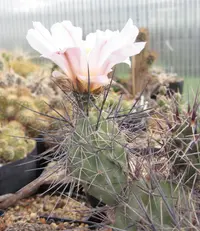
Tephrocactus alexanderi
Tephrocactus alexanderi
Tephrocactus verschaffeltii
Tephrocactus verschaffeltii

rainbow hedgehog cactus
Echinocereus rigidissimus
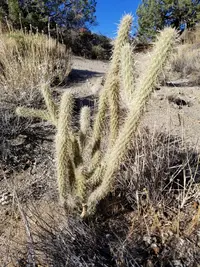
Gander's buckhorn cholla
Cylindropuntia ganderi
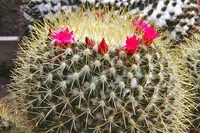
rainbow pincushion
Mammillaria rhodantha
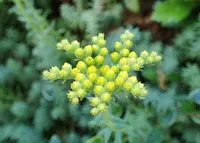
Reflexed Stonecrop
Petrosedum rupestre
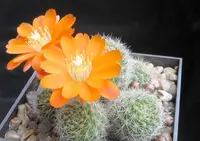
Aylostera fiebrigii
Aylostera fiebrigii
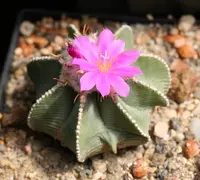
Aztekium hintonii
Aztekium hintonii