Gander's buckhorn cholla Care (Cylindropuntia ganderi)

Also known as: Gander's cholla
Gander's buckhorn cholla

About Gander's buckhorn cholla

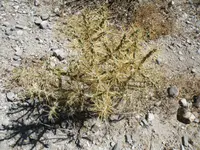
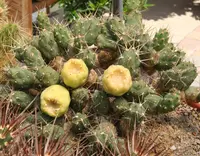
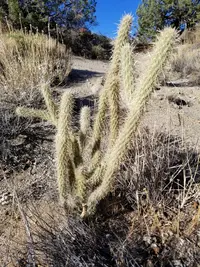
Gander's buckhorn cholla (Cylindropuntia ganderi) is a branching desert cactus known for its cylindrical, jointed stems densely covered with sharp spines. It forms upright, woody clumps that can become quite large in open ground.

This species is native to arid regions of southern California and northwestern Baja California, where it thrives in hot, dry, rocky habitats. In cultivation it prefers strong sun, very fast-draining mineral soil, and minimal water.

Its slow growth, heavy armament of spines, and need for excellent drainage make it better suited to careful growers than to casual beginners. Understanding how to care for Gander's buckhorn cholla is mainly about avoiding excess moisture and handling it safely.

Main Plant Requirements

Care Difficulty

Moderate Care

Light Preference

Full Sun

Water Requirements

Low Water

Temperature Preference

Warm Climate

Hardiness Zone

9–11

Soil Texture

Sandy, Rocky, Loamy

Soil pH

Slightly acidic (6.5–7.0), Neutral (7.0)

Soil Drainage

Well-drained

Fertilization

Minimal (feed rarely)

Get Personalized Care Plan

Scan your plant to receive care tips personalized for your specific plant

Available on iOS and Android

How to Care for the Gander's buckhorn cholla

This desert cactus needs strong sun to stay compact and healthy.

  • Provide 6–10 hours of direct sun daily; full, unobstructed exposure suits mature plants in arid climates.
  • Young or recently transplanted Gander's buckhorn cholla benefits from 2–3 weeks of filtered light or morning sun only to prevent scorching.
  • In cooler seasons, ensure at least 4–6 hours of direct sun; in extreme summer heat, slight afternoon shade reduces stress and stem bleaching.

This species is highly drought tolerant and must dry thoroughly between waterings.

  • Outdoors in native‑like conditions, water only after prolonged dry periods when pads look slightly wrinkled and the top 5–10 cm of soil are completely dry.
  • Use very fast‑draining, gravelly soil so water runs through within seconds; standing water or compacted clay leads to root and stem rot in Cylindropuntia ganderi.
  • Reduce or stop watering in cool seasons; if temperatures drop and growth pauses while stems stay firm, withhold water rather than follow a fixed schedule.

This cactus prefers hot, arid conditions but has notable cold tolerance when kept dry.

  • Best growth occurs around 75–95°F (24–35°C); the plant also tolerates brief spikes up to 105°F (40°C) if roots are in coarse, dry soil.
  • Established plants survive down to about 15–20°F (-9 to -6°C) when soil is dry, but repeated hard freezes with wet soil increase rot risk.
  • Protect from prolonged frost by improving drainage and avoiding winter watering; provide airflow and light shade in extreme heat to limit tissue stress.

This desert cactus handles very dry air and rarely needs extra humidity indoors.

  • Target 20–40% relative humidity, similar to arid indoor conditions, without deliberate humidification.
  • Plant tolerates central heating and drafty rooms, but avoid placing it directly above humidifiers or in bathrooms.
  • Humidity stress appears as soft, waterlogged segments or fungal spots; lower ambient moisture and increase air circulation if this occurs when caring for Gander's buckhorn cholla.

Cylindropuntia ganderi needs a very fast-draining, mineral-rich substrate that mimics desert soils.

  • Use a gritty mix such as 60–70% mineral components (coarse sand, pumice, or small gravel) blended with 30–40% cactus potting mix.
  • Aim for slightly acidic to neutral pH around 6.0–7.0, avoiding strongly acidic or alkaline amendments unless a soil test indicates imbalance.
  • Improve aeration by using large particle sizes (2–5 mm) and avoiding peat-heavy bagged mixes that stay wet for more than 2–3 days.
  • Do not plant in dense loam or clay; if garden soil is heavy, grow Cylindropuntia ganderi in raised beds or containers filled with a custom gritty cactus mix.

This species adapts well to container growing when the pot minimizes water retention and provides strong support.

  • Choose a wide, heavy terracotta or concrete pot to counterbalance the tall, branching stems and reduce tipping risk outdoors.
  • Select a pot only 2–4 cm wider than the root ball so the gritty mix dries quickly between sparse waterings.
  • Raise the container on pot feet or bricks so water drains freely from the holes and does not reabsorb from trays or paving.

This desert cactus needs very light feeding, as Gander's buckhorn cholla is adapted to nutrient-poor soils.

  • Use a low-dose balanced cactus fertilizer (for example 5-5-5) or very dilute balanced liquid NPK at 25–50% strength.
  • Feed once at the start of spring and once in early summer only, during active growth.
  • Do not fertilize in fall or winter, when growth slows and roots are more vulnerable to burn.
  • Avoid rich composts or frequent feeding, which can cause weak, overly lush segments.

Pruning Cylindropuntia ganderi is mainly about safety, space management, and removing problem growth.

  • Carry out pruning in late winter to early spring, before strong new growth begins.
  • Remove dead, diseased, storm-damaged, or crossing segments to maintain an open structure.
  • Use long-handled loppers or a pruning saw plus heavy leather gloves and eye protection.
  • Cut cleanly at segment joints to shape the plant and reduce snagging hazards without stubbing or tearing tissue.

Cylindropuntia ganderi is usually grown in the ground and dislikes frequent disturbance, so transplant only when clearly needed.

  • Transplant in late spring once frost risk has passed and soil is warming for faster root recovery.
  • Move plants when growth slows, stems lean from poor light, or roots circle and emerge from drainage holes in containers.
  • Shift to a slightly larger pot or new site with very fast-draining, gritty soil to prevent root rot.
  • Water lightly after moving, then keep on the dry side for 1–2 weeks to limit root stress and wound infection.

This species is most often propagated from stem cuttings, which root reliably under warm, dry conditions.

  • Take healthy segment cuttings in late spring or early summer, using clean, sharp tools and thick gloves.
  • Allow cut ends to dry and callus for 5–10 days in a shaded, airy place to reduce rot risk.
  • Plant callused segments upright in sterile, gritty cactus mix, burying just enough to stabilize them.
  • Keep warm with bright light, minimal water, and excellent drainage until firm new roots and growth appear.

This cactus is fairly cold hardy in dry climates but still benefits from basic winter management in many gardens.

  • Established plants in-ground tolerate short dips near 10–15°F if soil is sharply drained and air is dry.
  • In wetter climates, add a 5–8 cm gravel mulch around the base to improve drainage and insulate roots.
  • For containers, keep the mix almost dry and move pots under a roof or indoors to a bright, cool, frost-free spot.

Care Tips

Stabilize Young Plants

Use a short, sturdy stake and a loose figure‑8 tie to support young stems in windy or exposed sites until the root system anchors firmly into the soil.

Encourage Upright Form

Select 2–4 strongest stems and remove weak, low, or crossing segments with clean, long‑handled pruners to train a more open, upright clump that is easier to access and less prone to breakage.

Safe Handling Setup

Before any pruning or transplanting, put on thick leather gloves, long sleeves, and use tongs or folded newspaper to hold segments so spines and small glochids do not embed in skin or tools.

Segment Propagation Control

When propagating from stem segments, let cut ends callus in a dry, shaded place for 5–10 days, then plant them upright in a dedicated propagation bed or pot to avoid unwanted spreading in the main landscape area.

Monsoon-Season Protection

In regions with summer monsoon storms, slightly mound the planting site or add a shallow gravel swale around the base to direct brief heavy runoff away from the crown, which helps when caring for Gander's buckhorn cholla in poorly drained yards.

Common Pests and Diseases

Cochineal scale

This pest forms white, cottony patches on pads and stems, often with red staining when crushed. Symptoms include slowed growth and yellowing or slightly shriveled segments on affected areas.

Solution

Physically remove colonies with a strong stream of water or by wiping with cotton swabs dipped in 70% isopropyl alcohol, then dispose of heavily infested segments. For outdoor clumps, improve air movement around the plant, avoid excess nitrogen fertilizer, and if needed use a horticultural oil or insecticidal soap labeled for cacti, applied in the early morning or evening to avoid sunburn.

Cactus longhorn beetle

This pest bores into stems at or near the base, causing tunneling damage, sudden stem collapse, and dieback of whole branches. Symptoms include oozing or darkened entry holes and weakened, easily detached segments.

Solution

Hand-pick adult beetles at dusk or dawn and destroy them, and prune and remove badly damaged stems, disposing of them away from other cacti. Reduce nearby debris and mulch where larvae can develop, and where infestations are recurring, consider physical barriers or trapping combined with close monitoring during warm months when adults are active.

Soft scale

These insects appear as small, rounded or oval, tan to brown bumps along stems and joints, often producing sticky honeydew. Symptoms include attracted ants, sooty mold growth, and gradual decline in vigor.

Solution

Prune out heavily infested segments and discard them, then wash remaining stems with a firm spray of water to dislodge insects. Follow with targeted applications of insecticidal soap or light horticultural oil during cooler parts of the day, repeating every 7–10 days until populations are reduced, and limit high-nitrogen fertilization that encourages soft new growth.

Fusarium stem canker

This disease causes sunken, discolored lesions on stems that may enlarge and girdle segments, leading to shriveling and death of affected joints. Symptoms include reddish-brown or dark patches that feel soft or corky and may spread along the stem.

Solution

Cut away infected tissue well into clean, firm, green tissue with a sterile knife and dispose of all diseased material, keeping cuts as small as practical. Maintain dry conditions around the stems, avoid overhead watering, improve spacing for faster drying, and sterilize tools between plants to limit spread; in severe cases, replant only healthy, disease-free cuttings in fresh, fast-draining medium as part of careful Cylindropuntia ganderi care.

Bacterial soft rot

This disease leads to water-soaked, slimy, and foul-smelling areas on stems that quickly collapse, especially after mechanical damage or excessive moisture. Symptoms include rapidly spreading mushy tissue and segments that detach easily at rotted points.

Solution

Immediately remove and discard all affected segments well back into firm, uninfected tissue, disinfecting cutting tools after each cut. Allow fresh cuts to callus fully in a dry, shaded place before replanting, minimize injuries to stems, and keep the plant in very fast-draining soil with infrequent watering so surfaces dry quickly after rain or irrigation.

Interesting Facts

Baja desert specialist

This species is naturally restricted to rocky slopes and alluvial fans in northwestern Baja California and a small adjacent area of southern California, where it is adapted to extremely arid, high-sun desert conditions.

Hybridization hotspot role

It is known to hybridize with other buckhorn-type chollas where their ranges overlap, contributing genetic material to local hybrid swarms and adding to the taxonomic complexity of desert chollas in its region.

Spine sheath coloration

Its spines often carry pale, translucent sheaths that can give whole segments a silvery or yellowish cast, which helps reflect intense sunlight and reduces heat load on the stem surface.

Botan icon

Did you know?

Botanists only formally described this cactus in the mid-20th century after realizing that distinctive buckhorn-like cholla populations in parts of Baja California and nearby California did not match any previously named species, leading to its recognition as a separate taxon rather than a local form of another cholla.

FAQs about Gander's buckhorn cholla

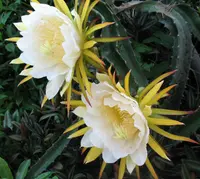
This species is very attractive to native bees and other insects when in bloom. The fruits and dense, spiny structure also offer food and shelter for desert birds, especially in naturalistic or habitat-style plantings.

Grow Healthy Plants with Botan Care

Keep your plants happy and healthy with plant identification, disease detection, and easy care guidance.

Botan plant care app — identify plants on mobile

Explore More Plants