Tacinga inamoena Care

Tacinga inamoena

About Tacinga inamoena

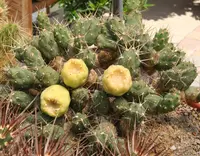
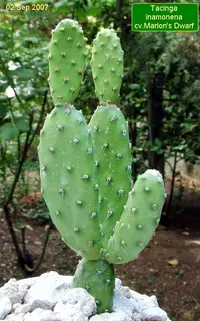
Tacinga inamoena is a branching cactus native to dry, rocky regions of eastern Brazil. It forms upright, jointed pads with spines and often shows bright, showy flowers followed by colorful fruits. The plant has a shrubby growth habit and can become quite wide over time in suitable conditions.

It is adapted to intense sun, high heat, and limited rainfall, which makes it relatively forgiving of drought but sensitive to overwatering. Sandy, fast-draining soil and plenty of light make it easier to care for Tacinga inamoena in cultivation.

Main Plant Requirements

Care Difficulty

Moderate Care

Light Preference

Full Sun

Water Requirements

Low Water

Temperature Preference

Tropical / Frost Sensitive

Hardiness Zone

10–12

Soil Texture

Sandy, Rocky, Loamy

Soil pH

Slightly acidic (6.5–7.0), Neutral (7.0)

Soil Drainage

Well-drained

Fertilization

Minimal (feed rarely)

Get Personalized Care Plan

Scan your plant to receive care tips personalized for your specific plant

Available on iOS and Android

How to Care for the Tacinga inamoena

This cactus prefers strong light and benefits from several hours of direct sun each day.

  • Aim for 6–8 hours of sun daily, with morning and late-afternoon direct sun ideal and light afternoon shade in very hot, arid climates.
  • Tacinga inamoena tolerates light partial shade, but stems may elongate and flowering decreases if it receives less than 4 hours of direct sun.
  • In summer, harden plants off gradually to full sun to avoid scorching; in winter, place in the brightest available spot to compensate for shorter days.

This species stores water in its stems and needs infrequent but thorough watering.

  • Allow the top 5–8 cm of soil to dry completely before watering, then soak the root zone so excess drains away fully.
  • In spring and summer, expect to water roughly every 10–21 days depending on heat and wind; increase intervals in cooler or overcast weather.
  • In autumn and winter, reduce watering sharply, watching for shriveling pads as a sign of thirst and soft, yellowing tissue as a sign of overwatering.

This cactus prefers warm, dry conditions with a distinct cool, but not freezing, winter rest.

  • Ideal growing temperatures range around 70–90°F (21–32°C) during the day and 60–70°F (16–21°C) at night.
  • It tolerates brief dips to about 40°F (4°C) if kept dry, but prolonged exposure below 35°F (2°C) or any hard frost can damage tissues.
  • In hot spells above 100°F (38°C), provide airflow and some afternoon shade to limit heat stress, especially for plants in dark containers or near reflective surfaces.

This cactus tolerates typical indoor humidity and rarely needs special moisture adjustments.

  • Aim for 30–50% humidity; values below 25% are usually still acceptable for this desert-adapted species.
  • Crisping of new pads and brown edge scarring can indicate humidity stress combined with underwatering, not low humidity alone.
  • Increase local humidity slightly only if air is extremely dry by grouping plants or placing a water tray nearby, never by misting.

This species requires a very fast-draining, gritty mix to prevent root rot.

  • Use a cactus mix amended with extra mineral material, such as 30–50% coarse sand, fine gravel, or pumice, to keep the structure open.
  • Aim for a lean, sandy to rocky texture with minimal organic matter so water moves through quickly and roots receive ample air.
  • Maintain soil pH in the slightly acidic to neutral range, around 6.0–7.0, which supports nutrient availability without stressing roots.
  • Avoid compact, peat-heavy, or clay soils that hold water, as these suffocate roots and quickly lead to rot in Tacinga inamoena.

This species is well suited to container growing when the pot is chosen to control moisture and support its spreading form.

  • Select a wide, shallow pot so the sprawling pads can balance better and the relatively shallow roots are not sitting in a deep wet column of soil.
  • Choose unglazed terracotta if extra moisture loss is needed, as its porous walls speed evaporation compared with plastic or glazed ceramic.
  • Place the container where accidental bumps are rare and, if necessary, add surface stones for extra weight to keep the shallow-rooted plant from tipping over.

This cactus grows well with minimal feeding, so fertilizer use should stay light and targeted during active growth.

  • Use a diluted balanced cactus fertilizer (around 10-10-10 NPK) or a low-nitrogen mix at 1/4–1/2 strength.
  • Apply once every 4–6 weeks in spring and summer when Tacinga inamoena is actively growing.
  • Skip feeding in fall and winter to respect its natural rest period and prevent weak, elongated growth.
  • Ensure soil is slightly moist before feeding to reduce root burn risk, and never fertilize a stressed or freshly repotted plant.

Tacinga inamoena needs only light structural pruning to stay healthy and manageable.

  • Best timing is late winter to early spring, just before active growth resumes.
  • Remove dead, shriveled, diseased, or storm-damaged pads using clean, sharp pruners or a sterile knife.
  • Thin crowded segments to improve airflow and light penetration, shaping the plant and reducing rot risk.
  • Limit cuts to small sections at a time to avoid stressing the plant and to maintain its natural form.

Container-grown plants benefit from infrequent repotting that focuses on root health and fresh, fast-draining soil.

  • Check for roots circling the pot, pushing through drainage holes, or noticeably slowed growth as signs it needs a larger container.
  • Plan repotting for late winter or early spring, about every 3–4 years, before strong new growth starts.
  • Choose a pot only 2–3 cm wider, filled with gritty cactus mix, and gently loosen the root ball without breaking thick roots.
  • After shifting Tacinga inamoena, keep it dry for 5–7 days, then resume light watering to reduce transplant shock and prevent rot.

New plants are most often produced from stem segments, which root reliably under warm, dry conditions.

  • Take healthy pad cuttings in late spring or early summer, then air-dry until a firm callus forms over the cut surface.
  • Insert callused segments upright into coarse, barely moist cactus mix, burying the base 1–2 cm deep for stability.
  • Keep in bright, indirect light at 70–80°F with very light watering until roots form, then gradually increase light and water.
  • Seed propagation is possible but slower; sow fresh seed on sandy mix, keep slightly moist, and provide steady warmth for germination.

This species is sensitive to prolonged freezing and benefits from dry, cool, frost-free winter conditions.

  • Move container plants indoors or under cover before temperatures drop consistently below about 40°F.
  • Provide a bright, cool spot around 45–55°F and keep soil almost completely dry to prevent root rot.
  • In mild climates, use a gritty, raised bed and a light gravel mulch to keep pads off cold, wet soil.

Care Tips

Stabilize heavy stems

As segments elongate and become top-heavy, plant the base slightly deeper in the potting mix and add a discreet stone or low wire loop at the soil line to keep the plant from leaning or uprooting in strong sun or wind.

Encourage branching

To promote a denser, more branched plant, selectively remove or tip-prune a few vigorous segments in late spring, allowing the cut surfaces to callus in bright, dry conditions before any chance of moisture exposure.

Segment propagation control

When segments detach, let them dry for 7–10 days, then root only the healthiest pieces in a separate tray so the mother plant is not overcrowded and airflow remains high around the original clump.

Cold rain protection

In regions with cool, wet winters, move container plants under a translucent rain shield or eave so roots stay dry and the plant avoids tissue damage from prolonged cold moisture on the pads.

Targeted pest monitoring

Inspect the junctions between segments and the areoles (spine bases) monthly for scale or mealybugs, and if pests appear, spot-treat with a cotton swab dipped in isopropyl alcohol rather than spraying the whole plant, which helps maintain a clean waxy surface while caring for Tacinga inamoena.

Common Pests and Diseases

Cochineal scale

This pest forms white, cottony clusters on areoles and joints, often producing red carminic dye when crushed. Symptoms include sticky honeydew and sooty mold on the pads.

Solution

Isolate the plant, then dab each cluster with cotton swabs dipped in 70% isopropyl alcohol and repeat weekly until no new insects appear; for larger infestations, rinse the pads with a strong but controlled stream of water and follow with a neem oil or insecticidal soap spray, ensuring good airflow and strong light to keep the surface dry.

Mealybugs

These insects appear as small white, cotton-like masses in crevices, along ribs, and at the pad joints, causing yellowing and stunted growth. This pest thrives under warm, dry, crowded conditions, especially in container-grown plants.

Solution

Remove visible colonies with a cotton swab soaked in 70% isopropyl alcohol, then spray the whole plant, including joints and undersides, with insecticidal soap or neem oil every 7–10 days for several cycles while also reducing crowding and checking nearby cacti for reinfestation.

Spider mites

These insects are tiny and often hard to see but cause fine speckling, bronzing, and a dull, dusty look on pads, sometimes with very fine webbing in dry, hot conditions. Symptoms include slowed growth and loss of normal green color.

Solution

Increase humidity around the plant without wetting the soil surface, then spray pads thoroughly with a strong jet of water followed by insecticidal soap or a horticultural oil labeled for mites, repeating weekly and avoiding placement in very hot, stagnant, low-humidity spots to support long-term Tacinga inamoena care.

Soft bacterial rot

This disease causes water-soaked, soft, foul-smelling areas on the pads, often starting from a wound, areole, or prolonged contact with wet surfaces. Symptoms include rapid collapse of affected tissue and spreading mushy patches in warm, humid conditions.

Solution

Cut out all affected tissue well into healthy, firm flesh with a sterile knife, dust the wound with dry sulfur or cinnamon, keep the plant in a warm, airy, dry location, and avoid overhead watering or water sitting on pads until the cut surfaces callus fully.

Fungal pad spots

This disease presents as small brown, corky, or sunken spots on pads that may enlarge and coalesce, often following minor mechanical injury or prolonged surface moisture. Symptoms include cosmetic scarring and, in severe cases, deformation of affected pads.

Solution

Remove heavily spotted pads with sterile tools, improve airflow, avoid watering over the plant, and apply a copper-based or sulfur-based fungicide if new lesions continue to develop, while ensuring the cactus receives plenty of light and dries quickly after any moisture exposure.

Interesting Facts

Flattened joint evolution

This species has highly flattened, leaf-like stem segments that carry out photosynthesis, an evolutionary adaptation in many opuntioid cacti that replaces true leaves and reduces water loss in its dry habitats.

Distinctive orange fruits

It produces fleshy, usually orange to reddish fruits that are eaten by local wildlife, which then disperse the seeds through their droppings, helping maintain natural populations.

Northeastern Brazil endemic

The species is naturally restricted to dry regions of northeastern Brazil, where it grows in caatinga shrublands and rocky outcrops adapted to strong sun, seasonal drought, and poor, shallow soils.

FAQs about Tacinga inamoena

In warm, bright conditions this cactus often flowers several times from late spring through summer, sometimes into early autumn. Blooming flushes are usually triggered by strong light, warmth, and a dry rest period between moderate waterings.

Grow Healthy Plants with Botan Care

Keep your plants happy and healthy with plant identification, disease detection, and easy care guidance.

Botan plant care app — identify plants on mobile

Explore More Plants