Blue Aloe Care (Aloe glauca)

Blue Aloe

About Blue Aloe

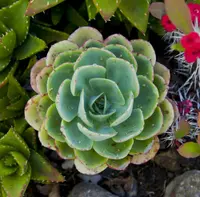
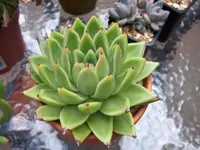
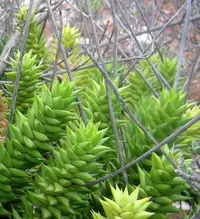
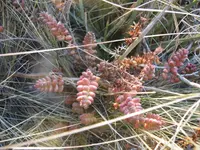
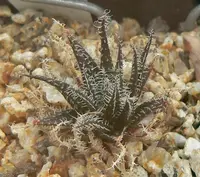
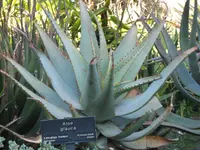
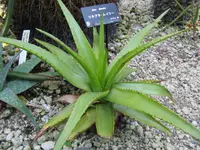
Blue aloe (Aloe glauca) is a compact, slow-growing succulent from arid regions of South Africa. It forms tight rosettes of thick, blue-gray leaves with small, firm teeth along the edges.

Mature plants produce tall flower stalks with tubular orange to red blooms that attract pollinators. Its strong drought tolerance and fleshy water-storing leaves make it suitable for bright indoor spots and dry gardens.

This species prefers strong light, very well-draining gritty soil, and infrequent watering. With attention to avoiding excess moisture, it is generally straightforward to care for Blue Aloe.

Main Plant Requirements

Care Difficulty

Easy Care

Light Preference

Full Sun

Water Requirements

Low Water

Temperature Preference

Warm Climate

Hardiness Zone

9–11

Soil Texture

Sandy, Loamy, Rocky

Soil pH

Slightly acidic (6.5–7.0), Slightly alkaline (7.0–7.5)

Soil Drainage

Well-drained

Fertilization

Minimal (feed rarely)

Get Personalized Care Plan

Scan your plant to receive care tips personalized for your specific plant

Available on iOS and Android

How to Care for the Blue Aloe

This succulent from arid regions needs bright light and handles significant sun if acclimated slowly.

  • Provide 4–6 hours of direct morning sun plus bright indirect light for the rest of the day; in very hot regions, give light afternoon shade.
  • Blue Aloe tolerates light partial shade, but growth becomes sparse and leaves stretch if it receives under 3–4 hours of strong light.
  • In summer, watch for leaf scorch or bleaching in harsh afternoon sun; in winter, move plants to the brightest, frost-free spot to compensate for shorter days.

This drought-adapted succulent prefers thorough but infrequent watering in sharply drained soil.

  • Water only when the top 3–5 cm of soil are completely dry; in active growth this may mean every 10–21 days depending on heat and wind.
  • Use gritty, fast-draining soil so water runs through quickly; standing water or a consistently wet root zone leads to root rot in Aloe glauca.
  • Reduce watering sharply in winter, giving just enough to prevent shriveling; soft, yellowing, or translucent leaves signal overwatering, while thin, wrinkled leaves indicate underwatering.

This species prefers warm, dry conditions and is sensitive to hard frost and prolonged cold, especially in wet soil.

  • Aim for 65–80°F (18–27°C) during active growth for strongest foliage and root development.
  • Short dips to about 30–32°F (-1–0°C) may be survived if the plant is dry, but repeated frost or freezing, wet conditions often cause tissue damage or rot.
  • In hot spells above 95°F (35°C), provide light shade and good airflow; in cooler seasons, protect from cold winds and move containers under cover before nights drop below 40°F (4°C).

This species adapts well to typical indoor humidity and rarely needs special adjustment.

  • Aim for 30–50% relative humidity, which matches the dry conditions Blue Aloe experiences in habitat.
  • Dry household air is usually acceptable; avoid placing the plant directly over strong humidifiers or in steamy bathrooms.
  • Humidity stress shows as soft, waterlogged leaves or fungal spotting; improve airflow and reduce moisture around the rosette if this appears.

Aloe glauca needs a very fast-draining, mineral-rich mix that keeps roots airy and dry between waterings.

  • Use a cactus or succulent mix based on coarse sand and fine gravel, not peat-heavy potting soil.
  • Add extra mineral components such as pumice, perlite, or small grit (20–40% of the volume) to improve drainage and aeration.
  • Maintain slightly acidic to neutral pH, around 6.0–7.0, avoiding strongly acidic or alkaline mixes that can limit nutrient uptake.
  • Avoid dense, moisture-retentive soils or those rich in un-composted organic matter, which promote root rot in this desert succulent.

This species is well suited to container growing when the pot supports its taproot and drainage needs.

  • Choose a pot deep enough to accommodate the taproot, leaving space beneath it so roots do not press against the base.
  • Select a heavy terracotta or clay container to increase stability and allow moisture to evaporate through the walls.
  • Elevate the pot slightly on feet or spacers so drainage holes stay clear and water does not pool under the base.

Aloe glauca grows well with light feeding, as a supplement rather than a necessity.

  • Use a balanced liquid fertilizer (for example 10-10-10) at 1/4–1/2 strength during active growth in spring–summer.
  • Apply every 4–6 weeks only when the plant receives good light and is actively growing.
  • Avoid feeding in late fall and winter when growth slows, to prevent weak, stretched tissue.
  • For caring for Blue Aloe indoors, a sparse schedule with well-drained soil is usually sufficient.

Aloe glauca benefits from light, hygienic pruning to maintain a tidy, healthy rosette.

  • Best time is late winter to early spring, before strong new growth begins.
  • Remove dead, yellowing, or damaged leaves at the base using clean, sharp scissors or pruners.
  • Trim away crowded or inward-growing offsets only if they distort the rosette or limit airflow.
  • Cut flower stalks back to the base after blooming to direct energy to leaf and root growth.

This species prefers tight pots and infrequent disturbance, so repot only when clearly root-bound.

  • Look for roots circling the pot, bulging sides, or slowed growth as signs it needs more space.
  • Schedule repotting in spring, every 3–4 years, when new growth is starting and recovery is fastest.
  • Use a shallow, slightly wider pot with gritty cactus mix, handling roots gently to limit breakage.
  • Allow roots to air-dry briefly if damaged, then replant, keep slightly dry for 5–7 days to reduce rot risk.

Propagation of Aloe glauca is most reliable from offsets, with seeds used mainly by advanced growers.

  • Separate basal offsets in late spring–summer when they have several leaves and visible roots.
  • Twist or cut pups cleanly from the parent, then air-dry cut surfaces for 2–3 days to callus.
  • Plant in a fast-draining cactus mix, keep warm (70–80°F), and water lightly once callused.
  • Seed propagation needs bright light, warmth, and very well-drained mix, with careful avoidance of overwatering.

This aloe is only moderately frost tolerant and benefits from simple winter precautions in cool climates.

  • In regions below 30°F, grow in containers and move indoors to a bright, cool, dry spot for winter.
  • Outdoors in mild climates, ensure sharply drained soil and keep foliage dry in prolonged cold, wet periods.
  • Reduce watering substantially in winter to prevent root rot when growth is slow or semi-dormant.
  • Mulch lightly around in-ground plants in borderline climates, keeping mulch away from the leaf bases.

Care Tips

Deep pot selection

Use a tall, heavy pot with a large drainage hole so the strong taproot can grow downward without circling and the plant stays stable as the rosette becomes top‑heavy.

Rock mulch layer

Apply a thin layer of coarse gravel or small stones on the soil surface to keep the neck of the plant dry, reduce splash that can cause rot, and mimic its natural rocky habitat when growing Blue Aloe.

Offset management

Remove offsets only when they have several roots of their own, then allow the cut or broken base to dry for 2–3 days before potting to reduce rot risk and keep the mother plant from becoming crowded.

Winter light boost

In winter, shift the plant to the sunniest window or supplement with a small LED grow light placed 20–30 cm above the leaves to prevent stretching and maintain the compact rosette form.

Targeted pest checks

Inspect the tight leaf bases and undersides monthly with a hand lens for mealybugs or scale, and if found, spot‑treat only the affected areas with cotton swabs dipped in isopropyl alcohol instead of drenching the whole plant.

Common Pests and Diseases

Aloe mite

This pest forms swollen, warty, tumor-like galls on leaves and at the growing tip, often with distorted, clustered growth. Symptoms include rough, corky, or cauliflower-like patches that slowly spread from the original infection site.

Solution

Remove and discard all affected leaves or rosettes well back into healthy tissue, sterilizing tools between cuts, and destroy heavily deformed plants to prevent spread. Keep new purchases isolated for several weeks, avoid overhead watering that splashes sap, and in early stages consider a targeted miticide labeled for eriophyid mites, following local regulations and label directions.

Aloe rust

This disease causes small yellow spots on leaves that turn into dark brown to black pustules, often surrounded by a yellow halo. Symptoms include weakened leaves that may yellow and dry prematurely, especially under humid or crowded conditions.

Solution

Remove leaves with visible pustules and dispose of them in the trash, not compost. Improve air circulation, keep foliage dry by watering at the base, and in persistent cases use a sulfur or copper-based fungicide labeled for succulents, applied according to directions.

Mealybugs

These insects appear as white cottony clusters in leaf axils, along roots, and at the base of rosettes, where they suck sap and excrete sticky honeydew. Symptoms include slowed growth, yellowing patches, and in severe cases shriveling of leaves.

Solution

Isolate the plant, then dab visible insects with cotton swabs dipped in isopropyl alcohol (70%) and repeat weekly until no new clusters appear. For heavier infestations, rinse the plant thoroughly with a strong but gentle water spray, check roots for soil mealybugs, repot into fresh mix if needed, and consider a systemic insecticide suitable for succulents if nonchemical methods fail.

Soft scale

These insects form flat, brown to grayish bumps on leaves and stems that do not move when touched. This pest weakens the plant by feeding on sap and producing honeydew, which can lead to sooty mold on the leaf surface.

Solution

Gently scrape or wipe off scales with a soft cloth or fingernail and clean leaves with a dilute alcohol solution or insecticidal soap. Repeat treatments every 7–10 days until no new scales appear, reduce plant crowding, and avoid excess nitrogen fertilizer, which encourages soft tissue and scale buildup.

Bacterial leaf spot

This disease produces water-soaked, translucent to dark brown spots on leaves, sometimes with a yellow edge and an irregular shape. Symptoms include mushy lesions that may ooze when pressed and can merge into larger dead patches.

Solution

Remove affected leaves as soon as spots appear, sterilizing cutting tools after each cut, and avoid splashing water on the foliage. Provide strong light, good air movement, and in Blue Aloe indoor care avoid keeping the rosette wet for long periods; discard severely affected plants to protect nearby aloes.

Interesting Facts

Blue leaf wax

Aloe glauca develops a thick bluish waxy coating (epicuticular wax) on its leaves that reduces water loss and reflects intense sunlight in its native South African habitats.

Short-lived flower stalks

Its tall, branched inflorescences with orange tubular flowers appear mainly in late winter to spring and are relatively short-lived, timed to attract sunbirds and other pollinators when few other nectar sources are available.

Rocky habitat specialist

In the wild, this species typically grows on rocky slopes and outcrops in arid regions of the Western and Northern Cape, often anchoring in narrow crevices where competing vegetation is limited.

Botan icon

Did you know?

Aloe glauca was first formally described by the German botanist Adrian Hardy Haworth in the early 19th century, and its species name glauca refers to the distinctive blue-gray leaf color that sets it apart from many other aloes.

FAQs about Blue Aloe

This species usually flowers only when mature and well-established, often after several years. Lack of blooms often relates to insufficient light, limited root space, or stress from recent repotting, division, or temperature extremes.

Grow Healthy Plants with Botan Care

Keep your plants happy and healthy with plant identification, disease detection, and easy care guidance.

Botan plant care app — identify plants on mobile

Explore More Plants