Offset division timing
Divide and repot offsets only when they have at least 3–4 of their own roots and the mother rosette fills most of the pot, which reduces transplant shock and helps keep the clump dense rather than leggy.

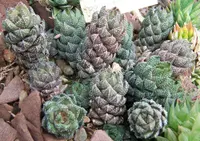
Crowded haworthia, Haworthiopsis coarctata, is a compact succulent from South Africa that forms tight clusters of upright, tapered stems. The fleshy, triangular leaves are arranged in dense spirals and often show raised, lighter bumps, giving the plant a textured, architectural look.
In its native habitat it grows in rocky, well-drained sites, adapted to bright light and limited water. These drought-tolerant traits make it slow growing but long lived in containers.
It suits beginners who want to learn how to care for Crowded Haworthia, as it tolerates some neglect if not overwatered. It generally prefers bright, indirect light, infrequent watering, and gritty, fast-draining soil in indoor conditions.

Care Difficulty
Easy Care

Light Preference
Bright Indirect Light

Water Requirements
Low Water

Temperature Preference
Tropical / Frost Sensitive

Hardiness Zone
10–11

Soil Texture
Sandy, Loamy, Rocky

Soil pH
Acidic (5.5–6.5), Slightly acidic (6.5–7.0)

Soil Drainage
Well-drained

Fertilization
Minimal (feed rarely)
Scan your plant to receive care tips personalized for your specific plant
Available on iOS and Android
This compact succulent prefers bright, indirect light with brief direct sun exposure.
This species stores water in its leaves and needs infrequent but thorough watering.
This succulent prefers warm, stable temperatures and does poorly in frost.
Humidity is rarely a concern for Haworthiopsis coarctata, which thrives in typical indoor air.
Haworthiopsis coarctata prefers a fast-draining, gritty medium that dries quickly between waterings.
This species is very suitable for container growing, including small pots and dish gardens.
Haworthiopsis coarctata grows well with light feeding, as it is adapted to low-nutrient conditions.
Haworthiopsis coarctata needs minimal pruning, mainly for tidiness and health.
This compact succulent prefers tight pots and only occasional repotting.
Haworthiopsis coarctata is most often propagated by offsets, with leaf cuttings and seed used less commonly.
This succulent is not frost hardy and requires basic winter protection in most climates.

Plant Health Check
Not sure what's wrong with your plant? Check your plant's health inside the app.
This species forms elongated columns of densely packed leaves arranged in a tight spiral, a growth habit that distinguishes it from many other Haworthia relatives that stay as low rosettes.
The raised white ridges on the leaves are made of hardened epidermal tissue called tubercles, which help scatter intense light and reduce water loss in its native South African habitat.
In the wild, it often grows in dense clumps wedged into rocky crevices, where the clustered roots stabilize the plant in shallow, gritty soils and help it persist through periodic drought.

In habitat, this species can grow partially shaded by surrounding shrubs and rocks, allowing its columnar rosettes to stretch upward for light while the lower parts of the plant remain protected from extreme heat and desiccation.
Brown tips usually result from low humidity, salt buildup, or minor underwatering, while browning at the base often indicates rot from excess moisture. Improve drainage, reduce watering frequency, and flush the potting mix occasionally to remove salts.
Keep your plants happy and healthy with plant identification, disease detection, and easy care guidance.