red-spined aloe Care (Aloe lineata)

red-spined aloe

About red-spined aloe

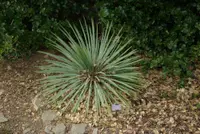
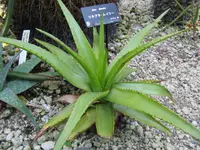
Red-spined aloe, Aloe lineata, is a slow-growing succulent shrub from arid regions of South Africa. It forms upright, single or few-stemmed clumps over time.

Its long, narrow, blue-green leaves are lined with sharp red spines that give the plant a striking, architectural look. Mature plants produce tall flower spikes with tubular blooms that attract pollinators.

This species is adapted to strong sun, high drainage, and low, infrequent rainfall, which makes it relatively low-maintenance in dry, bright conditions. Those learning how to care for red-spined aloe should note its strong preference for fast-draining soil and careful watering.

In mild climates it can grow outdoors, while in cooler regions it is better suited to containers that can be moved to shelter from frost.

Main Plant Requirements

Care Difficulty

Moderate Care

Light Preference

Full Sun

Water Requirements

Low Water

Temperature Preference

Tropical / Frost Sensitive

Hardiness Zone

10–11

Soil Texture

Sandy, Loamy, Rocky

Soil pH

Slightly acidic (6.5–7.0), Neutral (7.0)

Soil Drainage

Well-drained

Fertilization

Minimal (feed rarely)

Get Personalized Care Plan

Scan your plant to receive care tips personalized for your specific plant

Available on iOS and Android

How to Care for the red-spined aloe

This sun-loving South African succulent needs strong light to maintain its compact, red-edged form.

  • Provide 6–8 hours of direct sun, ideally with morning sun and light afternoon shade in hot, dry climates to prevent scorch on red-spined aloe leaves.
  • Outdoors, give it an open, unshaded position; in bright but cooler coastal areas it can tolerate full sun all day.
  • Watch foliage color as a guide: pale, stretched leaves indicate too little light, while brown, crispy tips suggest excessive intense afternoon sun.

This drought-tolerant succulent requires thorough but infrequent watering and very sharp drainage.

  • Water only when the top 3–5 cm of soil are completely dry, then soak the root zone once and let excess drain away quickly.
  • Reduce watering significantly in cool seasons, especially below 55°F (13°C), as Aloe lineata roots are prone to rot in cold, wet soil.
  • Check for early signs of stress: mushy leaves or a sour smell indicate overwatering, while wrinkled, slightly curling leaves suggest it is time to water.

This species prefers warm, dry conditions and dislikes prolonged cold or frost.

  • Aim for 65–85°F (18–29°C) for active growth, with the best performance around 70–80°F (21–27°C) in dry air.
  • Protect plants from drops below 30–32°F (-1–0°C); brief light frost may be survived, but repeated freezing damages leaf tissue and roots.
  • In hot regions, it tolerates up to about 100°F (38°C) if soil drains very fast and plants receive some protection from reflected afternoon heat.

Humidity is not a significant factor for Aloe lineata, which thrives in dry indoor air.

Aloe lineata needs very fast-draining, mineral-based soil to prevent root rot.

  • Use a gritty mix such as 50–60% cactus potting mix blended with coarse sand, pumice, or perlite.
  • Aim for a loose, open structure that allows water to pass through in seconds, not minutes.
  • Keep pH slightly acidic to neutral, around 6.0–7.0, avoiding heavy lime additions unless soil is very acidic.
  • Avoid dense, peat-heavy or clay soils that stay wet or compact, since they exclude air from the roots.

This species is well suited to container growing due to its compact, upright rosette and slow to moderate growth.

  • Choose a wide, heavy container that resists tipping as the rosette elongates and becomes top-heavy.
  • Select unglazed clay if extra evaporation is needed in humid climates, or glazed pots where moisture retention is a concern.
  • Use a pot only 2–4 in wider than the root ball so the mix dries evenly instead of holding moisture around the roots.

Aloe lineata is a light feeder that benefits from modest nutrition during its active growing season.

  • Use a balanced liquid fertilizer (such as 10-10-10 or 20-20-20) diluted to 25–50% strength for caring for red-spined aloe in pots.
  • Feed every 4–6 weeks in spring and summer only, skipping applications during intense heat stress or if growth is weak.
  • Stop feeding in fall and winter when growth slows, to prevent soft, cold-sensitive tissue and root burn.
  • Avoid rich compost or heavy slow-release products that stay wet; prioritize a free-draining, low-organic mix.

Aloe lineata requires minimal pruning, mainly to maintain cleanliness and plant health.

  • Best timing is late winter to early spring, before strong new growth begins.
  • Remove dead, dried, or damaged leaves at the base with clean, sharp pruning shears or a knife.
  • Cut crowded or crossing leaves only if they trap debris or moisture, which can encourage rot.
  • Limit pruning to cosmetic shaping; heavy removal can reduce vigor and delay flowering.

Container-grown Aloe lineata is slow-growing and prefers infrequent repotting to avoid root disturbance.

  • Check for roots circling the pot, emerging from drainage holes, or noticeably slowed growth as signs repotting is needed.
  • Plan to repot every 3–4 years in late winter or early spring, before the main growth flush.
  • Move up only 2–5 cm in pot diameter, using a gritty cactus/succulent mix to maintain fast drainage.
  • Handle roots gently, keep the collar slightly above soil level, and withhold watering for 3–5 days to let any injuries callus.

Aloe lineata is most reliably propagated from seed, with division used only when natural offsets appear.

  • Sow fresh seed in late winter to spring in a sterile, gritty cactus mix, barely covering the seeds.
  • Maintain bright, indirect light, steady warmth around 70–80°F, and lightly moist but never wet substrate until germination.
  • Improve success by providing bottom warmth and good air movement to limit fungal problems such as damping-off.
  • Separate any offsets in spring, let cut surfaces dry and callus for several days, then pot in a fast-draining mix and water lightly.

Aloe lineata is sensitive to hard frost and benefits from thoughtful winter management in most temperate climates.

  • Keep plants above 30–32°F; prolonged freezing can damage foliage and roots.
  • Move container plants indoors or into a bright, cool greenhouse before the first frost date.
  • In mild climates, grow in very free-draining soil and use a light gravel mulch to keep the crown dry in winter.
  • Reduce watering sharply in winter, allowing the mix to dry almost completely between light sips.

Care Tips

Acclimate Outdoor Moves

Shift containers gradually into higher light and wind over 7–10 days in late spring to prevent sun scorch and tissue stress when growing red-spined aloe outside for summer.

Rotate For Even Form

Turn the pot 90° every 2–3 weeks during active growth so the rosette develops evenly and does not lean or twist toward the strongest light source.

Use Topdressing Gravel

Apply a 0.5–1 in layer of coarse gravel or small stones on the soil surface to keep the neck of the plant dry, reduce rot risk, and prevent soil splash on the leaves.

Stabilize Tall Plants

For older, elongating plants in pots, use a heavy container or add stones at the base to counterbalance the tall rosette and prevent tipping in strong wind or when moved.

Winter Rest Adjustment

In cooler months with shorter days, allow slightly longer intervals between waterings and avoid repotting so the plant can complete its natural semi-dormant rest period without stress.

Common Pests and Diseases

Aloe mite

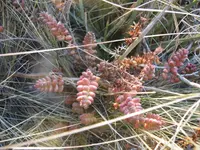
This pest causes abnormal, warty or coral-like growths on leaves, flower stalks, and rosettes, often starting in tight leaf bases of Aloe lineata. Symptoms include distorted tissue, thickened edges, and reddish or brown scarring in the affected areas.

Solution

Remove and discard all distorted or tumor-like growths well below the damaged tissue, sterilizing cutting tools between each cut with alcohol. Isolate the plant, then apply a sulfur-based or abamectin-containing miticide according to label directions, and avoid overhead watering that keeps the crown constantly moist, which can favor mite spread.

Aloe rust

This disease produces small yellow spots on leaves that turn into sunken orange to dark brown pustules, often appearing first on lower, older leaves. Symptoms include rough, powdery spore masses that can spread rapidly in humid or shaded conditions.

Solution

Cut off and discard affected leaves, keeping tools clean to avoid spreading spores, and increase light and airflow around the plant. Water at the soil level in the morning, keep leaves dry, and if new pustules appear, use a copper-based fungicide labeled for ornamentals at the lowest effective rate.

Leaf spot

This disease causes pale, water-soaked or tan lesions on leaves that may develop dark margins and sometimes concentric rings, especially on plants exposed to cool, damp conditions. Symptoms include slow enlargement of spots and, in severe cases, partial leaf yellowing and collapse from the tip downward.

Solution

Remove and dispose of affected leaf portions, reduce overhead misting, and space plants so leaves dry quickly after watering. If spotting continues, apply a chlorothalonil or copper fungicide suitable for succulents, and maintain a drier, bright environment to limit recurrence as part of Aloe lineata care.

Aloe scale

This pest appears as small, hard, brown or gray bumps on leaves and along the leaf margins and bases, often clustering where the spines and ridges of Aloe lineata provide shelter. This pest feeds on sap, causing yellowing, dull patches, and sometimes sticky honeydew on nearby surfaces.

Solution

Gently scrape or wipe off individual scales with a cotton swab dipped in isopropyl alcohol, then wash the plant under a firm but controlled stream of water to dislodge remaining insects. For persistent infestations, use a horticultural oil or insecticidal soap sprayed thoroughly on all leaf surfaces, repeating at 7–10 day intervals while keeping the plant in bright, dry conditions.

Mealybugs

These insects form cottony white clusters in leaf axils, around the base of the rosette, and on roots in potted plants, where they feed on plant sap. Symptoms include stunted growth, yellowing, and weakened plants, sometimes with sooty black mold growing on honeydew deposits.

Solution

Inspect leaf bases and roots, then physically remove visible mealybugs with a cotton swab dipped in 70% isopropyl alcohol and repot if the root zone is heavily infested. Follow up with repeated applications of insecticidal soap or a systemic insecticide labeled for succulents, and keep the plant on the dry side between waterings to discourage reinfestation.

Interesting Facts

Distinct red marginal spines

This species develops pronounced red to reddish-brown spines along the leaf margins, especially in strong light, which contrast sharply with the pale to blue-green leaf surface and give rise to its common name, red-spined aloe.

Strongly lined leaf surface

Its leaves have many fine, parallel, lengthwise lines on the surface, a feature that inspired the name lineata and helps distinguish it from many other aloes with smoother foliage.

Cape region endemic

This aloe is naturally restricted to parts of the Western and Eastern Cape in South Africa, where it grows in arid, rocky habitats and forms small groups or clumps rather than large tree-like structures.

Botan icon

Did you know?

In its native South African range, Aloe lineata often flowers in late winter to spring, producing tall, unbranched inflorescences with dense cylindrical clusters of tubular orange to red flowers that provide an important nectar source for local sunbirds and insect pollinators at a time when many other plants are not in bloom.

FAQs about red-spined aloe

Brown tips or patches usually come from underwatering, intense sun combined with low moisture, or old age of lower leaves. Check for hard, dry soil, adjust care gradually, and remove only completely dead foliage.

Grow Healthy Plants with Botan Care

Keep your plants happy and healthy with plant identification, disease detection, and easy care guidance.

Botan plant care app — identify plants on mobile

Explore More Plants