


Segment handling
Handle the plant only by the pot or with tongs when moving it, since the detachable segments break off easily and should be placed on dry mineral substrate if you want to root them as backups or for propagation.

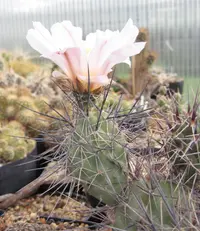
Tephrocactus alexanderi is a small, segmented cactus from arid regions of Argentina. It forms stacks of rounded, jointed pads that can detach easily. Spines vary by form, from short and bristly to long and sparse, giving the plant a distinctive, sculptural look in containers or rock gardens.
This species is adapted to strong sun, high drainage, and prolonged dry periods, which makes it relatively low-maintenance if kept dry and bright. Its slow growth and sensitivity to excess moisture are the main factors that influence how to care for Tephrocactus alexanderi. In cultivation, it prefers a very gritty, fast-draining soil and careful watering to prevent rot.

Care Difficulty
Moderate Care

Light Preference
Full Sun

Water Requirements
Low Water

Temperature Preference
Warm Climate

Hardiness Zone
9–11

Soil Texture
Sandy, Rocky, Loamy

Soil pH
Slightly acidic (6.5–7.0), Neutral (7.0)

Soil Drainage
Well-drained

Fertilization
Minimal (feed rarely)
Scan your plant to receive care tips personalized for your specific plant
Available on iOS and Android
This cactus needs strong light but benefits from some protection at the hottest times of day.
Watering should mimic an arid climate with brief soakings and long dry periods.
Temperature management is important to keep this cactus compact and healthy.
This cactus thrives in dry air and humidity rarely needs adjustment in typical homes.
Use a very fast-draining, mineral-heavy mix to prevent root rot in Tephrocactus alexanderi.
This species is very suitable for container growing due to its compact, segmented form.
This cactus needs only light feeding, as Tephrocactus alexanderi is adapted to nutrient-poor soils.
Pruning needs are minimal and mainly focus on health and safe handling of Tephrocactus alexanderi.
Repotting for this slow-growing cactus is infrequent and should prioritize root health and drainage.
Propagation is commonly done from stem segments, with seeds used less often for home growers.
Winter care focuses on cold limits and very dry soil conditions for this cactus.

Plant Health Check
Not sure what's wrong with your plant? Check your plant's health inside the app.
This cactus often drops or detaches its small, egg-shaped stem segments when stressed or physically disturbed, a form of clonal propagation that also helps the plant escape herbivory and mechanical damage in its native habitat.
It is known for very slow growth, often taking many years to form a modest clump of segments, which reflects its adaptation to nutrient-poor, arid Andean environments with short growing seasons.
Wild populations occur in arid, high-elevation regions of Argentina, where strong sun, large day–night temperature swings, and low rainfall shape its compact form, thick cuticle, and dense areoles with spines that reduce water loss.
This species grows slowly, usually adding only a few new segments each year. Growth is faster in warm, bright, dry conditions and during its active season, then almost stops in cooler months or if light is low.
Keep your plants happy and healthy with plant identification, disease detection, and easy care guidance.

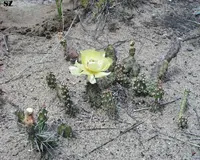
brittle pricklypear
Opuntia fragilis
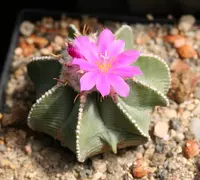
Aztekium hintonii
Aztekium hintonii
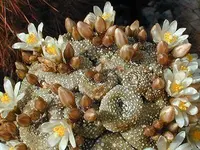
Blossfeldia
Blossfeldia liliputana
old man of the mountain
Cleistocactus buchtienii
Gasteria
Gasteria 'Little Warty'
Eulychnia acida
Eulychnia acida
Cleistocactus samaipatanus
Cleistocactus samaipatanus

Airampoa soehrensii
Airampoa soehrensii