Use mineral topdressing
Apply a 0.5–1 cm layer of fine grit or pumice on the soil surface to keep the tiny stems dry at the base, prevent algae and moss, and make it easier to spot early rot or fungal problems when caring for Blossfeldia.

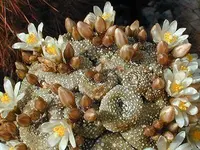
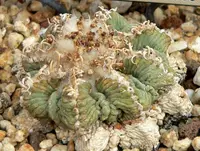
Blossfeldia liliputana is a miniature cactus from the high Andes of Argentina and Bolivia. It forms tiny, button-like bodies that often cluster tightly in rock crevices. These plants grow almost flush with the surface, with no obvious ribs or spines, which helps them tolerate strong sun and drying winds in nature. Growth is very slow, and plants stay extremely small even when mature. Blossfeldia prefers bright light, excellent drainage, and careful watering that allows the roots to dry between soakings. Its compact size and slow growth make it attractive to collectors, but also mean it can be sensitive to overwatering and poor ventilation, so it helps to learn how to care for Blossfeldia before buying one.

Care Difficulty
Hard Care

Light Preference
Partial Sun

Water Requirements
Low Water

Temperature Preference
Tropical / Frost Sensitive

Hardiness Zone
11–13

Soil Texture
Sandy, Rocky, Loamy

Soil pH
Slightly acidic (6.5–7.0), Neutral (7.0)

Soil Drainage
Well-drained

Fertilization
Minimal (feed rarely)
Scan your plant to receive care tips personalized for your specific plant
Available on iOS and Android
This miniature cactus prefers bright but gentle light that mimics high-altitude conditions.
Watering must stay sparse and precise to match this cactus’s very small root system.
This species prefers cool to warm conditions with a marked dry, cool rest in winter.
This miniature cactus prefers dry air and rarely needs extra humidity management.
Blossfeldia liliputana needs an extremely fast-draining, mineral-heavy mix to prevent root and stem rot.
This species is well suited to container growing due to its tiny size and slow growth.
This miniature cactus grows slowly and needs only light feeding in a gritty, lean mix.
This species requires virtually no structural pruning due to its tiny, compact growth.
Blossfeldia liliputana resents disturbance and is best repotted rarely and very gently.
Propagation is usually done from seed and requires patience and close control of moisture.
This cactus prefers a cool, dry winter rest and is not tolerant of hard frost.

Plant Health Check
Not sure what's wrong with your plant? Check your plant's health inside the app.
This species is often cited as the smallest cactus in the world, with individual stems typically only a few millimeters across and often hidden almost completely within rock crevices.
The plant has a highly reduced body with almost no visible ribs or spines, and its surface is dotted with tiny areoles that help minimize water loss in its harsh Andean habitat.
It naturally grows at high elevations in the Andes of Bolivia and Argentina, occupying cracks in nearly bare rock where it experiences strong sun, large temperature swings, and very limited soil.

In its native habitat, this cactus can survive long periods of near-complete desiccation, essentially drying out and later rehydrating and resuming normal metabolism when moisture returns, an adaptation that supports growing Blossfeldia under very lean watering regimes in cultivation.
Growth is extremely slow. Seedlings may stay only a few millimeters wide for years, and mature clumps often reach just 1–2 cm across over a decade, even with ideal light, careful watering, and free‑draining mineral substrate.
Keep your plants happy and healthy with plant identification, disease detection, and easy care guidance.