Protective handling
Always handle the plant with nitrile or latex gloves and avoid sap contact with skin or eyes, then rinse tools and pots with water after pruning or repotting to reduce irritation risk from the toxic latex.

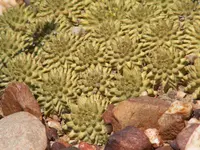
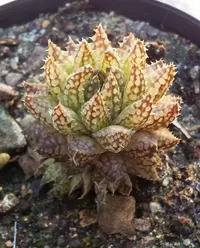
Euphorbia susannae is a miniature, clustering succulent from arid regions of South Africa. It forms tight mounds of short, knobbly green stems that resemble a small, sculptural cushion.
Growth is slow and compact, which makes it suitable for small pots and windowsill collections. Spines are usually short, and it produces small, inconspicuous flowers typical of many Euphorbia species.
This species prefers bright, indirect to soft direct light, very well-drained gritty soil, and careful watering with long dry intervals. With correct light and strict moisture control, it is relatively straightforward to grow and how to care for Euphorbia susannae becomes easier over time.

Care Difficulty
Moderate Care

Light Preference
Full Sun

Water Requirements
Low Water

Temperature Preference
Tropical / Frost Sensitive

Hardiness Zone
10–11

Soil Texture
Sandy, Rocky, Loamy

Soil pH
Slightly acidic (6.5–7.0), Neutral (7.0)

Soil Drainage
Well-drained

Fertilization
Minimal (feed rarely)
Scan your plant to receive care tips personalized for your specific plant
Available on iOS and Android
This compact succulent prefers high light with protection from intense midday sun.
This species is a drought-tolerant succulent that needs a thorough but infrequent watering approach.
This plant prefers warm, dry conditions and is sensitive to prolonged cold and frost.
This species thrives in dry indoor air and rarely needs humidity adjustment.
Use a very fast-draining, mineral-rich substrate to prevent root and stem rot.
This compact succulent is well suited to container growing.
This compact succulent needs only light feeding to stay healthy in pots.
Pruning is minimal and mainly used to maintain shape and remove damaged tissue.
This slow-growing succulent prefers infrequent repotting and a stable container environment.
Propagation of this species is possible but slower than many other succulents.
This species is not frost hardy and needs careful winter management in most climates.

Plant Health Check
Not sure what's wrong with your plant? Check your plant's health inside the app.
This dwarf succulent forms many small, rounded heads that sit almost flush with the soil surface, helping it visually blend into the stony quartz fields of its native habitat in the Western Cape of South Africa.
Instead of a single stem, it slowly produces numerous tightly packed heads from the base, creating a dense mound that can reach many times the diameter of the original plant over several years.
Its short, stiff spines arise from reduced leaves and serve mainly as physical protection and shading for the plant body, rather than as large photosynthetic structures as seen in some other succulents.

In the wild, many populations of this species are considered rare and highly localized, occurring only in very specific quartz-rich microhabitats, which makes in-situ conservation and responsible Euphorbia susannae plant care especially important for reducing pressure on wild plants.
This species stays very compact and low, usually under 10–15 cm tall, forming small mounded clumps. Growth is slow, so size changes are subtle, which makes it suitable for small pots and rock gardens.
Keep your plants happy and healthy with plant identification, disease detection, and easy care guidance.