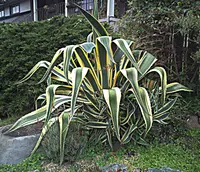
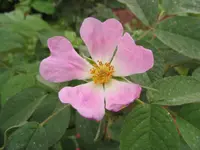
Hottentot Fig Care (Carpobrotus acinaciformis)

Also known as: Sally-my-handsome, Sabre Sourfig, Sour Fig
Hottentot Fig

About Hottentot Fig

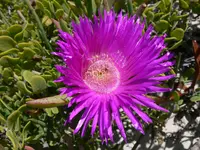
Carpobrotus acinaciformis, commonly called hottentot fig or ice plant, is a fast-growing, mat-forming succulent used mainly as a groundcover. It has thick, triangular, fleshy leaves and large, daisy-like flowers in shades of pink to purple that open in bright light.

This species is native to coastal areas of South Africa but is now naturalized in many mild coastal regions, where it stabilizes sandy soils. It is generally easy to grow because it tolerates drought, poor, sandy soils, salt spray, and wind.

Those conditions also mean it can become invasive outdoors in some climates. Understanding these traits helps gardeners decide how to care for Hottentot Fig responsibly and prevent unwanted spread.

Main Plant Requirements

Care Difficulty

Easy Care

Light Preference

Full Sun

Water Requirements

Low Water

Temperature Preference

Warm Climate

Hardiness Zone

9–11

Soil Texture

Sandy, Loamy, Rocky

Soil pH

Slightly acidic (6.5–7.0), Slightly alkaline (7.0–7.5)

Soil Drainage

Well-drained

Fertilization

Minimal (feed rarely)

Get Personalized Care Plan

Scan your plant to receive care tips personalized for your specific plant

Available on iOS and Android

How to Care for the Hottentot Fig

This coastal succulent thrives in strong, direct light and needs long daily sun exposure for compact, floriferous growth.

  • Provide 6–8 hours of full sun daily; Hottentot Fig performs best on open, unshaded slopes, dunes, or rocky sites.
  • It tolerates light partial shade (2–3 hours sun) but stems may stretch and flowering declines if shaded for much of the day.
  • In very hot inland summers, protect from intense late-afternoon sun with slight western shade to reduce leaf scorch and moisture stress.

This plant is highly drought-tolerant and prefers infrequent, deep watering in very fast-draining soil.

  • Allow the top 5–8 cm of sandy or gritty soil to dry completely before watering; in coastal climates rainfall alone is often enough once established.
  • Increase watering slightly in the first growing season, watching for firm, plump leaves as a sign of adequate moisture in Carpobrotus acinaciformis.
  • Reduce or stop supplemental water in cool or wet seasons; soft, splitting leaves and a sour smell in the soil indicate overwatering and poor drainage.

This species prefers mild, frost-free climates and tolerates considerable heat when soil drainage is excellent.

  • Ideal growth occurs around 60–75°F (16–24°C), typical of coastal conditions with moderate day–night swings.
  • It tolerates brief dips to about 25–28°F (-4 to -2°C), but repeated or hard frosts can damage foliage and kill young plants.
  • Growth slows in cool seasons; in hot inland sites above 95°F (35°C), ensure very sharp drainage and some airflow to limit heat stress and stem desiccation.

This coastal succulent handles low humidity well and rarely needs special humidity care.

This coastal succulent prefers very free-draining, sandy soil that mimics dune or coastal bluff conditions.

  • Use a gritty mix with about 60–70% coarse sand or fine gravel blended with 30–40% lean loam or cactus potting mix.
  • Ensure extremely sharp drainage; raised beds or sloped sites help water run off quickly and prevent root rot.
  • Aim for slightly acidic to neutral pH around 6.0–7.5, avoiding heavy limestones or strongly alkaline substrates.
  • For Carpobrotus acinaciformis, avoid clayey, compacted, or water-retentive soils, as these limit aeration and encourage fungal problems.

This species is suitable for container growing, especially in sunny, dry, frost-prone areas.

  • Choose a wide, shallow, heavy container to support its spreading habit and prevent tipping in wind.
  • Select unglazed terracotta or similarly porous material so the root zone dries rapidly between waterings.
  • Elevate the pot on feet or blocks so drainage holes stay clear and runoff leaves the container area quickly.

This coastal succulent needs only light feeding, as Hottentot Fig is adapted to poor, sandy soils.

  • Use a low-dose balanced NPK succulent fertilizer or a thin layer of compost in spring.
  • Feed once at the start of the main growing season; in very poor soils, add a second light feed in midsummer.
  • Dilute liquid fertilizer to 25–50% of the label rate to avoid soft, weak growth.
  • Do not feed in winter or when growth is slow or dormant.

Pruning helps keep Carpobrotus acinaciformis dense, healthy, and within bounds.

  • Best time is late winter to early spring, before strong new growth starts.
  • Remove dead, damaged, or rotting stems and any patches with fungal spotting.
  • Shorten overly long, straggly runners to maintain shape and prevent excessive spread.
  • Use clean, sharp pruning shears; make clean cuts above healthy nodes.

This groundcover succulent is more often transplanted in the landscape than repotted in containers.

  • Transplant in spring or early summer when soils are warming and growth is active.
  • Look for slow growth, roots circling the pot, or a plant lifting from the soil as signs it has outgrown its container.
  • Move to a shallow, wide container or sunny, well-drained site without disturbing roots more than necessary.
  • Water lightly after transplanting, then allow soil to dry between waterings to limit transplant shock and rot.

Carpobrotus acinaciformis plant care often includes routine renewal through vegetative propagation.

  • Take 7–10 cm stem cuttings in late spring or summer from non-flowering shoots.
  • Let cut ends dry for 1–2 days, then place in very well-drained, sandy mix under bright light.
  • Keep slightly moist, not wet; warm conditions around 68–75°F promote rooting.
  • For layering, pin a node to soil, keep just moist, then separate once well rooted.

This succulent is only moderately tolerant of cold and needs attention in regions with freezing winters.

  • Hardy roughly to 25–28°F; foliage damage occurs with harder or prolonged frosts.
  • Mulch the root zone lightly with gravel or coarse bark in marginal climates, keeping crowns uncovered.
  • Move container plants indoors or to a frost-free, very bright spot before hard frost.
  • Reduce watering sharply in winter so cold, wet soil does not cause root rot.

Care Tips

Slope Planting Strategy

Plant on a slight slope or raised berm so excess water drains away quickly, which helps prevent root rot and encourages strong, spreading growth.

Salt Spray Tolerance

Use this species as a buffer in coastal gardens where roads or paths are salted, but still hose foliage lightly after heavy salt spray to avoid long-term leaf burn and soil salinity buildup.

Controlled Spreading

Inspect runners several times per year and cut or lift unwanted stems before they root, then replant healthy pieces in bare spots where better groundcover is needed.

Sand Stabilization Use

For erosion control on sandy banks, stagger plantings in a zigzag grid and lightly pin young shoots with biodegradable landscape staples until new roots anchor the soil.

Low-Maintenance Propagation

When caring for Hottentot Fig, root pruned, non-flowering stem sections directly where coverage is desired instead of using pots, keeping the bottom node in firm contact with the soil for faster establishment.

Common Pests and Diseases

Aphids

This pest feeds on young shoots and flower stalks, causing distortion, sticky honeydew, and sometimes sooty mold growth on the foliage.

Solution

Prune and discard heavily infested shoot tips, then wash remaining stems with a firm stream of water to dislodge insects. For persistent colonies, apply a ready-to-use insecticidal soap or neem oil spray in the early morning, repeating every 5–7 days until new growth appears clean.

Mealybugs

These insects hide in stem joints and along fleshy leaves, leaving white cottony masses and causing yellowing or stunted pads.

Solution

Isolate affected plants, then dab visible mealybugs with cotton swabs dipped in 70% isopropyl alcohol and wipe away residues. Follow with a thorough spray of insecticidal soap, paying attention to leaf bases, and repeat weekly until no new insects appear as part of general Carpobrotus acinaciformis care.

Scale insects

This pest appears as small, hard, dome-shaped bumps on stems and leaf surfaces, leading to reduced vigor and occasional leaf yellowing.

Solution

Gently scrape or rub off scale with a soft brush or cloth, then treat remaining hotspots with horticultural oil to smother juveniles. Improve plant vigor by avoiding overwatering and ensuring strong light, which helps the plant outgrow mild damage.

Leaf spot

This disease causes irregular brown or black lesions on the fleshy leaves, sometimes surrounded by a yellow halo, and affected tissue may shrivel.

Solution

Remove and discard infected leaves to reduce fungal spores, and avoid overhead watering so foliage dries quickly. Improve air movement around the mat, and if spotting continues in wet weather, apply a sulfur or copper-based fungicide labeled for ornamental succulents according to the product directions.

Botrytis blight

This disease produces soft, water-soaked areas on leaves and stems that can develop gray, fuzzy mold under cool, humid conditions.

Solution

Cut out and discard all visibly affected sections, including any decaying flowers or seed heads, and avoid wetting the foliage. Increase sun exposure and airflow, and use a fungicide labeled for Botrytis on ornamentals if the weather remains cool and damp and new lesions keep forming.

Interesting Facts

Coastal dune stabilizer

This species forms dense, mat-like growth on sandy coastal soils, where its thick, trailing stems and fibrous roots trap sand and help stabilize dunes against wind and wave erosion.

Highly salt tolerant

The fleshy, succulent leaves tolerate both salt spray and saline soils, allowing this plant to grow close to the ocean where many other species cannot survive.

Invasive in mild climates

Outside its native South African range, especially in Mediterranean-type climates such as coastal California, it often becomes invasive, displacing native dune and cliff vegetation and altering soil chemistry.

Botan icon

Did you know?

The large, bright magenta flowers of this species open mainly in strong light and are visited by a wide range of pollinators, but its seeds are also spread by animals such as rodents and birds that eat the fleshy fruits, allowing it to colonize new coastal areas far from the original planting sites.

FAQs about Hottentot Fig

This species spreads rapidly by prostrate stems that root at the nodes, forming dense mats. In mild coastal climates it can quickly cover large areas and crowd out neighboring plants, so regular edging and removal of unwanted runners are important.

Grow Healthy Plants with Botan Care

Keep your plants happy and healthy with plant identification, disease detection, and easy care guidance.

Botan plant care app — identify plants on mobile

Explore More Plants