Euphorbia handiensis Care

Euphorbia handiensis

About Euphorbia handiensis

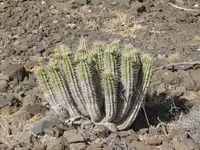
Euphorbia handiensis is a rare succulent shrub from the Canary Islands, where it grows in dry, rocky habitats with intense sun. Its upright, many-branched stems form a dense, sculptural clump with small spines and a striking, columnar look.

This species is slow-growing and long-lived, which makes it suitable for patient collectors and focused indoor growers. It is drought-tolerant but sensitive to excess moisture, so it needs sharply draining, mineral-rich soil.

Because it comes from an arid climate, it prefers bright light, low humidity, and careful watering. Understanding these natural conditions helps guide how to care for Euphorbia handiensis in home collections.

Main Plant Requirements

Care Difficulty

Moderate Care

Light Preference

Full Sun

Water Requirements

Low Water

Temperature Preference

Tropical / Frost Sensitive

Hardiness Zone

10–11

Soil Texture

Sandy, Loamy, Rocky

Soil pH

Slightly acidic (6.5–7.0), Neutral (7.0)

Soil Drainage

Well-drained

Fertilization

Minimal (feed rarely)

Get Personalized Care Plan

Scan your plant to receive care tips personalized for your specific plant

Available on iOS and Android

How to Care for the Euphorbia handiensis

This species thrives in strong light that mimics its arid, open habitat.

  • Provide 6–8 hours of direct sun daily; full sun with some light afternoon shade in very hot regions reduces scorch risk.
  • Young or recently transplanted Euphorbia handiensis benefits from 2–4 weeks of filtered light or morning sun only while acclimating.
  • In winter, ensure the plant is not shaded by buildings or trees; extended low light leads to weak, elongated growth and reduced spine density.

This drought-adapted succulent stores moisture in its stems and prefers infrequent, deep watering.

  • Allow soil to dry completely, at least the top 5–8 cm, before soaking the root zone; fast-draining, gritty soil is essential to prevent root rot.
  • During active growth in spring–summer, expect to water roughly every 2–4 weeks, guided by dryness and plant plumpness rather than a fixed schedule.
  • In fall–winter, reduce watering to very light, occasional drinks; yellowing, soft stems suggest overwatering, while wrinkling and shrinkage indicate underwatering.

Stable warmth and strong light support compact, healthy growth in this desert species.

  • Ideal growing temperatures are 70–85°F (21–29°C), with good airflow to prevent heat buildup around the stems.
  • The plant tolerates brief dips to about 40°F (4°C) if kept dry, but any frost can scar tissue or kill young growth.
  • In areas above 95°F (35°C), provide light afternoon shade and ensure roots stay dry overnight to avoid stress from combined heat and moisture.

This cactus-like succulent prefers dry indoor air and rarely needs humidity adjustment.

  • Aim for 30–50% relative humidity; it performs well in typical heated or air-conditioned rooms.
  • Dry, shriveling stems usually indicate watering or root issues rather than low humidity.
  • If air is extremely dry and hot, lightly mist the air around, not the plant, or place a water tray nearby without raising humidity above 50%.

This species needs a very fast-draining, mineral-rich substrate to prevent root rot.

  • Use a sandy, gritty mix such as 50% cactus mix with 50% mineral components like pumice, coarse perlite, or 3–5 mm gravel.
  • Keep the structure open and airy; avoid fine peat-heavy mixes that compact and stay wet.
  • A slightly acidic to neutral pH around 6.0–7.0 suits Euphorbia handiensis and supports nutrient uptake.
  • Improve drainage by using a shallow layer of coarse grit at the bottom of the pot, not organic mulch, to keep the root zone dry.

This species is well suited to container growing due to its compact, upright habit.

  • Choose a heavy, wide-based pot to prevent tipping as the stems become tall and top-heavy.
  • Select a pot only slightly wider than the root ball so the mix dries evenly between waterings.
  • Unglazed terracotta is useful because it wicks moisture from the mix, reducing the risk of waterlogged roots.

This drought-adapted succulent needs only light feeding to stay healthy in containers.

  • During spring–summer, apply a diluted balanced liquid fertilizer (around 10-10-10) at 1/4–1/2 strength every 6–8 weeks.
  • Use a low-organic, cactus-type formula rather than rich compost to avoid soft, weak growth.
  • Stop feeding in fall and winter when growth slows or stops.
  • For Euphorbia handiensis in the ground, rely mainly on a lean, well-drained soil and minimal supplemental nutrition.

Pruning needs are minimal and mainly focused on safety and health for Euphorbia handiensis.

  • Best time for any pruning is late spring to early summer, when growth is most active.
  • Remove only dead, damaged, or diseased stems, cutting back to healthy tissue with clean, sharp tools.
  • Avoid shaping cuts; heavy pruning can distort the natural columnar form and stress the plant.
  • Wear protective gloves and eye protection to avoid contact with the irritating white latex sap.

This species grows slowly and prefers infrequent disturbance of its root system.

  • Repot only every 3–5 years, when roots circle the pot, drainage slows, or growth declines despite good light.
  • Choose late spring as the safest time, using a slightly larger pot with a gritty cactus mix and ample drainage.
  • Lift the plant carefully, keep the rootball mostly intact, and remove only loose, dead roots to limit transplant shock.
  • After repotting Euphorbia handiensis, keep soil barely moist and shaded from harsh midday sun for 1–2 weeks.

Propagation is possible but demands care due to the toxic sap and sensitivity to excess moisture.

  • Stem cuttings in late spring–summer are the most practical method for home growers.
  • Wear gloves, let cut surfaces dry and callus for several days until no fresh sap appears.
  • Insert callused cuttings into sterile, gritty, barely moist cactus mix and provide bright, indirect light.
  • Maintain warm temperatures around 70–80°F and very light watering until roots establish.

Cold tolerance is low, so winter management focuses on keeping roots dry and above freezing.

  • Treat Euphorbia handiensis as a container plant in most climates cooler than USDA zone 10.
  • Before first frost, move pots indoors or into a greenhouse with temperatures kept above 40°F.
  • Provide maximum light indoors and water very sparingly, allowing the mix to dry fully between sips.
  • In mild regions, ensure outdoor plants have perfect drainage and no standing winter moisture around the crown.

Care Tips

Glove-first handling

Always wear nitrile or latex gloves and avoid skin contact when repotting or taking cuttings, because the milky sap is irritating and should be rinsed off skin immediately with plenty of water if exposure occurs.

Strategic pot orientation

Rotate the container by 90° every 4–6 weeks during active growth to keep the stems upright and evenly spaced, preventing one-sided leaning toward the light and reducing the risk of top-heavy tipping.

Top-dressing with grit

Add a 0.5–1 cm layer of coarse mineral grit or small gravel on the soil surface to keep the stem base dry, reduce algae and fungus gnat problems, and improve air flow around the crown.

Cold-season protection

If grown outdoors in mild climates, move the plant under a deep overhang or into a cold but frost-free space before night temperatures approach its minimum tolerance, protecting the roots from cold, wet soil.

Root zone inspection

Check roots during repotting every 2–3 years and remove any black, mushy tissue, then replant in fresh, dry, fast-draining mix to maintain a healthy root system when caring for Euphorbia handiensis.

Common Pests and Diseases

Spider mites

These pests thrive on Euphorbia handiensis in hot, dry conditions and feed on stem tissues, causing fine stippling, dull color, and delicate webbing in crevices.

Solution

Rinse stems thoroughly with a strong but controlled stream of water, then treat hidden areas with a miticide or insecticidal soap labeled for succulents; improve air movement and avoid prolonged drought stress to reduce recurrence when growing Euphorbia handiensis indoors or in greenhouses.

Mealybugs

These insects hide in ribs and branch junctions, appearing as white cottony clusters that weaken the plant and can cause yellowing and stunted growth.

Solution

Isolate the plant, dab visible insects with cotton swabs dipped in 70% isopropyl alcohol, then follow with 2–3 applications of insecticidal soap or a systemic insecticide at 7–10 day intervals while checking crevices regularly.

Scale insects

These pests form small, hard, brown or gray bumps along the stems and ribs, sucking sap and sometimes producing sticky honeydew that can attract sooty mold.

Solution

Gently scrape or peel off individual scales with a fingernail or soft tool, wipe affected areas with diluted alcohol, and apply horticultural oil or a suitable systemic product, repeating treatments over several weeks to catch newly hatched crawlers.

Corking and stem cankers

Symptoms include localized brown, sunken, or corky patches on stems, sometimes caused by combined mechanical injury and opportunistic fungal or bacterial infection in this spiny Euphorbia.

Solution

Cut out only clearly soft, spreading, or foul-smelling tissue with a sterile knife, allow cuts to dry and callus in bright, dry conditions, and adjust watering so the soil dries fully between waterings while avoiding overhead wetting of stems.

Latex-related sunburn

This disorder occurs when damaged stems exude latex that increases sensitivity to strong sun, leading to bleached, tan, or brown patches on the sunny side of the plant.

Solution

Move recently cut or repotted plants to bright but filtered light for 1–2 weeks, avoid handling or pruning during the strongest midday sun, and gradually reintroduce full sun once tissues have healed and hardened; remove only severely damaged segments if they become dry and necrotic.

Interesting Facts

Canary Islands endemic

This species is naturally restricted to the island of Fuerteventura in the Canary Islands, where it grows on arid, rocky slopes and volcanic substrates exposed to intense sun and wind.

Cactus-like spurges

Although it looks like a cactus, with tall ribbed columns and spines, it is a true spurge and produces the tiny, specialized flowers typical of the genus Euphorbia rather than cactus-type blooms.

Spines from old leaves

The sharp spines along its ribs develop from hardened leaf bases, a common adaptation in dry habitats that reduces leaf surface area and water loss while still protecting the stems from herbivores.

Botan icon

Did you know?

This species is considered one of the most threatened Euphorbia taxa in the Canary Islands, and its wild populations are monitored and protected due to strong habitat pressure from grazing and land use change.

FAQs about Euphorbia handiensis

This species is best grown outdoors in warm, arid or Mediterranean climates where it receives strong light and excellent drainage. Euphorbia handiensis indoor care is possible under high light and low humidity, but growth is slower and rot risk increases.

Grow Healthy Plants with Botan Care

Keep your plants happy and healthy with plant identification, disease detection, and easy care guidance.

Botan plant care app — identify plants on mobile

Explore More Plants