Cactus Care (Disocactus phyllanthoides)

Also known as: German empress
Cactus

About Cactus

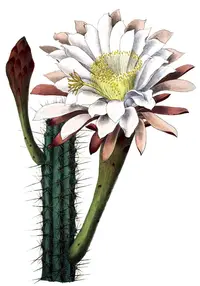
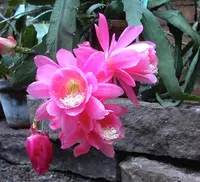
Disocactus phyllanthoides, often called the orchid cactus, is an epiphytic cactus with long, flattened stems and large, showy funnel-shaped flowers. It usually grows pendantly, making it suitable for hanging baskets and elevated containers indoors.

This species is native to humid forests of Mexico and Central America, where it grows on trees rather than in desert soil. Its forest origin means it prefers bright, indirect light, a well-draining but lightly moist substrate, and good air circulation.

Compared with desert cacti, it is moderately easy to grow if watering is controlled and excess moisture is avoided. Understanding how to care for Cactus in this case mainly involves balancing moisture and light while avoiding extreme temperatures.

Main Plant Requirements

Care Difficulty

Moderate Care

Light Preference

Bright Indirect Light

Water Requirements

Moderate Water

Temperature Preference

Tropical / Frost Sensitive

Hardiness Zone

10–11

Soil Texture

Sandy, Loamy, Organic-rich

Soil pH

Acidic (5.5–6.5), Slightly acidic (6.5–7.0)

Soil Drainage

Well-drained

Fertilization

Light (every 4–6 weeks)

Get Personalized Care Plan

Scan your plant to receive care tips personalized for your specific plant

Available on iOS and Android

How to Care for the Cactus

Disocactus phyllanthoides prefers bright, indirect light that mimics bright forest edges.

  • Provide 4–6 hours of soft morning sun with bright, filtered light the rest of the day; avoid harsh midday and afternoon sun, especially behind glass.
  • Plant tolerates light partial shade but elongated, pale stems indicate it needs more light; move it closer to a bright window or to dappled outdoor light.
  • In summer, protect from reflected heat and strong noon sun; in winter, move to the brightest spot available to compensate for shorter days.

This epiphytic cactus prefers evenly moist, fast-draining soil rather than constant dryness.

  • Water when the top 2–4 cm of soil feels dry, then soak thoroughly until excess drains away; never let the pot sit in standing water.
  • In spring and summer, expect to water more often as growth and flowering increase; in fall and winter, extend the interval once stems feel firm but soil dries more slowly.
  • Signs of overwatering include blackened stem bases and sour-smelling, soggy mix; limp, wrinkled stems with dry, crumbly soil point to underwatering and need for a deep drink.

This species grows best in mild, frost-free conditions with stable temperatures.

  • Aim for 65–80°F (18–27°C) during active growth; short peaks up to 85°F (29°C) are tolerated if light is filtered and humidity is moderate.
  • Protect from cold below 50°F (10°C); brief dips to 45°F (7°C) may be survived but can slow growth and increase rot risk in wet soil.
  • Never expose to frost, as tissue is easily damaged; in hot spells above 85°F (29°C), give extra shade and airflow to prevent stress and scorching.

This epiphytic cactus prefers moderate humidity but usually adapts to typical home conditions.

  • Aim for 40–60% humidity to support firm, turgid stems and reliable flowering.
  • It tolerates slightly dry air, but prolonged levels below 30% may cause puckering, browning tips, and slower growth.
  • Increase humidity by grouping plants, using a nearby pebble tray, or placing it in a naturally more humid room away from cold drafts.

This species needs a loose, airy, and sharply draining mix that still holds modest, even moisture.

  • Use a base of peat- or coco-based potting mix combined with ample perlite or pumice and fine orchid bark for structure.
  • Aim for a slightly acidic to neutral pH around 6.0–7.0 to support nutrient uptake and root health.
  • Ensure the mix drains within seconds, not minutes, after watering to prevent waterlogging of the shallow roots.
  • Avoid heavy garden soil, pure cactus sand mixes, or any medium that compacts and excludes air around the roots of Disocactus phyllanthoides.

This species is very suitable for container growing, especially in hanging baskets or elevated pots.

  • Choose a wide, shallow container that matches its spreading, shallow-rooted habit and reduces soggy lower layers.
  • Select a stable, weighty pot or sturdy hanger so long, pendulous stems do not tip the container as they elongate.
  • Use a container material that moderates moisture, such as unglazed clay, if the home tends to stay humid or watering is less precise.

Disocactus phyllanthoides responds well to light, consistent feeding during active growth.

  • Use a balanced liquid fertilizer around 10-10-10 or 20-20-20, diluted to 25–50% strength.
  • Feed every 2–4 weeks in spring and summer while new segments and flower buds develop.
  • Choose formulations suitable for Cactus or epiphytic cacti, avoiding high-urea products.
  • Reduce feeding to once in late fall, then stop through winter dormancy.

Pruning helps maintain Disocactus phyllanthoides shape and supports healthy flowering.

  • Time main pruning for late spring to early summer after blooming finishes.
  • Use clean, sharp scissors or pruning shears to remove dead, shriveled, or damaged stems.
  • Thin out tangled, crowded, or overly long segments to improve light penetration and airflow.
  • Shortening leggy growth encourages branching and more flower-bearing segments next season.

Repotting keeps this epiphytic cactus healthy by refreshing the mix and avoiding root congestion.

  • Check for roots circling the pot, mix drying extremely fast, or slowed growth as repotting signs.
  • Repot every 2–3 years in late winter to early spring, just before active growth starts.
  • Choose a shallow pot 2–5 cm wider with a free-draining cactus or orchid-style mix.
  • Gently loosen roots, remove old soil, water lightly after potting, and keep shaded for 5–7 days to reduce stress.

Disocactus phyllanthoides is most often propagated from stem cuttings for consistent new plants.

  • Take 8–12 cm healthy stem segments in late spring or early summer.
  • Let cut ends dry and callus for 2–5 days in a warm, airy place.
  • Insert cuttings upright in slightly moist, free-draining mix and keep at 70–80°F with bright, indirect light.
  • Maintain light moisture and avoid waterlogging until roots form in 3–6 weeks.

Cool, dry winter conditions help set flower buds but the plant is not frost hardy.

  • Keep plants indoors or in a greenhouse when outdoor temperatures drop below 45–50°F.
  • Maintain cool conditions around 50–60°F with bright, indirect light for bud formation.
  • Water sparingly, allowing most of the potting mix to dry, and do not fertilize in winter.
  • Avoid drafts and sudden temperature swings that can cause bud or segment drop.

Care Tips

Support arching stems

Install a wide, sturdy hanging basket or a low trellis so the long, heavy stems can drape or rest without kinking, which prevents tissue damage and improves flower display.

Rotate seasonally

Turn the pot by 90° every 2–3 weeks during active growth so stems develop evenly and do not lean or twist strongly toward one side, which reduces breakage at the base.

Flower bud protection

Once flower buds appear, avoid moving or jostling the plant and keep it away from door drafts or air vents, since sudden orientation or microclimate changes often cause buds to abort.

Post-bloom grooming

After the main flowering flush, remove spent blooms and any thin, shriveled stem segments with clean shears to reduce fungal risk and direct energy into healthy new growth.

Cool rest period

Provide a slightly cooler, brighter, and drier rest period for 6–8 weeks in late fall to early winter to help set more flower buds, a key step in Disocactus phyllanthoides plant care that many growers overlook.

Common Pests and Diseases

Mealybugs

This pest feeds on plant sap and hides in leaf joints and along flattened stems, often appearing as white cottony clumps. Symptoms include sticky honeydew, sooty mold, and slowed or distorted new growth.

Solution

Remove visible insects with a cotton swab dipped in 70% isopropyl alcohol and rinse stems gently with lukewarm water; repeat weekly until no new insects appear. Isolate the plant, increase airflow, and, if the population is larger, use a labeled insecticidal soap or neem oil spray on all stem surfaces, including undersides and crevices.

Spider mites

These insects are tiny sap-feeders that thrive in warm, dry indoor air and often go unnoticed until fine webbing appears along the flat stems. Symptoms include dull, speckled stem surfaces and general loss of vigor.

Solution

Shower the plant thoroughly, focusing on the undersides and edges of the stems, then maintain slightly higher humidity and better air circulation to slow reinfestation. For persistent mites, apply insecticidal soap or a horticultural oil according to label directions, repeating every 7–10 days until new growth appears clean.

Scale insects

This pest appears as small, tan to brown bumps firmly attached along the stems, edges, and areoles, and it draws sap from the plant. Symptoms include yellowing, patchy discoloration, and sticky honeydew on stems or nearby surfaces.

Solution

Manually remove scale with a soft toothbrush or cloth dipped in diluted alcohol, working carefully along both sides of the flattened stems. After mechanical removal, monitor for several weeks and treat emerging crawlers with insecticidal soap or neem oil, ensuring stems dry in good airflow to avoid fungal issues.

Stem soft rot

This disease is usually caused by opportunistic bacteria or fungi that enter through wounds or waterlogged tissue, especially where stems hold moisture against the pot rim or soil line. Symptoms include water-soaked, translucent or mushy stem sections that may develop a foul odor and collapse rapidly.

Solution

Cut away all affected tissue back into firm, healthy stem using a sterile blade, then let cut surfaces callus in dry, bright shade for several days before replanting. Discard any soggy substrate, replant in a fresh, free-draining cactus mix, and adjust watering so the mix dries almost completely between waterings to support long-term Disocactus phyllanthoides care.

Botrytis blight

This disease is a gray mold that develops in cool, humid, stagnant conditions, especially when stems stay wet or are overcrowded. Symptoms include soft, pale spots that quickly develop fuzzy gray mold and may cause sections of the flattened stems to die back.

Solution

Remove and discard all affected stem sections and any fallen plant debris, then improve air movement and avoid overhead watering so stems dry quickly. In severe or recurring cases, reduce crowding, adjust temperature and humidity, and consider a targeted fungicide labeled for ornamental houseplants, applied according to directions to protect remaining healthy tissue.

Interesting Facts

Hybrid origin cactus

This species is now understood to be of hybrid origin, likely involving a cross between Disocactus crenatus and Disocactus speciosus, which explains its vigorous growth and large, showy flowers compared with many wild epiphytes.

Night-opening blossoms

The large funnel-shaped flowers typically open in the evening or night and remain attractive into the following day, an adaptation that aligns with pollination by nocturnal visitors such as moths in its native range.

Flattened leaf-like stems

Its apparent leaves are actually flattened stems called cladodes, which carry out photosynthesis and store water while hanging from trees or rocks in its natural epiphytic and lithophytic habitats.

Botan icon

Did you know?

In European horticulture this species was cultivated and selectively bred as early as the 18th and 19th centuries, and its striking flowers played an important role in the development of many modern epiphyllum-type hybrids commonly grown today.

FAQs about Cactus

Lack of blooms usually relates to insufficient light, no cool, slightly drier winter rest, or excess nitrogen fertilizer. Mature stems flower best. Provide bright conditions, a cooler rest period, and balanced feeding to support Disocactus phyllanthoides care.

Grow Healthy Plants with Botan Care

Keep your plants happy and healthy with plant identification, disease detection, and easy care guidance.

Botan plant care app — identify plants on mobile

Explore More Plants