Florida scrub roseling Care (Callisia ornata)

Also known as: Scrub roseling
Florida scrub roseling

About Florida scrub roseling

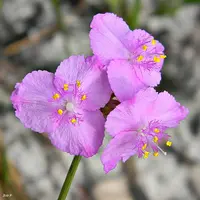
Florida scrub roseling (Callisia ornata) is a small, clumping perennial herb native to dry, sandy scrub habitats in Florida and parts of the southeastern United States. It typically forms low mats of narrow, grass-like leaves with delicate pink to lavender, three-petaled flowers held on slender stems.

This species thrives in open, sunny sites with well-drained, poor soils and shows good drought tolerance once established. Its natural adaptation to harsh, dry environments makes it relatively low-maintenance in suitable conditions, though it dislikes heavy, waterlogged substrates.

Gardeners who want to learn how to care for Florida scrub roseling should focus on providing strong light, sharply drained soil, and avoiding overwatering to keep plants compact and healthy.

Main Plant Requirements

Care Difficulty

Moderate Care

Light Preference

Partial Sun

Water Requirements

Moderate Water

Temperature Preference

Tropical / Frost Sensitive

Hardiness Zone

9–11

Soil Texture

Sandy, Loamy, Organic-rich

Soil pH

Acidic (5.5–6.5), Slightly acidic (6.5–7.0)

Soil Drainage

Well-drained

Fertilization

Light (every 4–6 weeks)

Get Personalized Care Plan

Scan your plant to receive care tips personalized for your specific plant

Available on iOS and Android

How to Care for the Florida scrub roseling

Callisia ornata prefers bright, indirect light with some gentle direct sun each day.

  • Provide 3–5 hours of morning sun with light shade or filtered light in the afternoon to prevent leaf scorch.
  • The plant tolerates partial shade, but below about 3 hours of bright exposure daily growth becomes sparse and stems stretch.
  • In hot summers, especially for Florida scrub roseling in open sites, use afternoon shade or dappled tree cover to reduce stress and fading.

Callisia ornata prefers evenly moist but not saturated soil.

  • Water when the top 2–3 cm of soil feels dry, allowing deeper soil to stay slightly damp without becoming soggy.
  • Reduce watering in cooler months, letting the soil dry an extra day, and increase slightly during active warm-season growth.
  • Watch for yellow, limp leaves or a sour smell as signs of overwatering, and crisp, curling leaves or stalled growth as signs of underwatering; improve drainage if water pools on the surface.

This species favors warm, frost-free conditions for best growth.

  • Aim for 65–80°F (18–27°C) as the main growing range, where Callisia ornata produces the most compact foliage.
  • It tolerates brief heat up to about 90°F (32°C) if soil moisture and light shade are adequate, but growth slows above this, and leaves may scorch in full sun.
  • Protect from cold below 40°F (4°C); light frost can damage foliage, and prolonged exposure near or below 32°F (0°C) may kill stems and roots.

This species prefers moderately humid air but tolerates typical indoor conditions if not kept too dry.

  • Aim for 40–60% humidity to keep foliage dense and reduce leaf-tip browning.
  • Tolerates short periods near 30% humidity, but prolonged dry air can cause curled, crispy leaf edges and slower growth.
  • Increase humidity with a nearby tray of pebbles and water or by grouping Florida scrub roseling with other plants, rather than misting heavily.

This plant grows best in airy, fast-draining, slightly sandy substrate that never stays waterlogged.

  • Use a mix of 50–60% all-purpose potting mix with 20–30% perlite and 10–20% coarse sand for structure and drainage.
  • Ensure the medium is loose and crumbly so roots receive enough oxygen and excess water drains within a few seconds of watering.
  • Aim for mildly acidic to neutral pH around 6.0–7.0; avoid strongly alkaline mixes that can limit nutrient availability.
  • Avoid dense clay-based substrates or heavy peat blends that hold water for many hours and increase the risk of root rot in Callisia ornata.

This species is well suited to container growing due to its compact, spreading habit.

  • Choose a shallow, wide pot to allow lateral spreading stems while preventing unused, soggy soil volume beneath the roots.
  • Select a container material that matches your climate; terracotta suits humid regions, while glazed pots retain moisture longer in dry areas.
  • Stabilize trailing growth by placing the pot in a low, broad cachepot or on a stable tray so the plant’s weight does not tip the container.

Callisia ornata benefits from light, consistent feeding during active growth but does not need heavy fertilization.

  • Use a balanced liquid fertilizer (for example 10-10-10) at 1/4–1/2 strength for Florida scrub roseling.
  • Apply every 4–6 weeks in spring and summer when growth is active.
  • Skip high-salt synthetic feeds; a mild, well-diluted balanced product is enough.
  • Stop or reduce feeding to 1 light application for the entire period in fall and winter.

Pruning helps Callisia ornata stay compact, dense, and healthy.

  • Best time is late winter to early spring, before strong new growth begins.
  • Remove dead, damaged, or leggy stems back to just above a node to encourage branching.
  • Thin crowded shoots to improve light penetration and air flow through the mat.
  • Use small, sharp scissors or clean pruning snips, disinfected before and after use.

This species adapts well to containers but prefers not to be disturbed more often than needed.

  • Plan to repot every 2–3 years or when roots circle the pot base or emerge from drainage holes.
  • Choose early spring for moving Callisia ornata to a container 2–3 cm wider with fresh, well-draining mix.
  • Water the plant the day before repotting, then gently loosen and untangle roots to limit stress.
  • After repotting, water thoroughly once, then keep in bright, indirect light for 5–7 days.

Callisia ornata is commonly propagated from stem cuttings, which root quickly under the right conditions.

  • Take 7–10 cm non-flowering stem cuttings in spring or summer, including at least 2–3 nodes.
  • Remove lower leaves and place the cut end in moist, well-draining mix or water.
  • Maintain bright, indirect light, 70–80°F, and consistently lightly moist substrate for rooting.
  • Division of dense clumps in spring is also effective; keep new divisions shaded for several days.

This plant is sensitive to freezing temperatures and needs protection in regions with cold winters.

  • Bring outdoor containers indoors before temperatures drop below 45°F.
  • Grow indoors in winter at 60–75°F with bright, indirect light and slightly reduced watering.
  • In mild climates, keep outdoor plants in sheltered spots and avoid waterlogged soil.
  • Do not leave Callisia ornata exposed to frost, as stems and foliage are easily damaged.

Care Tips

Stem pinching

Pinch out the soft tips of long stems every few weeks to keep the plant compact and encourage denser side branching instead of sparse, trailing growth.

Low pot profile

Use a wide, shallow pot rather than a deep one to suit the plant’s naturally shallow root system and reduce the risk of staying wet at the bottom of the container.

Rotating for symmetry

Rotate the pot 90° every 1–2 weeks so that all sides receive similar light exposure and stems do not lean strongly toward one direction.

Timed rejuvenation trim

Once stems become woody or bare at the base, cut them back by 1/3–1/2 in late spring and re-root the healthy tip cuttings to thicken the planting.

Quarantine and scouting

When bringing new plants home, keep them isolated from existing Callisia for 10–14 days and inspect leaf undersides and stem joints weekly for early signs of spider mites or scale while caring for Florida scrub roseling.

Common Pests and Diseases

Spider mites

This pest feeds on the thin, succulent foliage, causing stippling, dulling of leaf color, and fine webbing on stems and leaf undersides, especially in warm, dry indoor air.

Solution

Rinse foliage thoroughly with lukewarm water, focusing on leaf undersides, then repeat every few days; if needed, apply an insecticidal soap or neem oil spray and increase humidity and air movement to make conditions less favorable for mites.

Mealybugs

These insects hide in leaf axils and along stems, sucking sap and causing stunted growth, leaf yellowing, and sticky honeydew that can lead to sooty mold on the dense mat of foliage.

Solution

Isolate the plant, dab visible insects with cotton swabs dipped in 70% isopropyl alcohol, then follow with repeated treatments of insecticidal soap, ensuring the spray reaches between crowded shoots and under leaves until no new pests appear.

Southern blight

This disease, caused by soilborne fungi, leads to sudden wilting, stem collapse at the soil line, and white fungal growth with small tan sclerotia on the surface of the potting mix or lower stems, especially in warm, moist conditions.

Solution

Remove and discard affected plants and surrounding potting mix, clean or replace containers, and replant in a fresh, well-draining substrate while avoiding overwatering and keeping the soil surface clean of fallen leaves and debris.

Leaf spot

Symptoms include small, water-soaked or brown spots on leaves that may enlarge and coalesce, leading to patches of dying tissue on the thin leaves when moisture lingers on the foliage.

Solution

Remove and discard affected leaves, improve air circulation around the plant, avoid wetting the foliage, and if spotting continues, use a copper-based or other labeled fungicide, following instructions carefully as part of Callisia ornata plant care.

Interesting Facts

Florida scrub specialist

Callisia ornata is naturally restricted to Florida’s inland scrub and sandhill habitats, growing in very open, nutrient-poor, sandy soils that many other species cannot tolerate.

Sun and fire adapted

In its native scrub, this species often grows in sites exposed to intense sun and periodic fire, and it is adapted to re-establish in the bright, open gaps that follow fire events.

Part of a rare flora

This species contributes to the botanical uniqueness of the Florida scrub ecosystem, a biodiversity hotspot that contains many narrowly distributed and endemic plants.

FAQs about Florida scrub roseling

This species spreads gradually by short, branching stems, forming low patches rather than running long distances. It can lightly self-seed, but is not typically aggressive if older clumps are thinned and unwanted seedlings are removed.

Grow Healthy Plants with Botan Care

Keep your plants happy and healthy with plant identification, disease detection, and easy care guidance.

Botan plant care app — identify plants on mobile

Explore More Plants