Removable pot sleeves
Place the nursery pot inside a decorative cachepot without drainage so you can easily lift the plant out for soaking and quick drying, which reduces the risk of trapped water around the roots and leaf base.

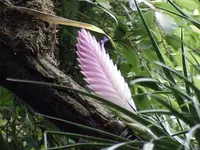
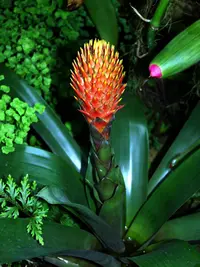
Pink quill, Wallisia cyanea, is a compact epiphytic bromeliad often grown as a tabletop or windowsill houseplant. It forms a dense rosette of narrow, arching green leaves.
The plant is named for its flat, bright pink bract that looks like a feather or quill, with small purple flowers emerging from the sides. In nature it occurs in tropical forests of Ecuador and nearby regions, usually growing on trees rather than in soil.
Its slow growth, modest size, and tolerance of indoor conditions make it manageable for most homes. Light, air humidity, and careful watering are the main factors that influence how to care for Pink quill.

Care Difficulty
Moderate Care

Light Preference
Bright Indirect Light

Water Requirements
Moderate Water

Temperature Preference
Tropical / Frost Sensitive

Hardiness Zone
11–12

Soil Texture
Loamy, Peaty, Organic-rich

Soil pH
Acidic (5.5–6.5), Slightly acidic (6.5–7.0)

Soil Drainage
Well-drained

Fertilization
Light (every 4–6 weeks)
Scan your plant to receive care tips personalized for your specific plant
Available on iOS and Android
Wallisia cyanea prefers bright, indirect light that mimics dappled forest conditions.
Wallisia cyanea needs moderate watering with careful attention to both the central cup and the potting mix.
This bromeliad prefers warm, stable temperatures with good air movement and no frost exposure.
This bromeliad prefers moderately humid air and reacts quickly to very dry conditions.
Use a very airy, fast-draining mix that mimics epiphytic conditions rather than dense potting soil.
This species is well suited to container growing when the pot supports its shallow, epiphytic root system.
Wallisia cyanea benefits from light, consistent feeding during active growth.
Wallisia cyanea needs minimal pruning focused on spent flowers and damaged leaves.
This bromeliad prefers a snug pot and is repotted infrequently to refresh its mix or manage offsets.
Propagation is commonly done by separating offsets rather than by seed.
This tropical epiphyte is frost-sensitive and needs indoor conditions in cold climates.

Plant Health Check
Not sure what's wrong with your plant? Check your plant's health inside the app.
In the wild, this species grows as an epiphyte on tree branches in coastal Ecuador, using its roots mainly for anchoring rather than for nutrient uptake from soil.
Its tightly overlapping leaves form a central cup that can hold water and organic debris, creating a small microhabitat for insects and microorganisms.
The stiff pink bracts that resemble a quill gradually turn green after flowering as the pigments change, signaling the end of the main blooming phase.

Wallisia cyanea was long known in cultivation under the name Tillandsia cyanea, and the change to the genus Wallisia reflects modern DNA-based research that reshaped the bromeliad family tree.
Lack of flowering is usually due to insufficient light, low humidity, or a plant that is still immature. A brief, mild temperature drop and slightly brighter conditions can help trigger blooming if the plant is otherwise healthy.
Keep your plants happy and healthy with plant identification, disease detection, and easy care guidance.