Support Heavy Racemes
Install a discreet hoop stake or small trellis before flower spikes elongate, then loosely tie stems with soft plant ties so the weight of the blooms does not crack brittle branches or distort new growth.

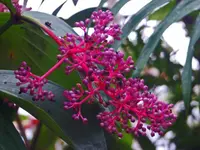
Medinilla speciosa is a tropical evergreen shrub valued for its showy hanging clusters of pink flowers and glossy, deeply veined leaves. It is often grown as a decorative indoor container plant in bright, warm rooms. Native to humid forests in Southeast Asia, it prefers stable warmth, high air humidity, and protection from direct, harsh sun. These needs make it more suitable for growers who already have some experience with tropical houseplants. To care for Medinilla speciosa successfully, provide airy but moisture-retentive soil, gentle airflow, and avoid sudden changes in temperature or watering habits.

Care Difficulty
Hard Care

Light Preference
Bright Indirect Light

Water Requirements
Keep Soil Moist

Temperature Preference
Tropical / Frost Sensitive

Hardiness Zone
11–12

Soil Texture
Loamy, Peaty, Organic-rich

Soil pH
Acidic (5.5–6.5), Slightly acidic (6.5–7.0)

Soil Drainage
Moist but well-drained

Fertilization
Light (every 4–6 weeks)
Scan your plant to receive care tips personalized for your specific plant
Available on iOS and Android
This plant prefers bright, gentle light that mimics dappled tropical shade.
This species prefers evenly moist but never waterlogged soil.
Stable, warm conditions support healthy growth and flowering.
This species needs relatively high humidity to keep leaves and flower bracts healthy.
Medinilla speciosa prefers a loose, airy, organically rich mix that drains quickly but retains some moisture.
This species is suitable for container growing, especially in climates too cool for year-round outdoor planting.
Nutrient support helps Medinilla speciosa flower well in containers, but feeding should stay light and controlled.
Targeted pruning maintains shape and flowering performance in Medinilla speciosa without heavy cutting.
Container-grown Medinilla speciosa dislikes frequent disturbance, so repot only when clear signs appear.
Medinilla speciosa is usually propagated by stem cuttings rather than seeds in home conditions.
This tropical shrub is not frost hardy and needs sheltered winter conditions in most climates.

Plant Health Check
Not sure what's wrong with your plant? Check your plant's health inside the app.
In its native range in the Philippines, this species often grows as an epiphyte, using tree branches as support while taking moisture and nutrients from rain, debris, and humid air rather than from soil alone.
The plant produces small, fleshy berries that change color as they mature, typically shifting from green to pink or purplish tones, which helps signal ripeness to fruit‑eating birds that disperse the seeds.
Its branching flower stalks carry many small blossoms arranged in drooping clusters, an adaptation that allows flowers and later berries to hang free from the foliage for easier access by pollinators and frugivores.

This species is native to warm, humid forests in the Philippines and is considered uncommon in the wild, yet it has become a valued ornamental plant in tropical collections and botanical gardens around the world, where detailed Medinilla speciosa care instructions support ex situ conservation.
Lack of flowering usually relates to low light, insufficient maturity, or stress from repotting or temperature swings. Provide stable warmth, good humidity, and avoid frequent repositioning. Use a balanced fertilizer at half strength during active growth to support buds.
Keep your plants happy and healthy with plant identification, disease detection, and easy care guidance.