Staking Tall Spikes
Install slender bamboo stakes and soft ties early in the season to keep flowering stems upright and prevent wind damage, especially in exposed beds.

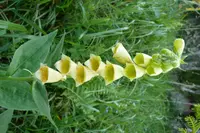
Yellow foxglove (Digitalis grandiflora) is a clump-forming perennial grown mainly for its upright spikes of tubular, soft yellow flowers. It usually forms a low rosette of green leaves at the base, with flowering stems that rise above in early to mid-summer.
This species is native to parts of central and eastern Europe, where it grows in open woodlands, meadows, and rocky slopes. Gardeners value it for a natural, slightly wild look and for attracting pollinators.
It is moderately easy to grow when given well-drained soil, consistent moisture, and partial sun. Understanding how to care for yellow foxglove helps keep plants healthy and long-lived in garden settings.

Care Difficulty
Moderate Care

Light Preference
Partial Shade

Water Requirements
Moderate Water

Temperature Preference
Cold Hardy

Hardiness Zone
3–8

Soil Texture
Sandy, Loamy, Organic-rich

Soil pH
Acidic (5.5–6.5), Slightly acidic (6.5–7.0)

Soil Drainage
Moist but well-drained

Fertilization
Minimal (feed rarely)
Scan your plant to receive care tips personalized for your specific plant
Available on iOS and Android
Digitalis grandiflora prefers bright, gentle light that protects foliage from harsh midday sun.
Digitalis grandiflora prefers evenly moist, well-drained soil that never stays waterlogged.
This species is a cool-temperate perennial that tolerates winter cold but dislikes extreme heat.
Humidity is rarely a limiting factor for Digitalis grandiflora grown outdoors.
Digitalis grandiflora prefers moist, well-drained, humus-rich soil that does not stay waterlogged.
This species can be grown in containers for short-term displays if the pot is sized and stabilized carefully.
Digitalis grandiflora benefits from light, targeted feeding rather than heavy fertilization.
Pruning Digitalis grandiflora is mainly done to tidy plants and encourage extended flowering.
This species is usually grown in garden beds, so care focuses on planting and occasional transplanting rather than frequent repotting.
Digitalis grandiflora is most often multiplied from seed, with self-sowing common in suitable beds.
This foxglove is generally cold hardy in temperate climates and needs only modest winter care.

Plant Health Check
Not sure what's wrong with your plant? Check your plant's health inside the app.
This species often behaves as a true perennial, maintaining basal leaf rosettes and flowering from the same crowns for many years, unlike some other foxgloves that are strictly biennial.
Its tubular, pale yellow flowers are shaped and sized for medium to large bumblebees, which enter the tube and contact the anthers and stigma while foraging for nectar and pollen.
The species is native to light woodlands, forest edges, and mountain meadows from central to eastern Europe, where it typically grows in humus-rich, slightly acidic soils with partial shade.

Digitalis grandiflora was one of the foxglove species available to early European botanists in the 18th and 19th centuries, and herbarium collections from this period still provide reference material for modern taxonomic and genetic studies of the genus Digitalis.
Lack of flowering often comes from too much shade, nutrient-poor soil, or plants that are still immature. This species may need a season or two to establish strong roots before producing full flowering spikes.
Keep your plants happy and healthy with plant identification, disease detection, and easy care guidance.