Sturdy staking
Install low, unobtrusive stakes early in the season and loosely tie stems before they set seed pods so wind or heavy rain does not snap the tall, brittle flowering shoots.

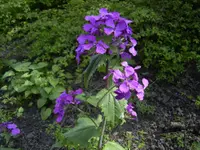
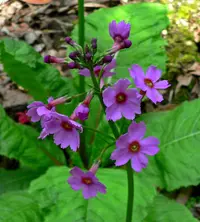
Annual honesty, Lunaria annua, is a cool-season biennial often grown as an annual for its spring flowers and decorative seed pods. It forms leafy clumps and sends up upright stems with clusters of purple or white, four-petaled blooms.
After flowering, the plant develops flat, round seed pods that dry to a silvery, papery disc often used in dried arrangements. It is native to parts of Europe and western Asia but is now naturalized in many temperate gardens.
This plant is generally easy to grow, adapting to average garden soil and partial shade to sun, which simplifies how to care for annual honesty.

Care Difficulty
Easy Care

Light Preference
Partial Shade

Water Requirements
Moderate Water

Temperature Preference
Cool Climate

Hardiness Zone
4–8

Soil Texture
Loamy, Silty, Organic-rich

Soil pH
Acidic (5.5–6.5), Slightly acidic (6.5–7.0)

Soil Drainage
Moist but well-drained

Fertilization
Minimal (feed rarely)
Scan your plant to receive care tips personalized for your specific plant
Available on iOS and Android
This plant prefers bright outdoor sites with gentle sun and some protection from intense midday exposure.
Lunaria annua prefers evenly moist, well-drained soil that never stays saturated for long periods.
This cool-season biennial performs best in mild temperatures and tolerates moderate cold once established.
Humidity is not a significant factor for Lunaria annua, which handles typical indoor and outdoor air well.
Lunaria annua prefers loose, moist, well-drained soil that does not stay waterlogged.
This species can be grown in containers when provided with enough depth and stable moisture.
This plant needs only modest feeding to flower and set decorative seed pods well.
Light pruning keeps Lunaria annua tidy and can improve flowering and seed quality.
This species is usually grown in garden beds, so focus on careful transplanting rather than frequent repotting.
Seed propagation is the standard method for renewing plantings and maintaining displays of this biennial species.
This hardy biennial usually needs minimal winter care in temperate climates.

Plant Health Check
Not sure what's wrong with your plant? Check your plant's health inside the app.
The famous papery discs are actually the plant’s central seed pod partition, or septum, revealed after the outer pod walls and seeds fall away, leaving a naturally translucent, silvery membrane.
The purple or white flowers have a stronger, sweeter fragrance in the evening and at night, which helps attract nocturnal moth pollinators in their native and naturalized range.
Although often called an annual, this species typically behaves as a biennial, forming only leaves in its first year, then flowering, setting seed, and self-sowing in its second year to maintain long-term stands.

The distinctive silvery seed discs of this plant became so popular in dried arrangements that they helped drive its spread from southeastern Europe across much of Europe, North America, and other temperate regions as a long-established garden and cottage-ornamental species.
Lack of flowering usually comes from too much shade, excessive nitrogen fertilizer, or sowing too late the previous year. This biennial forms leaves the first year, then flowers the second once it experiences winter chill.
Keep your plants happy and healthy with plant identification, disease detection, and easy care guidance.