Coral Bells Care (Heuchera 'Lime Rickey')

Also known as: Alum Root

About Coral Bells

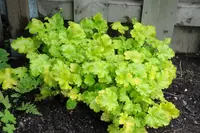
Heuchera 'Lime Rickey' is a compact, herbaceous perennial grown mainly for its bright lime-green, scalloped leaves. It forms tidy clumps that hold color from spring into fall, adding contrast to mixed borders and containers.

This cultivar comes from North American woodland and rocky habitats, where wild Heuchera species grow in dappled light and well-drained soil. Its shallow root system and foliage-first growth habit make it relatively forgiving and suitable for small gardens.

Heuchera 'Lime Rickey' is considered moderately easy to grow, as long as the soil drains well and the plant is protected from harsh, direct afternoon sun. Understanding how to care for Coral Bells helps keep the foliage dense and the plant long-lived.

Main Plant Requirements

Care Difficulty

Moderate Care

Light Preference

Partial Shade

Water Requirements

Moderate Water

Temperature Preference

Cold Hardy

Hardiness Zone

4–9

Soil Texture

Loamy, Sandy, Organic-rich

Soil pH

Acidic (5.5–6.5), Slightly acidic (6.5–7.0)

Soil Drainage

Moist but well-drained

Fertilization

Light (every 4–6 weeks)

Get Personalized Care Plan

Scan your plant to receive care tips personalized for your specific plant

Available on iOS and Android

How to Care for the Coral Bells

This perennial thrives with bright conditions but needs protection from harsh sun to keep foliage vibrant.

  • Provide 3–5 hours of morning sun with light afternoon shade; dappled or filtered light suits Coral Bells in hotter climates.
  • In cool summer regions, it can handle light sun most of the day if soil stays evenly moist and roots are mulched.
  • If leaves bleach, crisp at the edges, or develop scorched patches, reduce direct midday sun; if growth is sparse or pale, move to a brighter spot.

This plant prefers consistently moist but not waterlogged soil, with short dry periods near the surface.

  • Water when the top 2–3 cm of soil feels dry, aiming for a thorough soak that drains out rather than frequent light splashes.
  • Use well-drained soil rich in organic matter so roots stay moist but have air; avoid heavy clay that stays wet for long periods.
  • In hot summer weather, watch for wilting or limp leaves as a sign to water; yellowing, mushy crowns suggest overwatering and poor drainage around Heuchera 'Lime Rickey'.

This hardy perennial tolerates a wide temperature range but grows best in moderate conditions.

  • Optimal growing temperatures are 60–75°F (16–24°C), with strongest leaf color and steady growth in the cooler part of this range.
  • Established plants are typically hardy to about -20°F (-29°C) in the ground, though winter survival improves with mulch and good drainage.
  • During heat above 85°F (29°C), provide shade and consistent soil moisture; repeated extremes above 95°F (35°C) can stress foliage and reduce vigor over time.

Heuchera 'Lime Rickey' grows well in typical outdoor humidity but benefits from slightly moist air in hot, exposed sites.

  • Aim for 40–60% humidity, which most gardens naturally provide in partial shade beds or mixed borders.
  • Plants tolerate short dry air spells, but prolonged hot, low humidity with strong sun can cause leaf scorch and crispy edges.
  • If foliage shows browning margins, increase humidity slightly by mulching the soil surface and grouping plants to reduce rapid moisture loss.

Heuchera 'Lime Rickey' prefers loose, moisture-retentive yet free-draining soil that never stays waterlogged.

  • Use a loamy structure enriched with fine compost or leaf mold to provide organic matter and steady moisture.
  • Ensure sharp drainage by incorporating 20–30% coarse material such as perlite, fine bark, or grit through the planting zone.
  • Target a slightly acidic to neutral pH around 6.0–7.0, avoiding strongly alkaline or compacted clay sites that restrict roots.
  • Improve aeration by breaking up clods, removing heavy subsoil, and raising the bed slightly where drainage is naturally slow.

This plant is well suited to container growing outdoors on patios, balconies, or in mixed planters.

  • Choose a pot wide enough for its spreading crown so outer growth does not quickly overhang and dry out at the rim.
  • Use a relatively heavy or weighted container to prevent wind rock, which can loosen the shallow root system in tall pots.
  • Select materials like glazed ceramic or thick plastic if faster moisture retention is needed in sunny, exposed positions.

Heuchera 'Lime Rickey' benefits from modest feeding to support foliage color and steady growth.

  • Use a balanced, slow-release granular fertilizer (for example 10-10-10) or light compost top-dressing in spring.
  • Apply fertilizer at 1/2 the label strength to avoid salt buildup and overly lush, weak growth.
  • Feed once in early spring and again midsummer during active growth, then stop in late summer.
  • For Coral Bells in containers, monitor more closely and use diluted liquid feed every 4–6 weeks in the growing season.

Pruning Heuchera 'Lime Rickey' focuses on tidying foliage and maintaining a compact mound.

  • In early spring, remove all dead, mushy, or winter-burned leaves using clean hand pruners or scissors.
  • During the growing season, trim faded flower stalks at the base to direct energy back into foliage.
  • Thin crowded or damaged leaves to improve airflow and reduce fungal problems.
  • If stems elongate and clump opens, lightly cut back outer foliage to refine shape.

Heuchera 'Lime Rickey' is usually grown in garden beds but can be transplanted or repotted when growth declines.

  • Transplant or repot in early spring or early fall when temperatures are mild and soil is workable.
  • Look for signs such as roots circling the pot, soil drying very fast, or slowed growth before moving the plant.
  • Lift the clump gently, tease apart congested roots with fingers, and trim any rotten or broken sections.
  • Replant at the same soil level in well-drained, organic-rich soil, then water thoroughly and shade lightly for a few days.

Heuchera 'Lime Rickey' is commonly propagated by division to maintain cultivar traits and vigor.

  • Divide mature clumps in early spring or early fall when weather is cool and soil moist.
  • Lift the plant carefully, then separate the crown into sections, each with several buds and healthy roots.
  • Replant divisions at the same depth in well-drained soil, spacing 25–35 cm apart.
  • Water consistently until established and provide light shade and mulch to reduce transplant stress.

Heuchera 'Lime Rickey' is generally cold hardy but benefits from simple winter care in colder regions.

  • In late fall, apply a 5–7 cm layer of mulch around the crown, keeping it slightly away from the stems.
  • Leave most healthy foliage in place to shield the crown, trimming only dead or diseased leaves.
  • For container plants in zones colder than the plant’s rating, move pots into a sheltered, frost-free but cool spot.

Care Tips

Mulch For Crowns

Apply a 2–3 in layer of fine bark mulch around but not touching the crowns to keep roots cool, conserve moisture, and reduce heaving of shallow roots in freeze–thaw cycles.

Divide To Rejuvenate

Every 3–4 years in early spring or early fall, lift clumps, trim away woody or leafless centers, and replant only vigorous outer sections at the same depth to maintain dense foliage and strong color.

Manage Winter Heaving

In cold climates, check plants after winter thaws and gently firm any lifted crowns back into place, then top up mulch to protect the shallow root system from further movement.

Rotate And Re-Site

If foliage fades or scorches over the season, mark the plant’s performance and move it in early spring to a spot with slightly different light or drainage to fine-tune conditions for growing Coral Bells.

Slug And Vine Weevil Checks

Inspect leaves and the crown area regularly for slug damage and notched edges from vine weevils, and use physical barriers, hand-picking, or targeted biological controls before damage weakens the plant.

Common Pests and Diseases

Vine weevils

This pest feeds on the roots as larvae and on the foliage as adults, often causing sudden decline and notching on leaf edges. Symptoms include wilting in spite of adequate moisture and poor new growth.

Solution

Inspect plants and surrounding soil for creamy white, C-shaped grubs and remove them by hand, and destroy heavily infested container plants if roots are severely eaten. Use nematodes labeled for vine weevil control in spring or late summer, and reduce nearby hiding places such as dense ground covers and debris around pots to help manage populations when growing Coral Bells in containers or beds.

Rust

This disease produces orange, brown, or rust-colored pustules on the undersides of leaves, with yellowing or spotting on the upper surface. Infected foliage often looks weak and may drop prematurely.

Solution

Promptly remove and discard affected leaves to reduce spore spread, and avoid overhead watering so foliage dries quickly. Space plants for good airflow, water at soil level, and if rust is persistent, rotate to more resistant Heuchera cultivars or apply a sulfur or copper-based fungicide according to label directions.

Powdery mildew

This disease appears as white or gray powdery patches on the upper leaf surface, which can lead to distorted growth and reduced vigor. Symptoms include dull, faded foliage and slower growth in crowded or shaded positions.

Solution

Improve air circulation by thinning nearby plants and avoid wetting foliage, especially in the evening. Remove heavily infected leaves and, if needed, apply a labeled fungicide such as neem oil or potassium bicarbonate, repeating as directed until new growth appears clean.

Crown rot

This disease affects the base of the plant where stems meet the roots, often in poorly drained or waterlogged soil. Symptoms include a mushy crown, yellowing foliage, and sudden collapse of the entire plant.

Solution

Remove and discard affected plants and any obviously rotting crown tissue, then improve drainage by amending soil with coarse material or raising the planting area. Avoid overwatering, do not bury the crown too deeply, and space plants so the crown dries quickly after rain or irrigation.

Aphids

These insects cluster on tender new growth, sucking sap and causing curled, sticky leaves due to honeydew deposits. This pest can attract sooty mold and weaken the plant if populations are high.

Solution

Rinse off colonies with a firm stream of water, especially from the undersides of leaves, and pinch back heavily infested shoot tips. Encourage or introduce natural predators such as lady beetles, and if needed use insecticidal soap or horticultural oil, ensuring thorough coverage of all infested areas.

Interesting Facts

Stable chartreuse foliage

This cultivar maintains a consistent lime-green to chartreuse leaf color through much of the growing season, even in partial shade, unlike many heucheras that fade or bronze more strongly with light changes.

Heat-tolerant lineage

Although many heucheras struggle in hot, humid conditions, this plant was selected in part for better heat tolerance, making it more reliable in warmer regions when given adequate moisture and drainage.

Genetic hybrid background

It originates from complex breeding among North American Heuchera species, which contributes to its compact mounding habit, lobed foliage, and improved garden performance compared with many older coral bell cultivars.

Botan icon

Did you know?

Heuchera 'Lime Rickey' received industry recognition soon after its introduction and has been frequently used by landscape designers as a high-visibility contrast plant, especially to set off dark-leaved heucheras and purple-leaved shrubs in mixed borders.

FAQs about Coral Bells

Yellowing foliage often results from water stress, poor drainage, or nutrient imbalance. Check for soggy or compacted soil, adjust watering, and consider a light, balanced fertilizer. Excessive heat or strong sun can also bleach and yellow leaves.

Grow Healthy Plants with Botan Care

Keep your plants happy and healthy with plant identification, disease detection, and easy care guidance.

Botan plant care app — identify plants on mobile

Explore More Plants