blacksamson echinacea Care (Echinacea angustifolia)

Also known as: narrow-leaved purple coneflower
blacksamson echinacea

About blacksamson echinacea

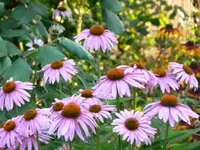
Blacksamson echinacea (Echinacea angustifolia) is a hardy perennial wildflower in the daisy family, valued for its resilience and long-lived clumps. It typically forms upright stems with narrow, rough-textured leaves and pale purple to pink cone-shaped flowers.

This species is native to central North American prairies and dry grasslands, where it thrives in full sun and lean, well-drained soils. Its deep root system and drought tolerance make it relatively low-maintenance once established, which simplifies how to care for blacksamson echinacea. It suits sunny borders, meadow-style plantings, and pollinator gardens.

Main Plant Requirements

Care Difficulty

Easy Care

Light Preference

Full Sun

Water Requirements

Low Water

Temperature Preference

Cold Hardy

Hardiness Zone

3–8

Soil Texture

Sandy, Loamy, Rocky

Soil pH

Acidic (5.5–6.5), Slightly acidic (6.5–7.0)

Soil Drainage

Well-drained

Fertilization

Minimal (feed rarely)

Get Personalized Care Plan

Scan your plant to receive care tips personalized for your specific plant

Available on iOS and Android

How to Care for the blacksamson echinacea

This prairie perennial needs strong sun to flower and stay compact.

  • Provide 6–8 hours of direct sun daily; 8–10 hours is ideal in cooler climates for abundant blooms in blacksamson echinacea.
  • Tolerates light partial shade (3–4 hours direct sun) but expect fewer, weaker stems and more lodging in rich soils.
  • In hot regions, prioritize morning sun with light afternoon shade to reduce leaf scorch; ensure open exposure in spring and fall when sun is weaker.

This species is drought-tolerant and prefers infrequent, deep watering once established.

  • Allow the top 5–7 cm of soil to dry fully before watering; soil should feel dry and loose, not cool or sticky, when you probe with a finger or trowel.
  • During the first growing season, water slowly and deeply when lower leaves begin to lose slight turgor, then reduce frequency in following years.
  • Watch for overwatering signs such as yellowing, limp foliage and a sour soil smell; ensure fast-draining, sandy or loamy ground to prevent root rot in Echinacea angustifolia.

This hardy perennial tolerates wide temperature swings once established outdoors.

  • Active growth is strongest at 65–80°F (18–27°C); flowering and root development are reliable in this range.
  • Mature plants survive winter down to about -30°F (-34°C) in the ground with good drainage, though top growth dies back after hard frost.
  • During summer heat above 90–95°F (32–35°C), plants usually cope well if soil is not waterlogged; mulch 3–5 cm deep to buffer rapid temperature and moisture fluctuations.

This species tolerates a wide humidity range and usually does not need special humidity control in typical indoor air.

This prairie perennial prefers lean, fast-draining soil with enough structure to keep roots aerated.

  • Use sandy or sandy-loam soil with 30–50% coarse sand or fine grit to mimic its native dry prairie conditions.
  • Aim for slightly acidic to neutral pH, around 6.0–7.5, which suits Echinacea angustifolia root function and nutrient uptake.
  • Incorporate only a thin layer (10–20%) of mature compost; overly rich, high-organic soil encourages weak, floppy growth.
  • Avoid compacted clay, waterlogged spots, or heavy peat mixes, and amend them with grit or sand to improve drainage and air spaces.

This species can be grown in containers, but performs best in deep, stable pots placed in full sun outdoors.

  • Choose a pot at least 30–35 cm deep to accommodate the strong taproot and reduce stress during summer heat.
  • Select a heavy terracotta or concrete container to prevent tipping when stems elongate and flower heads develop.
  • Fill the pot with a gritty, low-organic mix so water drains within a few minutes, reducing crown rot risk in blacksamson echinacea.

This prairie perennial, including blacksamson echinacea, needs only light feeding in average garden soil.

  • Apply a thin layer of compost around plants in early spring to support steady growth.
  • Use a balanced slow-release fertilizer (around 10-10-10) once in spring if soil is poor or plants look weak.
  • If using liquid feed, dilute to 1/2 strength and apply no more than monthly during the growing season.
  • Avoid fertilizing in fall and winter, when Echinacea angustifolia is dormant and not actively growing.

Pruning Echinacea angustifolia is simple and mainly supports tidy growth and continued flowering.

  • Deadhead spent blooms in summer by cutting stems just above a leaf node to encourage more flowers.
  • Remove dead, damaged, or diseased stems at the base using clean, sharp pruners to reduce disease risk.
  • In late fall or very early spring, cut back dry stems to near ground level if you do not need winter seedheads.
  • Thin crowded clumps by taking out weaker stems to improve air flow and reduce fungal problems.

This deep-rooted prairie species is better transplanted young and left undisturbed once established.

  • Transplant in early spring or early fall, when temperatures are mild and soil moisture is steady.
  • Look for roots circling the container, water draining too quickly, or stalled growth as signs a potted plant needs a larger pot or garden space.
  • Lift the plant with a wide root ball, disturb roots as little as possible, and replant at the same depth in well-drained soil.
  • Water thoroughly after transplanting, then keep soil slightly moist (not waterlogged) for 1–2 weeks to reduce transplant shock.

Echinacea angustifolia is commonly propagated from seed and by careful division of established clumps.

  • Sow seeds in fall outdoors or cold-stratify in a refrigerator for 30–60 days before spring sowing to break dormancy.
  • Use a free-draining seed mix, maintain light moisture, and provide bright light at 65–75°F for reliable germination.
  • Divide mature clumps in early spring, ensuring each division has several buds and a solid portion of the taproot.
  • Replant divisions promptly at original depth and water well until new growth shows successful establishment.

This species is cold hardy in much of North America and usually needs minimal winter care.

  • Tolerates frost and freezing once established, with roots surviving well below 0°F in well-drained soil.
  • After hard frost, allow seedheads to remain for wildlife, or cut stems back to 5–10 cm if a cleaner look is preferred.
  • Apply a light 5–8 cm mulch layer in colder regions to buffer soil temperature, but keep mulch off the crown.
  • For container plants in very cold climates, move pots to a sheltered, unheated but frost-moderated area.

Care Tips

Encourage Deep Roots

In the first growing season, allow the soil surface to dry fully, then water deeply but infrequently so the plant develops a strong taproot that will anchor it and improve drought resilience in later years.

Minimal Mulch Strategy

Use only a very thin (1–2 cm) layer of coarse mulch such as gravel or crushed bark around the crown so the root zone is kept slightly cooler while the crown itself stays dry and less prone to rot.

Controlled Self-Seeding

If you want a natural-looking colony, leave a few spent flower heads on the plant until they are fully dry, then shake them over bare soil in fall to promote self-seeding while still keeping overall spread under control.

Winter Crown Protection

In regions with freeze–thaw cycles, leave the dead stems in place over winter and cut them back only in early spring, as the standing growth helps insulate the crown and protects emerging buds.

Targeted Harvest Timing

For those interested in Echinacea angustifolia care for herbal use, harvest roots only from well-established plants that are at least 3 years old, doing so in late fall when top growth has died back but before the ground freezes, to reduce stress on the planting.

Common Pests and Diseases

Aster yellows

This disease is caused by a phytoplasma that disrupts normal growth, leading to distorted, bushy, yellowed flower heads and deformed stems. Symptoms include green, tufted centers instead of normal cones and overall stunting.

Solution

Remove and destroy affected plants as soon as symptoms appear, since there is no cure once infected. Control leafhopper populations (the main vectors) by encouraging predators, using reflective mulches, and avoiding overhead irrigation that favors their movement; keep nearby weeds low, as many host the pathogen.

Powdery mildew

This disease appears as white to gray powdery patches on leaves and sometimes stems, especially in warm days and cool nights with high humidity. Symptoms include yellowing, leaf distortion, and early leaf drop in severe cases.

Solution

Improve air circulation by spacing plants properly and thinning crowded clumps, and avoid overhead watering in the evening. Remove and discard heavily infected leaves, and if needed apply a sulfur or potassium bicarbonate fungicide labeled for ornamentals at the first sign of infection.

Japanese beetles

These insects chew irregular holes in leaves and flowers, often skeletonizing foliage and damaging petals and cones. This pest is most active on sunny days and can gather in large groups on flower heads.

Solution

Hand-pick beetles in early morning and drop them into soapy water, focusing on heavily infested flowers first. Reduce nearby lawn grubs with targeted biological controls such as milky spore or beneficial nematodes, and avoid placing pheromone traps close to the planting area to prevent drawing more beetles onto the plants.

Leafhoppers

These insects are small, wedge-shaped sap feeders that jump readily when disturbed and may cause pale stippling, leaf curling, or tip burn. This pest is also an important vector of aster yellows on coneflowers.

Solution

Reduce leafhopper numbers by using strong water sprays to knock them off plants, and encourage beneficial insects such as lady beetles and lacewings by limiting broad-spectrum insecticides. Floating row covers over young plants and maintaining weed-free borders help lower vector pressure and support Echinacea angustifolia care in garden settings.

Gray mold

This disease, caused by Botrytis, leads to soft, brown, water-soaked spots on petals and leaves that develop fuzzy gray mold under cool, damp conditions. Symptoms include blighted flower heads and collapsing stems at the base of infected tissue.

Solution

Remove and discard spent flowers and any soft, moldy tissue as soon as it appears, and keep the area around plants free of dense debris. Improve drainage and airflow, water at the base rather than overhead, and use a targeted Botrytis fungicide only when cultural measures are not sufficient and conditions remain persistently wet.

Interesting Facts

Great Plains specialist

This species is native mainly to the dry prairies and Great Plains of central North America, where it is adapted to open, sunny grasslands with relatively low rainfall.

Deep taproot strategy

It develops a strong, deep taproot that allows the plant to access water stored well below the soil surface and to survive extended summer droughts.

Pollinator partnership

Its narrow, pale to rose-purple rays and prominent spiny cone attract a wide range of native solitary bees and butterflies, which act as primary pollinators in its natural range.

Botan icon

Did you know?

This species was one of the original wild coneflowers used in early 20th-century pharmacognosy research, helping to establish Echinacea as a model genus in modern studies of plant secondary metabolites and their ecological roles.

FAQs about blacksamson echinacea

Lack of flowering often comes from too much shade, overly rich or wet soil, or plants that are still immature. Avoid heavy fertilizing, ensure several hours of direct sun, and avoid crowding by more vigorous neighbors.

Grow Healthy Plants with Botan Care

Keep your plants happy and healthy with plant identification, disease detection, and easy care guidance.

Botan plant care app — identify plants on mobile

Explore More Plants