French rose Care (Rosa gallica)

Also known as: Provence Rose, Red Rose of Lancaster, provincial rose
French rose

About French rose

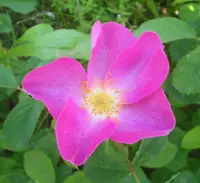
French rose, known botanically as Rosa gallica, is a compact, deciduous shrub rose valued for its fragrant, often deep pink to crimson flowers. It typically forms a dense, bushy clump with upright stems, thorny canes, and simple, matte green leaves.

This species is native to parts of Europe and western Asia, where it grows in sunny, open habitats and light woodland edges. It is generally robust and cold-hardy, which makes it easier to grow than many modern roses, provided it gets good light, air circulation, and well-drained soil.

Its simple care needs and disease tolerance make it suitable for cottage gardens, borders, and traditional herb gardens; learning how to care for French rose is straightforward for most gardeners.

Main Plant Requirements

Care Difficulty

Moderate Care

Light Preference

Full Sun

Water Requirements

Regular Water

Temperature Preference

Cold Hardy

Hardiness Zone

4–8

Soil Texture

Loamy, Sandy, Organic-rich

Soil pH

Acidic (5.5–6.5), Slightly acidic (6.5–7.0)

Soil Drainage

Moist but well-drained

Fertilization

Light (every 4–6 weeks)

Get Personalized Care Plan

Scan your plant to receive care tips personalized for your specific plant

Available on iOS and Android

How to Care for the French rose

Rosa gallica performs best in stable, bright outdoor conditions with ample direct sun.

  • Provide 6–8 hours of direct sunlight daily, ideally with morning sun and light afternoon shade in hotter regions to limit leaf scorch.
  • Plant in an open, unshaded spot; it tolerates light partial shade but flowering and fragrance decline if it receives under 4–5 hours of sun.
  • In summer, protect from reflected heat off walls or pavement; in cooler months, ensure unobstructed exposure so caring for French rose supports strong bud formation.

Rosa gallica prefers consistently moist but not waterlogged soil with deep, infrequent watering.

  • Water when the top 3–5 cm of soil is dry, applying a slow, deep soak at the base so moisture reaches 15–20 cm down.
  • Use well-drained soil; pooling water, sour smell, yellowing lower leaves, or soft stems suggest overwatering and risk of root rot.
  • In spring–summer, expect more frequent watering during hot, dry spells; in fall–winter, reduce frequency and rely on rainfall unless the soil stays dry for many days.

This shrub rose is hardy and manages a wide temperature range when established outdoors.

  • Active growth and best flowering occur around 60–75°F (16–24°C), with good performance in typical spring and early summer conditions.
  • Rosa gallica tolerates winter cold down to about -10°F to -20°F (-23 to -29°C) when planted in the ground and mulched around the root zone.
  • In heat above 90°F (32°C), flowering and color may decline; provide mulch, consistent moisture, and some afternoon shade to limit stress and leaf scorch.

Humidity plays a minor role for Rosa gallica, which thrives in typical outdoor air.

  • Target ambient humidity around 30–60% when possible, similar to most temperate outdoor conditions.
  • This French rose tolerates dry air well if soil moisture is kept steady and roots are not stressed by drought.
  • Watch for crisp leaf edges or slow bud development as possible signs of combined dryness and heat, and improve airflow rather than misting.

Rosa gallica prefers deep, well-drained, moderately fertile soil that stays evenly moist but never waterlogged.

  • Use a loamy mix with noticeable structure: roughly 40% topsoil, 40% well-rotted compost, 20% coarse sand or fine grit for drainage.
  • Aim for slightly acidic to neutral pH, about 6.0–7.0, which supports nutrient availability and healthy root function.
  • In heavy clay, improve aeration by incorporating coarse sand, compost, and fine bark to create stable pores for air and water movement.
  • Avoid compacted, boggy, or extremely sandy soil where water either stands around the roots or drains away within seconds.

This species can grow successfully in containers if the pot is large and stable enough.

  • Choose a container at least 40–50 cm deep and wide so the woody root system can anchor and support tall stems without tipping.
  • Use a heavy ceramic or clay pot outdoors to reduce overheating of roots and add stability against wind movement.
  • Raise the pot on feet or bricks so drainage holes clear freely and excess water runs off instead of pooling under the base.

Rosa gallica benefits from moderate feeding during the active growing season to support flowering and healthy foliage.

  • Use a balanced granular or liquid fertilizer (around 10-10-10 NPK) or well-rotted compost as the main nutrient source.
  • Feed every 4–6 weeks in spring and early summer, then stop by late summer to avoid soft late growth.
  • Apply fertilizer at half the label strength for container plants to prevent salt buildup and root burn.
  • For French rose growing in fertile garden soil, light compost top-dressing in spring is often sufficient.

Rosa gallica responds well to thoughtful pruning that maintains an open structure and strong flowering wood.

  • Prune in late winter or very early spring before buds break, when structure is easy to see.
  • Remove dead, diseased, crossing, or inward-growing stems with clean, sharp bypass pruners.
  • Thin crowded canes at the base to improve air flow and reduce fungal problems, leaving the strongest stems.
  • Shorten remaining canes lightly to shape the shrub and encourage vigorous new flowering shoots.

Shrub forms like Rosa gallica are usually grown in the ground, where occasional transplanting matters more than repotting.

  • Transplant in late fall or early spring when the plant is dormant and temperatures are cool.
  • Move plants if growth is stunted, flowering declines, or roots circle inside a container or planting hole.
  • Dig a wide root ball, keep roots shaded and moist, and replant at the same soil depth in well-drained ground.
  • Water deeply after transplanting, then keep soil evenly moist for several weeks to limit transplant shock.

Rosa gallica is commonly propagated from suckers, hardwood cuttings, or seed, depending on whether identical clones are needed.

  • Lift and divide rooted suckers in late fall or early spring, replanting them promptly at the same depth.
  • Take hardwood cuttings in late fall, 15–20 cm long, and insert in sandy, well-drained medium outdoors or in a cold frame.
  • Keep cuttings evenly moist, cool, and out of direct scorching sun until strong roots form.
  • Sow cleaned seeds in autumn outdoors or cold-stratify them for 8–12 weeks before spring sowing to improve germination.

Rosa gallica is generally cold hardy in temperate climates and needs only modest winter care in the ground.

  • Tolerates typical frost in USDA zones 4–8 once well established, especially in well-drained soil.
  • Apply 5–8 cm of organic mulch around the root zone in late fall, keeping it slightly away from stems.
  • In very cold or exposed sites, mound soil or compost 10–15 cm around the base to shield lower buds.
  • Move container-grown plants into a sheltered, unheated but frost-free spot or heel pots into the ground.

Care Tips

Layering Propagation

Use simple layering by pinning a flexible stem to the soil and lightly covering a wounded section with soil so it can root in place, then detach and transplant the new plant after 1 growing season.

Targeted Cane Support

Install individual bamboo canes or discreet hoops early in the season to support long flowering stems, tying them loosely with soft ties to reduce wind damage and keep blooms off wet ground.

Airflow Through Thinning

In early spring, selectively remove a few crowded inner stems at the base to open the center of the shrub, which improves airflow and greatly reduces black spot and mildew pressure.

Petal Drop Hygiene

During and after flowering, regularly remove spent blooms and fallen petals from the shrub and soil surface to limit fungal spore buildup and pest harboring sites.

Mulch Management

Maintain a 5–7 cm ring of organic mulch around the base but pull it back 5–8 cm from the stems to protect roots from heat and drought while avoiding constant stem moisture that can lead to rot when caring for French rose.

Common Pests and Diseases

Rose black spot

This disease causes round black or dark purple spots on leaves, often followed by yellowing and premature leaf drop, especially in damp conditions.

Solution

Prune and discard affected leaves and stems, then improve air circulation by thinning dense growth and avoiding overhead watering. In humid regions, apply a preventive fungicide labeled for black spot at 7–14 day intervals during the growing season, and always clean up fallen leaves around the plant.

Rose powdery mildew

This disease produces white, powdery fungal growth on young leaves, buds, and stems, often causing distortion and reduced flowering in dry days with cool, humid nights.

Solution

Remove and discard heavily infected shoots, then increase air movement by spacing plants and pruning congested growth. Water at the base in the morning and, if needed, use a sulfur or potassium bicarbonate fungicide according to label directions as part of regular Rosa gallica care.

Rose rust

This disease shows as orange, rust-colored pustules on the undersides of leaves, sometimes with yellow or brown spots on top surfaces, and can lead to leaf drop if severe.

Solution

Promptly remove and dispose of affected leaves and any heavily infected stems, and keep the plant foliage as dry as possible by watering at soil level. In sites with recurring rust, use a rust-specific fungicide preventively in spring and ensure good spacing and pruning to maintain airflow.

Rose aphids

These insects cluster on tender shoots and buds, sucking sap and causing curling leaves, distorted flowers, and sticky honeydew that can attract sooty mold.

Solution

Wash colonies off with a strong but controlled stream of water, repeating every few days during outbreaks, and pinch off heavily infested shoot tips. Encourage natural predators like lady beetles, or apply an insecticidal soap or horticultural oil thoroughly to young growth, following label instructions and avoiding high-temperature applications.

Rose sawfly (rose slug)

This pest is the larval stage of a sawfly and skeletonizes leaves, leaving a translucent or windowed appearance that can progress to large areas of missing tissue.

Solution

Inspect foliage regularly in spring and early summer and handpick or crush larvae on leaves when numbers are low. For heavier infestations, spray the undersides of leaves with a horticultural oil or insecticidal soap, and remove nearby plant debris where adults may shelter.

Interesting Facts

Ancient European lineage

This species is one of the oldest documented European roses, known in cultivation since classical antiquity and likely derived from wild populations in central and southern Europe and western Asia.

Source of deep crimson

Its petals naturally produce a strong crimson to purplish pigment, which historically made it a preferred parent in breeding old garden roses with rich, dark flower colors.

Parent of many cultivars

Rosa gallica forms the genetic backbone of famous historic groups like Gallica roses, and has been used extensively in breeding for fragrance, cold tolerance, and compact shrub form.

Botan icon

Did you know?

In medieval and early modern Europe, Rosa gallica was so culturally important that specific forms such as Rosa gallica 'Officinalis' became emblematic symbols in heraldry and national identity, most famously associated with the red rose used in English coats of arms after the Wars of the Roses.

FAQs about French rose

Lack of blooms usually relates to insufficient light, excess nitrogen fertilizer, or heavy, unpruned old wood. Check that the plant gets strong sun, use balanced fertilizer, and prune after flowering to renew young, flowering stems.

Grow Healthy Plants with Botan Care

Keep your plants happy and healthy with plant identification, disease detection, and easy care guidance.

Botan plant care app — identify plants on mobile

Explore More Plants