Bronze loquat Care (Rhaphiolepis deflexa)

Bronze loquat

About Bronze loquat

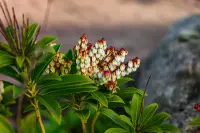
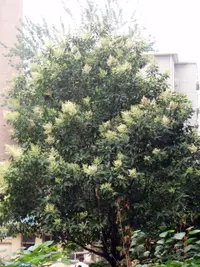
Bronze loquat, Rhaphiolepis deflexa, is an evergreen shrub or small tree valued for its bronzy new foliage that matures to glossy deep green. It forms a dense, rounded canopy and often develops multiple trunks, giving it a compact, architectural look in landscapes.

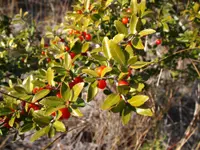
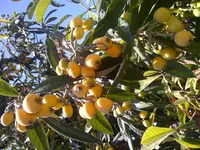
This species is native to southern China and Hong Kong, where it grows in warm, mild climates. It produces fragrant white to pale pink spring flowers, followed by small, dark fruits that attract birds.

Rhaphiolepis deflexa is generally considered low-maintenance, with good tolerance to heat, coastal conditions, and short dry periods once established. It prefers sun to light shade, moderately fertile, well-drained soil, and benefits from occasional pruning to maintain shape, which helps clarify how to care for Bronze loquat in home gardens.

Main Plant Requirements

Care Difficulty

Easy Care

Light Preference

Full Sun

Water Requirements

Moderate Water

Temperature Preference

Warm Climate

Hardiness Zone

8–11

Soil Texture

Sandy, Loamy, Organic-rich

Soil pH

Acidic (5.5–6.5), Slightly acidic (6.5–7.0)

Soil Drainage

Well-drained

Fertilization

Minimal (feed rarely)

Get Personalized Care Plan

Scan your plant to receive care tips personalized for your specific plant

Available on iOS and Android

How to Care for the Bronze loquat

Rhaphiolepis deflexa thrives in bright outdoor conditions with several hours of direct sun each day.

  • Provide 4–6 hours of direct sun daily, ideally with morning sun and light afternoon shade, especially in hotter regions.
  • Tolerates partial shade (as little as 2–3 hours of direct sun), but Bronze loquat flowers and foliage color are best in stronger light.
  • In very hot summers, protect from intense west-facing afternoon sun to reduce leaf scorch and moisture loss, particularly in exposed sites.

Watering Rhaphiolepis deflexa focuses on deep, infrequent sessions once roots are established.

  • Allow the top 3–5 cm of soil to dry before watering, then water slowly so moisture reaches the deeper root zone.
  • In spring and summer, expect to water more often during hot, dry spells; in fall and winter, extend intervals as growth and evaporation slow.
  • Watch for yellowing, soft leaves as a sign of overwatering and poor drainage; crisp leaf edges and wilting in dry soil indicate underwatering.

This shrub performs best in mild climates with warm summers and relatively frost-free winters.

  • Optimal growth occurs around 60–80°F (16–27°C), where foliage stays dense and flowering is more reliable.
  • Mature plants can tolerate brief drops to about 15–20°F (-9 to -6°C), but young plants are more cold-sensitive and benefit from frost protection.
  • Handles summer heat up to about 95°F (35°C) if soil moisture is adequate; prolonged extremes above this can stress the plant and reduce flowering.

This shrub handles a wide humidity range and usually does not need special humidity management outdoors.

This shrub prefers well-structured, freely draining soil that avoids prolonged saturation around the roots.

  • Use a moderately sandy or loamy soil with some organic matter so it holds moisture briefly but drains within a few minutes after watering.
  • Aim for slightly acidic to neutral pH, roughly 6.0–7.0, to support balanced nutrient uptake and overall Rhaphiolepis deflexa plant care.
  • Blend compost with coarse sand or fine gravel to improve both nutrient content and drainage without becoming compacted.
  • Avoid heavy clay, poorly drained spots, or mixes high in peat that stay wet and airless, which encourages root rot.

This species grows reliably in containers when given enough root space and stable drainage-focused conditions.

  • Choose a wide, heavy pot to counter the shrub’s dense canopy so wind or accidental bumps do not tip it over.
  • Select a container material such as thick ceramic or concrete that slows moisture loss in hot, exposed positions.
  • Fill the bottom third of large pots with coarse, inert material like chunky gravel to reduce weight while preserving deep drainage channels.

Rhaphiolepis deflexa benefits from light, consistent feeding but grows acceptably in average garden soil.

  • Use a balanced slow-release fertilizer (for example 10-10-10) or a thin layer of compost in early spring to support healthy growth.
  • Apply fertilizer 1–2 times during the growing season, following label rates and avoiding heavy applications near the trunk.
  • For container-grown Bronze loquat, use a diluted balanced liquid feed at 1/2 strength every 4–6 weeks in spring and summer.
  • Stop feeding in late summer so new growth hardens before cold weather, and do not fertilize in winter dormancy.

Pruning Rhaphiolepis deflexa keeps the shrub dense, healthy, and flowering well.

  • Time main pruning for late winter to early spring, just before new growth starts, with only light touch-ups after flowering.
  • Remove dead, diseased, crossing, or storm-damaged branches first using clean, sharp bypass pruners or loppers.
  • Thin congested interior shoots to increase light and airflow, which supports stronger flowering and reduces fungal issues.
  • Shorten overly long stems to maintain a natural, rounded shape rather than shearing into hard geometric forms.

This shrub is usually grown in the ground, so focus on thoughtful transplanting rather than frequent repotting.

  • Transplant in late winter to early spring when growth is just restarting, avoiding the hottest months to reduce stress.
  • Look for signs such as circling roots in containers or very slow growth before moving or upsizing the plant.
  • Dig a wide planting hole, keep the root ball intact, and set the crown at the same soil level to limit transplant shock.
  • Water deeply after planting, mulch 5–8 cm around (not against) the stem, and keep soil evenly moist until new growth appears.

Rhaphiolepis deflexa is commonly propagated from semi-hardwood cuttings and occasionally from seed.

  • Take semi-hardwood cuttings in late summer, 8–12 cm long, from healthy, non-flowering shoots.
  • Remove lower leaves, dip the cut base in rooting hormone, and place in a free-draining mix such as 50% perlite, 50% peat or coco coir.
  • Maintain bright, indirect light, high humidity, and a stable 68–75°F for several weeks while roots form.
  • Sow fresh seed in autumn in a gritty seed mix, keep just moist, and expect variable germination times.

This shrub is moderately cold hardy but benefits from simple winter precautions in cooler regions.

  • Mature plants usually tolerate light frosts, but young specimens are more sensitive to extended freezing conditions.
  • Apply a 5–8 cm mulch layer around the root zone in late fall to stabilize soil temperature and moisture.
  • In USDA zones colder than the plant’s rating, wrap exposed container plants or move them to a sheltered, unheated but frost-free spot.
  • Brush off heavy snow from branches to reduce the risk of breakage from accumulated weight.

Care Tips

Wind-form training

In young plants exposed to wind, selectively tip-prune the most windward shoots each spring to encourage a broader, lower canopy that resists storm damage and reduces branch breakage as the shrub matures.

Salt-spray management

In coastal sites, hose down foliage with fresh water every 2–4 weeks during dry weather to remove salt deposits from leaves and buds, reducing leaf burn and improving overall vigor.

Targeted mulch collar

Maintain a 5–8 cm deep mulch ring that stays 3–5 cm away from the stem base to stabilize soil moisture, suppress weeds, and prevent collar rot from constant bark contact with wet organic matter.

Preventive fungal hygiene

In humid or poorly ventilated sites, collect and dispose of fallen leaves and spent flowers promptly to limit fungal spore buildup and reduce the risk of leaf spot and dieback over time.

Structural thinning cuts

Every 2–3 years, remove a few older interior branches right at their origin instead of just shearing the outer foliage, which opens the shrub to light and air and supports healthier, denser regrowth when growing Bronze loquat.

Common Pests and Diseases

Entomosporium leaf spot

This disease causes small purple to red spots on young leaves that enlarge, often developing tan centers and dark borders, and can lead to heavy defoliation in humid, wet conditions.

Solution

Remove and discard heavily spotted leaves, avoid overhead watering, and increase spacing or pruning to improve airflow. In areas with a history of Entomosporium, apply a preventive fungicide labeled for leaf spot on Rhaphiolepis during periods of frequent rain, especially on new growth.

Cercospora leaf spot

This disease produces irregular brown or gray leaf spots with darker margins that may cause gradual thinning of the canopy, especially on older foliage.

Solution

Collect and dispose of fallen leaves, reduce leaf wetness by watering at soil level, and keep the plant in an open, airy position. Where the problem recurs, use a broad-spectrum ornamental fungicide according to label directions at the first sign of spotting on new leaves.

aphids

These insects feed on tender shoots and undersides of leaves, causing curling, distortion, and sticky honeydew that can attract sooty mold.

Solution

Spray young growth with a strong stream of water to dislodge colonies, then treat remaining aphids with insecticidal soap or a light horticultural oil, repeating as needed. Encourage natural predators such as lady beetles by minimizing use of broad-spectrum insecticides nearby.

scale insects

This pest appears as small, dome-shaped or flat bumps on stems and leaves, sucking sap and leading to yellowing, stunted growth, and honeydew deposits.

Solution

Prune out heavily infested twigs and gently scrape or rub off accessible scales with a soft brush or cloth. For larger infestations, apply horticultural oil thoroughly to branches and leaf undersides during mild weather, ensuring full coverage to smother the insects.

sooty mold

This disease is a superficial black fungal growth that develops on leaves and stems where honeydew from sap-feeding insects has accumulated, reducing light to the foliage and dulling appearance.

Solution

Address the underlying honeydew producers such as aphids or scale with targeted control, then wash affected foliage with water and a mild soap solution to remove the black coating. Improve air circulation and light exposure to help new clean growth develop, following general Rhaphiolepis deflexa plant care guidelines.

Interesting Facts

Bronze juvenile foliage

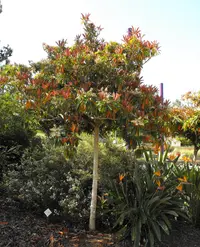
Young leaves emerge coppery bronze to reddish and gradually mature to glossy dark green, creating a two-tone canopy that is especially visible in spring flushes.

Naturally compact canopy

This species forms a dense, rounded, small tree or large shrub with relatively short internodes, so it maintains a tidy outline with minimal pruning in cultivated landscapes.

High coastal tolerance

Bronze loquat shows notable tolerance to wind and salt-laden air, which makes it reliable for coastal plantings in mild climates where more delicate evergreens struggle.

FAQs about Bronze loquat

Flowering declines when light is too low, pruning is done at the wrong time, or the plant is stressed by drought or nutrient imbalance. Avoid heavy pruning after flowering and keep growth vigorous for reliable bud production.

Grow Healthy Plants with Botan Care

Keep your plants happy and healthy with plant identification, disease detection, and easy care guidance.

Botan plant care app — identify plants on mobile

Explore More Plants