Lokta Care (Daphne bholua)

Lokta

About Lokta

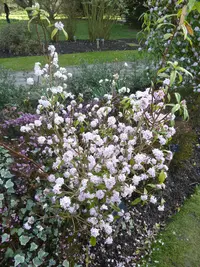
Lokta, botanically known as Daphne bholua, is an evergreen shrub valued for its scented winter flowers and fine, fibrous bark. It usually forms an upright, bushy shape with narrow, leathery leaves and clusters of small, waxy flowers in shades of white to deep pink.

This species is native to the Himalayan region, where it grows on mountain slopes and forest edges. It can be somewhat demanding in gardens, as it dislikes disturbance and needs well-drained, humus-rich soil. Understanding how to care for Lokta, especially its need for cool roots, consistent moisture, and shelter from harsh conditions, helps improve long-term success.

Main Plant Requirements

Care Difficulty

Hard Care

Light Preference

Partial Shade

Water Requirements

Moderate Water

Temperature Preference

Cool Climate

Hardiness Zone

7–9

Soil Texture

Loamy, Peaty, Organic-rich

Soil pH

Acidic (5.5–6.5), Slightly acidic (6.5–7.0)

Soil Drainage

Moist but well-drained

Fertilization

Minimal (feed rarely)

Get Personalized Care Plan

Scan your plant to receive care tips personalized for your specific plant

Available on iOS and Android

How to Care for the Lokta

Daphne bholua prefers bright but gentle light that avoids intense midday sun.

  • Provide 3–5 hours of morning sun with light or dappled shade from late morning to afternoon, especially in warmer regions.
  • Site the shrub where nearby trees or buildings filter strong afternoon sun to reduce leaf scorch, particularly during summer heat.
  • In cooler climates it tolerates more direct sun, but even when caring for Lokta outdoors, avoid highly exposed south-facing walls that reflect heat.

This shrub prefers consistently moist but not saturated soil with good drainage.

  • Before watering, let the top 3–5 cm of soil dry, then water slowly so moisture reaches the root zone without pooling around the base.
  • During active growth and flowering, aim for evenly moist soil, reducing frequency in cool, wet seasons to prevent root rot and sour, waterlogged soil.
  • Signs of overwatering include yellowing leaves and soft stems, while dull, drooping foliage and dry, crumbly soil indicate the need for a deep soak.

This species prefers cool to mild conditions and dislikes temperature extremes.

  • Optimal growth occurs around 50–70°F (10–21°C), with best flowering where summers are not hot and nights stay relatively cool.
  • The shrub generally tolerates lows down to about 10–15°F (-12–-9°C) once established, but young plants benefit from mulch to buffer sudden freezes.
  • Prolonged heat above 85°F (29°C), especially with dry soil, can stress plants, so provide shade, mulch, and steady moisture during hot spells.

Daphne bholua prefers steady, moderately moist air rather than very dry indoor conditions.

  • Aim for 40–60% humidity, similar to a cool, sheltered garden environment.
  • Dry, centrally heated rooms can cause leaf edge browning and premature bud drop, indicating humidity stress.
  • Increase humidity outdoors with wind protection and mulch around the root zone, and indoors by grouping plants or using a pebble tray instead of misting.

Daphne bholua requires moisture-retentive yet free-draining soil to avoid root problems.

  • Use a loamy, organic-rich structure that holds moisture but does not stay waterlogged, such as garden loam blended with leaf mold or composted bark.
  • Ensure sharp drainage by incorporating 20–30% grit or coarse sand, especially in heavier native soils.
  • Aim for slightly acidic to neutral pH (6.0–7.0), avoiding strongly alkaline soils that can limit nutrient uptake.
  • Avoid compacted, saturated, or very sandy soils by improving aeration with bark chips and by raising the planting area if drainage is slow.

This shrub can be grown in containers if the pot is large, stable, and drains efficiently.

  • Choose a tall, heavy container to anchor the shrub and reduce tipping in winter winds when the top growth is dense.
  • Select a pot volume that allows a broad root run but still dries slightly between waterings, avoiding very narrow or shallow shapes.
  • Use a container mix combining loam-based compost with fine bark and grit so water drains freely while roots remain evenly aerated.

Daphne bholua benefits from light, careful feeding rather than heavy fertilization, similar to many Lokta relatives in the wild.

  • Use a balanced, slow-release fertilizer (for example 8-8-8 or 10-10-10) in early spring as new growth begins.
  • Apply a second light dose in midsummer only if growth appears weak or leaves pale.
  • Keep fertilizer strength low, at half the label rate, to avoid root burn and salt buildup.
  • Stop feeding in late summer so the plant can harden growth before winter dormancy.

Daphne bholua needs only minimal, precise pruning to maintain health and natural form.

  • Time any pruning for just after flowering so buds for the next season are not removed.
  • Cut out dead, diseased, or storm-damaged wood with clean, sharp bypass pruners.
  • Thin a few crowded inner shoots to improve light and airflow without changing the outline.
  • Avoid hard cutting into old wood, as daphnes resent severe pruning and may decline.

This shrub dislikes disturbance, so repotting or transplanting Daphne bholua should be rare and carefully planned.

  • Look for roots circling the pot base or very slow growth as signs a container plant needs more space.
  • Carry out transplanting in early spring or early autumn, when temperatures are mild and soil is workable.
  • Expect to move established plants only every several years, choosing a permanent site with good drainage.
  • Lift with a generous root ball, handle roots gently, water thoroughly, then shade and shelter the plant until re-established.

Propagation of Daphne bholua is possible but slow and often unreliable, so it is usually attempted by experienced growers.

  • Use semi-ripe cuttings in mid to late summer, taken from non-flowering shoots with a heel of older wood.
  • Insert cuttings into a sharply draining, low-peat medium and keep at 65–75°F with high humidity and bright shade.
  • Apply a rooting hormone to the cut base to improve strike rate and reduce rot risk.
  • Layering low, flexible stems in spring is another option; keep the buried section moist until well rooted, then sever.

Daphne bholua is moderately cold hardy but benefits from simple winter protection in colder regions.

  • Mulch the root zone in late autumn with 5–8 cm of leaf mold or bark, keeping mulch off the stems.
  • In exposed sites, use a windbreak or fleece wrap around the shrub during severe freezes.
  • For container plants, move pots to a sheltered, unheated but frost-sheltered spot, such as against a house wall.

Care Tips

Root-zone cooling

Mulch around the base with 5–8 cm of fine bark or leaf mould, keeping it 3–5 cm away from stems, to keep roots cool and moist while reducing stress during summer heat waves.

Sheltered site planning

Plant near a wall, fence, or evergreen shrub that breaks cold wind and winter sun, which helps prevent bark cracking and flower bud damage in freezing conditions.

Minimal root disturbance

Avoid digging, edging, or planting other shrubs close to the root zone, since this species resents disturbance and performs best when the surrounding soil is left undisturbed.

Targeted bud thinning

On established plants, lightly thin congested flowering shoots by removing a few inner twigs after bloom, which improves air flow and encourages larger flower clusters the following winter.

Winter container protection

For plants in pots, move containers against a sheltered wall and wrap the pot with bubble wrap or horticultural fleece over winter, keeping the root ball from freezing solid while still allowing drainage for growing Lokta.

Common Pests and Diseases

Leaf spot

This disease causes brown, tan, or purple spotting on leaves that may merge into larger dead areas, sometimes leading to premature leaf drop.

Solution

Remove and dispose of affected leaves, avoid overhead watering, and ensure good air circulation around the shrub; in persistent cases, apply a preventive fungicide labeled for ornamental shrubs in early spring according to Daphne bholua care instructions.

Daphne sudden death

Symptoms include sudden wilting and collapse of part or all of the shrub, often with discolored, darkened tissue at the base of stems.

Solution

Promptly remove and dispose of affected plants and nearby fallen debris, avoid replanting daphne in the same soil for several years, and improve drainage and watering practices to reduce stress and soilborne pathogen buildup.

Scale insects

These insects appear as small, fixed bumps on stems and leaf undersides, causing yellowing, leaf drop, and sticky honeydew that may attract sooty mold.

Solution

Prune out heavily infested stems, gently scrub remaining scale with a soft brush and soapy water, and use horticultural oil sprays during the crawler stage, repeating as needed according to label directions.

Aphids

These insects cluster on shoot tips and flower buds, sucking sap and leading to distorted new growth, sticky honeydew, and possible sooty mold on leaves.

Solution

Wash colonies off with a firm stream of water, pinch back heavily infested soft shoots, and, if needed, apply insecticidal soap or horticultural oil to young aphids, ensuring full coverage of growing tips and leaf undersides.

Botrytis blight

This disease causes browning and collapse of flowers and soft young shoots, often covered with a gray, fuzzy mold in cool, damp conditions.

Solution

Cut off and discard all affected flowers and stems, keep foliage as dry as possible, space plants to improve airflow, and consider a targeted fungicide labeled for botrytis on ornamentals if wet, cool weather persists and infection is recurrent.

Interesting Facts

Himalayan understory specialist

This evergreen shrub is native to montane forests of the central and eastern Himalayas, where it typically grows in the cool, shaded understory between roughly 1,700–3,000 m, often among rhododendrons and oaks.

Intensely fragrant winter blooms

It produces clusters of highly scented, tubular flowers in mid to late winter, releasing strong fragrance even at low temperatures when few other shrubs are in bloom.

Adapted to cool summers

In its native range, summers are relatively cool and moist, so this species is naturally adapted to mild growing seasons and can struggle in climates with hot, dry summers.

Botan icon

Did you know?

In parts of its Himalayan range, the inner bark of Daphne bholua has traditionally been used to make high-quality, durable handmade paper, and this cultural history is reflected in the name Lokta paper in Nepal.

FAQs about Lokta

Lack of flowers often comes from too much shade, heavy pruning at the wrong time, or stress from recent planting. Allow a few seasons to establish, avoid hard pruning after flowering, and keep soil evenly moist but free-draining.

Grow Healthy Plants with Botan Care

Keep your plants happy and healthy with plant identification, disease detection, and easy care guidance.


Botan plant care app — identify plants on mobile

Explore More Plants