upland cotton Care (Gossypium hirsutum)

Also known as: Cotton, Mexican Cotton
upland cotton

About upland cotton

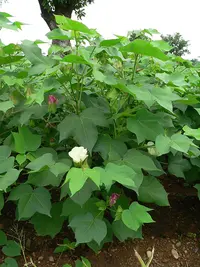
Upland cotton, Gossypium hirsutum, is a fast-growing shrub cultivated mainly for its seed fibers, which are used to make most everyday cotton fabrics. It typically forms a branching, bushy plant with broad, lobed leaves, showy cream or yellow flowers, and distinctive fluffy white bolls after flowering.

This species is native to tropical and subtropical regions of the Americas but is now grown widely in warm climates around the world. It is relatively easy to manage in suitable conditions but needs warmth, full sun, and consistent moisture to stay healthy.

For home growers who want to care for upland cotton, the plant prefers well-drained, moderately fertile soil and protection from prolonged cold or waterlogging.

Main Plant Requirements

Care Difficulty

Moderate Care

Light Preference

Full Sun

Water Requirements

Regular Water

Temperature Preference

Tropical / Frost Sensitive

Hardiness Zone

9–11

Soil Texture

Sandy, Loamy, Organic-rich

Soil pH

Acidic (5.5–6.5), Slightly acidic (6.5–7.0)

Soil Drainage

Well-drained

Fertilization

Moderate (every 2–4 weeks)

Get Personalized Care Plan

Scan your plant to receive care tips personalized for your specific plant

Available on iOS and Android

How to Care for the upland cotton

This sun-loving crop needs strong, consistent light to produce healthy bolls and fiber.

  • Provide 6–8 hours of direct sun daily; full sun all day is ideal where summers are mild.
  • In hotter regions, give upland cotton morning sun with light afternoon shade to limit leaf scorch and stress.
  • Watch for pale, elongated stems as a sign of too little light, and for crisped leaf edges as a sign of excessive, reflected heat exposure.

This species prefers evenly moist but not saturated soil, especially during active growth and flowering.

  • Water when the top 3–5 cm of field or bed soil feels dry, applying a deep soak rather than frequent light sprinkling.
  • Ensure soil drains freely; standing water, sour smell, or wilting with wet soil indicate overwatering and root stress in Gossypium hirsutum.
  • In hot, dry summer, expect more frequent watering, then reduce amounts as temperatures cool and bolls mature toward season’s end.

This warm-season species needs stable heat and is very sensitive to cold and frost.

  • Aim for 75–90°F (24–32°C) during active growth; germination and early seedlings perform best around 70–85°F (21–29°C).
  • Avoid temperatures below 55°F (13°C); growth slows sharply, and light frost can kill plants outright.
  • During heat waves above 100°F (38°C), flowering and boll set may drop, so ensure good soil moisture and consider light afternoon shade.

This species prefers moderately dry air and usually does not need special humidity control indoors.

  • Aim for 30–50% relative humidity; typical heated or air-conditioned homes fall in this range.
  • Upland cotton tolerates brief drier air but may show leaf edge browning and slight curl when humidity stays below 25%.
  • If air is very dry near heaters or vents, move the plant away and place the pot on a shallow pebble tray with water to raise local humidity slightly.

Gossypium hirsutum grows best in deep, loose, well-drained mineral soil with moderate organic matter.

  • Use a sandy or loamy mix, such as 2 parts all‑purpose potting mix, 1 part coarse sand, and 1 part perlite, to keep the root zone open and airy.
  • Aim for slightly acidic to neutral pH (6.0–7.0); avoid strongly acidic or alkaline substrates that can limit nutrient uptake.
  • Blend in a thin layer of mature compost for nutrients but keep the overall mix mineral-dominant to prevent waterlogging.
  • Avoid heavy clay, compacted soil, or peat‑heavy mixes that stay wet for long periods, since these favor root rot and poor root aeration.

This species can be grown in containers if the pot is chosen to support its deep, fast-growing root system and tall stems.

  • Select a pot at least 30–35 cm deep so the taproot can extend downward without curling tightly against the base.
  • Use a relatively heavy or wide-based container to reduce the risk of tipping as the plant becomes top-heavy with stems and bolls.
  • Choose a pot material that does not dry extremely fast in full sun, or the root zone may overheat and require very frequent watering compared to in-ground plants.

Gossypium hirsutum responds well to moderate, balanced nutrition during its active growing season for strong growth and flowering.

  • Use a balanced NPK fertilizer (such as 10-10-10) or well-rotted compost on established plants in spring.
  • Feed every 4–6 weeks during the growing season, depending on soil fertility and plant vigor.
  • Dilute liquid fertilizer to 50% strength to limit salt buildup and leaf burn, especially in containers.
  • Reduce or stop feeding in late fall and winter when growth slows or plants die back.

Pruning Gossypium hirsutum helps manage size, improve airflow, and maintain healthy flowering wood.

  • Carry out main pruning in late winter or very early spring before strong new growth begins.
  • Remove dead, diseased, or storm-damaged stems, cutting back to healthy tissue with clean, sharp pruners.
  • Thin crowded interior branches to improve light penetration and reduce fungal disease risk.
  • Lightly shape plants by shortening overly long shoots, avoiding heavy cuts during peak flowering.

Upland cotton is usually grown as an annual in the ground, so transplanting young plants correctly is more important than frequent repotting.

  • Transplant seedlings outdoors after frost when roots fill starter cells but are not tightly circling.
  • Choose a sunny site with loose, well-drained soil; harden plants off for 7–10 days beforehand to reduce stress.
  • Handle the root ball gently, planting at the same depth and watering thoroughly to settle soil around roots.
  • For container-grown plants, shift to a 2–5 cm wider pot only when roots circle the pot and growth slows.

Gossypium hirsutum is most commonly propagated from seed, which keeps the process simple and reliable for home growers.

  • Sow fresh seeds in late spring once temperatures reach about 70°F or provide bottom heat indoors.
  • Use a sterile, free-draining seed mix and sow seeds about 1–2 cm deep, keeping the medium evenly moist.
  • Provide bright light and warm conditions for germination, which often occurs within 7–14 days.
  • Cuttings are possible in warm, humid conditions but are less common than seed-based methods.

Gossypium hirsutum is frost-sensitive and typically grown as a warm-season annual, so it usually does not overwinter outdoors in cold climates.

  • Avoid exposure to frost; growth declines sharply below about 50°F and plants may be killed by freezing.
  • In mild climates, apply a light mulch around the root zone to moderate soil temperature and conserve moisture.
  • Move container plants indoors to a bright, frost-free spot if attempting to extend the season or overwinter.

Care Tips

Timely pinching

Pinch out the main shoot tip when plants reach 20–30 cm to encourage branching and more fruiting sites, but stop pinching once flower buds are forming so boll production is not delayed.

Targeted boll thinning

If plants set an excessive number of small bolls, remove the weakest or most crowded ones so the remaining bolls size up better and mature more uniformly.

Seasonal staking system

Install slim stakes or a simple string trellis early in the season and loosely tie stems as they elongate so heavy, maturing bolls do not bend or snap branches in wind or rain.

Early pest scouting

Use a white sheet or tray to tap foliage weekly and check for aphids, whiteflies, and caterpillars, treating hot spots immediately with insecticidal soap or Bacillus thuringiensis rather than waiting for visible leaf damage.

Clean harvest practice

When bolls open, harvest on dry days and keep lint off the soil surface by using clean trays or cloths, which helps limit staining, mold growth, and seed quality loss while growing upland cotton.

Common Pests and Diseases

boll weevil

This pest bores into cotton flower buds and bolls, causing them to shed prematurely and sharply reducing yield and fiber quality. Symptoms include punctured buds, darkened or deformed bolls, and increased fruit drop.

Solution

Collect and destroy shed squares and damaged bolls, remove and dispose of plant residues after harvest, and avoid leaving volunteer cotton plants that can host the insect. In outdoor plantings, use pheromone traps for monitoring and apply targeted insecticides only if thresholds are reached; for small garden or container plants, early removal of infested structures is usually sufficient.

cotton aphids

These insects cluster on young stems, undersides of leaves, and flower buds, sucking sap and producing sticky honeydew that can lead to sooty mold. Symptoms include curled or distorted new leaves, sticky surfaces, and the presence of ants tending the aphids.

Solution

Spray plants with a strong stream of water to dislodge colonies, then treat remaining aphids with insecticidal soap or horticultural oil, ensuring full coverage of leaf undersides. Encourage natural predators like lady beetles outdoors and remove heavily infested leaves or shoots if populations remain high.

cotton bollworm

This pest is the larval stage of several moth species that chew holes in squares, flowers, and bolls, feeding on developing seeds and fibers. Symptoms include ragged feeding damage, frass (insect droppings) around entry holes, and premature fruit drop.

Solution

Handpick and destroy caterpillars and damaged fruiting structures on small-scale plantings and remove crop residues promptly after the season. Use pheromone traps to monitor moth activity outdoors and, if needed, apply Bacillus thuringiensis (Bt) or other selective biological products while larvae are still small.

bacterial blight

This disease causes angular, water-soaked leaf spots that turn dark brown to black, often bounded by veins, and can also infect stems and bolls. Symptoms include defoliation under severe pressure and dark, sunken lesions on bolls that stain lint and reduce fiber quality.

Solution

Remove and destroy infected leaves and plant debris, avoid overhead watering, and space plants to improve airflow and leaf drying. In outdoor plantings, rotate away from cotton and other susceptible hosts, use certified clean seed when possible, and avoid working with plants when foliage is wet to reduce spread.

Verticillium wilt

This disease is caused by a soil-borne fungus that invades the plant’s vascular system, leading to yellowing, wilting, and one-sided leaf symptoms, often starting on older leaves. Symptoms include stunted growth, premature leaf drop, and brown streaking in the stem when cut open.

Solution

Plant in well-drained soil that has not recently grown cotton or other Verticillium-susceptible crops and avoid overwatering that keeps soil wet for long periods. Remove and discard severely affected plants, do not compost infected roots, and practice long crop rotations; for container-grown plants, replace contaminated potting mix and disinfect pots before replanting as part of responsible Gossypium hirsutum plant care.

Interesting Facts

Main source of cotton

This species produces most of the world’s cotton fiber for textiles, especially in the United States, China, India, and Brazil, due to its high yield and fiber quality compared with other cotton species.

Polyploid genome origin

It is an allopolyploid species, formed by ancient hybridization between an African-Asian A-genome cotton and a New World D-genome cotton, which combined two distinct chromosome sets into a single stable species.

Domestication in the Americas

Archaeological evidence shows that this cotton was independently domesticated in Mesoamerica and in the Caribbean region, where Indigenous communities selected plants for longer, whiter fibers and better spinning qualities.

Botan icon

Did you know?

The fibers on the seeds of this species are single elongated epidermal cells that can grow to more than 2–3 cm in length, making them some of the longest single cells produced by any plant and ideal for spinning into strong yarn.

FAQs about upland cotton

Yellowing leaves usually result from nutrient deficiency, overwatering, or natural aging of lower foliage. Check drainage, avoid waterlogged soil, and use a balanced fertilizer. Inspect roots for rot and leaves for pests such as aphids or whiteflies.

Grow Healthy Plants with Botan Care

Keep your plants happy and healthy with plant identification, disease detection, and easy care guidance.

Botan plant care app — identify plants on mobile

Explore More Plants