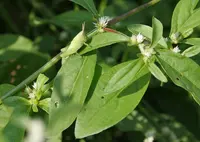
Costa Rican skullcap Care (Scutellaria costaricana)

Costa Rican skullcap

About Costa Rican skullcap

Costa Rican skullcap (Scutellaria costaricana) is a compact, herbaceous perennial often grown as a houseplant or seasonal ornamental. It is valued for its bright orange-red tubular flowers that stand out against dark green, slightly toothed leaves. The plant forms a low, bushy mound and can bloom over an extended period in warm, humid conditions. In nature, it occurs in the cloud forests of Costa Rica, where it grows in shaded, moist habitats. This background explains its preference for bright, indirect light, consistently moist but not waterlogged soil, and good air movement. With stable warmth and regular moisture, it is generally moderate in difficulty to grow, and understanding how to care for Costa Rican skullcap helps it perform well indoors.

Main Plant Requirements

Care Difficulty

Moderate Care

Light Preference

Partial Shade

Water Requirements

Keep Soil Moist

Temperature Preference

Tropical / Frost Sensitive

Hardiness Zone

10–11

Soil Texture

Loamy, Organic-rich

Soil pH

Acidic (5.5–6.5), Slightly acidic (6.5–7.0)

Soil Drainage

Moist but well-drained

Fertilization

Light (every 4–6 weeks)

Get Personalized Care Plan

Scan your plant to receive care tips personalized for your specific plant

Available on iOS and Android

How to Care for the Costa Rican skullcap

This tropical perennial prefers bright, gentle light that mimics a high-canopy forest edge.

  • Provide 4–6 hours of bright, indirect light or soft morning sun; shield from harsh midday and afternoon sun to prevent leaf scorch.
  • Allow light, shifting shade in hotter climates; Costa Rican skullcap tolerates partial shade but flowering declines in very deep shade.
  • In summer, use filtered light under trees or shade cloth; in cooler seasons, move slightly closer to brighter exposure to compensate for shorter days.

This species favors evenly moist, well-drained soil without long periods of drought or saturation.

  • Water when the top 2–4 cm of soil feels dry; aim for moisture that is damp but not soggy through the root zone.
  • Reduce frequency during cooler months, letting the surface dry a bit more, while still preventing the plant from wilting or foliage becoming dull and limp.
  • Improve drainage with organic matter to avoid standing water; watch for yellowing, soft stems as signs of overwatering and crisp, curling leaves as signs of underwatering.

This plant performs best in consistently warm, frost-free conditions typical of its tropical origin.

  • Aim for 65–80°F (18–27°C) for active growth; short spikes slightly above or below this range are usually tolerated if soil moisture is stable.
  • Protect from cold; growth slows below about 55°F (13°C), and frost at 32°F (0°C) or lower can kill stems and roots.
  • In hot spells above 85–90°F (29–32°C), provide light shade and avoid heat-reflecting surfaces to limit stress and prevent leaf scorch.

This species prefers moderate to high humidity and reacts quickly to very dry air.

  • Aim for 50–70% humidity to keep foliage dense and flower buds from drying out.
  • Leaves curling, browning tips, or dropped buds indicate humidity stress in Costa Rican skullcap.
  • Increase humidity with a pebble tray under the pot, grouping plants together, or using a small room humidifier.

Scutellaria costaricana grows best in loose, moisture-retentive but free-draining soil.

  • Use a mix of 50% peat or coco coir, 30% compost, and 20% perlite to create a light, airy structure.
  • Ensure the mix drains within 1–2 minutes after watering so roots stay moist but never waterlogged.
  • Target a slightly acidic to neutral pH around 6.0–7.0, which supports nutrient availability and healthy root activity.
  • Avoid heavy clay, compacted soil, or pure sand, which either suffocate roots or dry out too quickly.

This species is well suited to container growing for controlled moisture and root conditions.

  • Choose a pot just 2–4 in wider than the root mass to keep the mix drying at a steady, even rate.
  • Use a stable, heavier container if stems become top heavy so the plant does not tip when the soil is moist.
  • Select a pot material that matches your climate, such as unglazed terracotta for faster drying or plastic for slower moisture loss.

This tropical flowering perennial responds well to modest, consistent feeding during its active season.

  • Apply a balanced liquid fertilizer (such as 10-10-10 or 20-20-20) at 1/2 strength every 2–4 weeks in spring and summer.
  • Use a slow-release fertilizer or light compost top-dressing at the start of the growing season for Costa Rican skullcap in containers.
  • Ensure soil is moist before feeding to reduce root burn, and avoid fertilizing stressed or wilted plants.
  • Reduce or stop feeding in fall and winter when growth slows, especially for indoor plants under low light.

Thoughtful pruning helps Scutellaria costaricana stay compact and flower well.

  • Pinch soft shoot tips in spring and early summer to encourage bushier growth and more flowering stems.
  • Remove dead, diseased, or damaged stems at any time using clean, sharp scissors or pruning snips.
  • Thin out crowded interior shoots after a main flush of bloom to improve air movement and reduce fungal problems.
  • Lightly trim spent flower spikes to maintain shape and often trigger additional blooming cycles.

Container-grown plants appreciate periodic repotting to maintain healthy, dense growth.

  • Check for roots circling the pot, emerging from drainage holes, or persistent wilting as signs that Scutellaria costaricana needs a larger container.
  • Plan to repot every 1–2 years in spring, shifting to a pot 2–5 cm wider with fresh, well-drained peat-free mix.
  • Water the plant well the day before, gently loosen the root ball, and prune only severely circling roots to limit shock.
  • After repotting, water thoroughly, keep in bright but indirect light for 3–7 days, and resume feeding only once new growth appears.

This species is commonly propagated from softwood cuttings and sometimes by seed for larger batches of plants.

  • Take 7–10 cm softwood stem cuttings in late spring or early summer, choosing non-flowering shoots with 2–3 leaf nodes.
  • Remove lower leaves, dip the cut end in rooting hormone, and place in a moist, sterile, well-drained medium such as perlite and peat.
  • Provide bright, indirect light, high humidity (60–80%), and bottom warmth around 70–75°F to support rooting in 3–6 weeks.
  • Sow fresh seeds on the surface of a fine seed mix, keep lightly covered and evenly moist, and maintain warmth until germination.

This tropical plant is frost-tender and needs protection in regions with cool winters.

  • In climates below 50°F, grow Scutellaria costaricana in containers so plants can be moved indoors before frost.
  • Keep indoor plants in bright, indirect light at 60–70°F and allow the topsoil to dry slightly between waterings.
  • In mild climates, add a 3–5 cm mulch layer around outdoor plants to insulate the root zone during cooler months.

Care Tips

Encourage Bushy Form

Pinch back the soft tips of each non-flowering stem every 3–4 weeks during active growth to promote side-branching and denser clusters of blooms.

Timed Rejuvenation Prune

Once flowering slows, cut back the longest, woodier stems by 1/3 to trigger a fresh flush of compact growth and new flower spikes instead of letting the plant become leggy.

Rotate For Even Flowering

Turn the pot 1/4 turn every 1–2 weeks so all sides receive similar light, which keeps the plant evenly leafed and prevents flower clusters from concentrating on just one side.

Prevent Stem Breakage

In hanging baskets or when stems trail, use soft garden ties or small hoops to loosely support long flowering stems so their weight does not cause kinks that interrupt water flow to the flowers.

Refresh Tired Specimens

If an older plant becomes sparse at the base, take 7–10 cm softwood tip cuttings in late spring or early summer and root them in a small propagation tray so you can replace the original plant with several vigorous new clones when caring for Costa Rican skullcap.

Common Pests and Diseases

Spider mites

This pest thrives on Costa Rican skullcap in warm, dry indoor air and causes fine stippling, dull leaves, and fine webbing on stems and leaf undersides.

Solution

Rinse foliage thoroughly with lukewarm water, focusing on leaf undersides, then repeat every few days; for heavier infestations, use insecticidal soap or horticultural oil and increase humidity while improving air circulation to prevent rebound populations.

Aphids

These insects cluster on new shoots and flower spikes, sucking sap and causing distorted growth, sticky honeydew, and sometimes sooty mold on leaves.

Solution

Pinch or rinse off colonies under a gentle stream of water, then treat remaining insects with insecticidal soap or a light horticultural oil spray, repeating weekly until no new aphids appear and avoiding direct hot sun on recently treated foliage.

Botrytis blight

This disease favors the dense, leafy canopy and bright but cool, humid conditions, leading to soft brown spots on leaves and flowers that develop gray fuzzy mold.

Solution

Remove and discard all affected tissues, improve airflow around the plant, avoid overhead watering, and allow the surface of the potting mix to dry slightly between waterings; in persistent cases, a labeled fungicidal spray can be used according to product directions.

Leaf spot

This disease produces small water-soaked or brown spots with possible yellow halos on the foliage, often starting on lower or crowded leaves in humid, low-airflow conditions.

Solution

Prune and dispose of heavily spotted leaves, water at the base rather than over the foliage, and space plants so air can move through the canopy; if new spots continue to appear, apply a copper-based or other labeled fungicide and maintain more even moisture without splashing leaves.

Interesting Facts

Endemic cloud forest herb

This species is naturally restricted to humid montane forests of Costa Rica, where it grows as a small understory perennial in shaded, mossy habitats with consistently high moisture.

Distinctive scarlet corolla tube

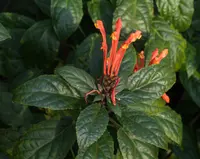
Its bright red to orange tubular flowers are strongly bilabiate (two-lipped) and adapted to bird pollination, with the elongated corolla tube matching the foraging behavior of local hummingbirds.

Named for Costa Rica

The species epithet costaricana directly refers to Costa Rica, reflecting the country where the plant was first collected and described botanically.

FAQs about Costa Rican skullcap

Lack of blooms often results from insufficient light, depleted nutrients, or old, woody stems. Provide bright conditions, feed lightly during the growing season, and trim back leggy growth to stimulate fresh shoots and flower production.

Grow Healthy Plants with Botan Care

Keep your plants happy and healthy with plant identification, disease detection, and easy care guidance.

Botan plant care app — identify plants on mobile

Explore More Plants